White Clover

General Description

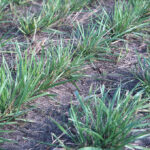
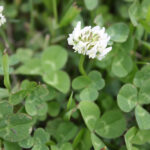
White clover requires adequate growing season moisture and moderate summer temperatures. White clover is widely distributed, especially in cool temperate climates. The plant has stolons or creeping stems near the soil surface. Leaves, flowers, and roots grow directly from these stolons. It is a relatively short plant with indeterminate growth, although taller types can grow up to 25 cm (10 in).


There are three types of white clover which vary mostly in height and persistence. The small type is commonly found in lawn mixes, or naturalized in disturbed or heavily grazed moist areas. It is highly persistent. The large type, often called Ladino, is larger (four-times) than the small type. With its low persistence it is rarely used, but can be seeded for short term hayland especially under irrigation. The intermediate type, also called common or Dutch, yields well, is a prolific seed producer, and is often used for pasture in high moisture regions. 

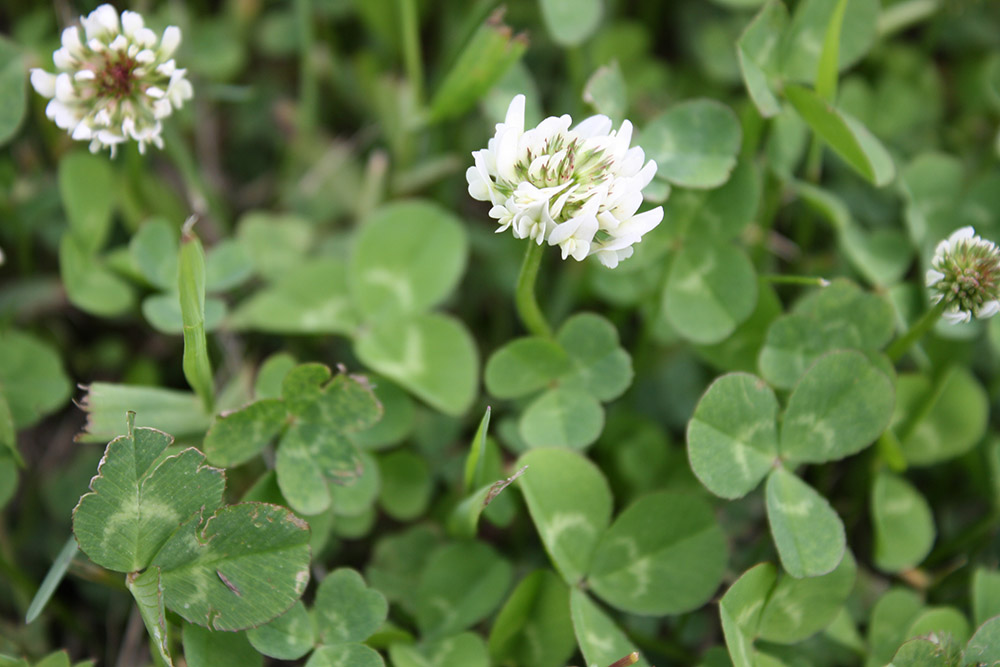
White clover has 3 leaflets attached at a single point, and are dark green, often with a white watermark. Leaflets are finely toothed, hairless, and nearly round, up to 3 cm (1 1/4 in) wide. Plants are only as high as the length of the flower and leaf stocks, which varies by type from ground level 25 cm (10 in). Seedling plants develop a taproot initially and then as plants age they develop threadlike, fibrous roots growing from detached stolons. White clover can cause bloat.

White clover requires adequate growing season moisture and moderate summer temperatures. White clover is widely distributed, especially in cool temperate climates. The plant has stolons or creeping stems near the soil surface. Leaves, flowers, and roots grow directly from these stolons. It is a relatively short plant with indeterminate growth, although taller types can grow up to 60 cm (24 in).​​​

There are three types of white clover which vary mostly in height and persistence (wild white, common white or white Dutch and Ladino). They look the same, but differ in size. Wild white clover is the smallest, ranging from 5-17.5 cm (2-7 in) tall. Intermediate white clover (also called Dutch or New Zealand White) grows to 40 cm (16 in). Ladino clover can grow up to 60 cm (24 in). The intermediate types are more suited for pastures than the ladino and tend to have more stolons per square metre than the ladino varieties.

White clover has 3 leaflets attached at a single point, and are dark green, often with a white watermark. Leaflets are finely toothed, hairless, and nearly round, up to 3 cm (1 1/4 in) wide. Plants are only as high as the length of the flower and leaf stocks, which varies by type. Seedling plants develop a taproot initially and then as plants age they develop threadlike, fibrous roots growing from detached stolons. White clover can cause bloat.


Type

Agronomic legume.


Origin

Mediterranean origins. Brought to North America by settlers.


Longevity

At least 10 years. Stolon survival and self-seeding (seed set) is critical for persistence.

Use

Intermediate types used for pasture. Small types tend to increase in continually grazed pastures.

Pasture. Intermediate types used for pasture. Small types tend to increase in continually grazed pastures.


Optimal Time of Use

Summer, fall. Late spring, once the plant has reached full height and leaf canopy, it is safe to begin use. 


Recovery After Use

Tolerates frequent grazing and can be grazed repeatedly throughout the season to 5 cm (2 in) height. Intermediate and large types benefit from rotational grazing. Low growing points make small type white clover well adapted to use in continuous, closely grazed systems. Only graze lightly in the last six weeks of the growing season for improved winter survival.

Yield

The low growth form makes white clover lower yielding than other legumes, but quality remains high throughout the growing season and after grazing. Intermediate and tall types have greater forage yields.

Palatability/Nutritional Value

Excellent palatability, highly digestible. White clover crude protein is approximately 19.5-21% and total digestible nutrients is around 65%. Quality is maintained throughout the growing season as new leaves are grown. Can cause bloat. Sheep may select for white clover increasing their risk for bloat.

Annual Precipitation min/max (mm)

400mm / 1770mm.


Drought Tolerance

Poor tolerance. White clover is unproductive even in short duration drought. It easily dies from long or extreme drought. Small types tend to be more drought tolerant.

Poor tolerance. White clover is unproductive even in short duration drought. It easily dies from long or extreme drought. Small types tend to be more drought tolerant.


Flooding Tolerance

Tolerates 1-2 weeks of spring flooding. High moisture is desired over the growing season, but flooding or water logging is not tolerated.


Winter Hardiness

Poor to fair hardiness. Growing points are in the stolons which are at or on the soil surface so very susceptible to winter kill. Maintaining soil fertility and restricting grazing to light or no grazing in the last six weeks of the growing season improves winter survivability. Intermediate and small types have some winter hardiness while large types are the least winter hardy.

Soil Texture Preference

White clover prefers fertile clay and loam textured soil. White clover may grow on coarser sandier soils if moisture is adequate.


Erosion Control

Not well suited. White clover may be included in some erosion control mixtures as a nitrogen fixer for grasses or as a plant for higher moisture areas. 


Salinity Tolerance

Not tolerant.


Acidity Tolerance

Moderate tolerance. White clover can grow in pH 5.0, but prefers 6.0 to 6.5.

Moderate tolerance. White clover can grow in pH 5.5, but prefers 6.0 to 6.5.


Alkalinity Tolerance

Low tolerance.

Seeds per kg

1,764,000 seeds/kg (800,000 seeds/lb)


Suggested Mixtures

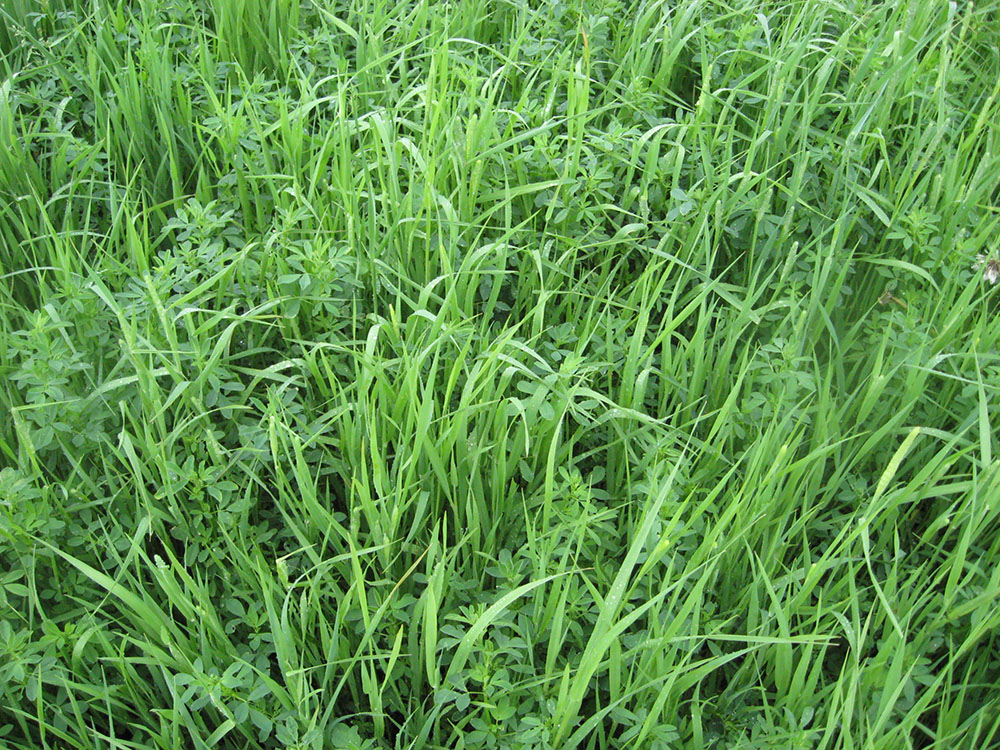
White clover mixes well with most cool season perennial grasses, particularly bunch grasses that can tolerate frequent grazing allowing for an open canopy; meadow bromegrass, orchard grass, tall fescue. Has also been grown with Russian wildrye and timothy. White clover can compete with sod forming grasses such as Kentucky bluegrass, and smooth bromegrass when moisture and fertility are not limiting and frequent defoliation keeps the canopy open.

White clover mixes well with most cool season perennial grasses, particularly bunch grasses that can tolerate frequent grazing allowing for an open canopy; meadow bromegrass, orchard grass, tall fescue. Has also been grown with timothy. White clover can compete with sod forming grasses such as Kentucky bluegrass, and smooth bromegrass when moisture and fertility are not limiting and frequent defoliation keeps the canopy open.


Ease of Establishment

White clover should be seeded shallow (6 mm / 0.25 in). Although seedlings are small and slow to develop, they can establish easily if fertility and moisture conditions are favourable. Competition from grasses and cover crops should be minimized. Stand will thicken as stolons develop.


Competitiveness

Small volunteer types can invade continuously grazed pastures, especially under moist conditions. Healthy stolons are critical for competitiveness. Shading of white clover decreases its competitiveness.

Small volunteer types can invade continuously grazed pastures, especially under moist conditions. Healthy stolons are critical for competitiveness. Shading of white clover decreases its competitiveness. White clover roots generally grow to the same depth as roots of commonly used grasses, creating intense competition between white clover and the grasses for soil nutrients and moisture. White clover often disappears from pastures because it cannot compete with the grasses for nutrients present at low levels.


Management Considerations

It is important to monitor livestock for bloat while grazing white clover. Inoculate white clover with Rhizobium trifolii for better nodulation and nitrogen fixing. Grows best on fertile, moist soils without shading from other plants. Stolon survival is critical for persistence so maintaining adequate fertility is important. Although white clover can tolerate a shorter rest period than most other legumes in a grazing system, grazing should be light enough not to damage stolons. Restrict or reduce grazing in the last six weeks of the growing season to restore stolon health and provide a canopy to help insulate stolons for winter. White clover can be grazed after a killing frost, however, reducing the canopy increases the risk of winter kill.

It is important to monitor livestock for bloat while grazing white clover. Inoculate white clover with Rhizobium trifolii for better nodulation and nitrogen fixing. Grows best on fertile, moist soils without shading from other plants. Stolon survival is critical for persistence so maintaining adequate fertility is important. Although white clover can tolerate a shorter rest period than most other legumes in a grazing system, grazing should be light enough not to damage stolons. Restrict or reduce grazing in the last six weeks of the growing season to restore stolon health and provide a canopy to help insulate stolons for winter. White clover can be grazed after a killing frost, however, reducing the canopy increases the risk of winter kill.

British Columbia Rangeland Seeding Manual, Saskatchewan Dryland Forage Species Adaptation Tool, Manitoba Forage Adaptation and Comparison Guide, USDA Plants Database, Alberta Forage Manual

British Columbia Rangeland Seeding Manual, Saskatchewan Dryland Forage Species Adaptation Tool, Manitoba Forage Adaptation and Comparison Guide, USDA Plants Database, Alberta Forage Manual, OMAFRA Publication 30

White clover is adapted to the Sub-Boreal Spruce, Sub-Boreal Pine-Spruce and Interior Cedar-Hemlock zones. In the southern part of the Central Interior it is suited to wetter parts of the Interior Douglas-fir zone, and to irrigated and subirrigated areas in the Bunchgrass zone and dry parts of the Interior Douglas-fir zone. It will typically persist in swales and depressions in the drier zones, and the white Dutch types can be included to have benefits of a legume in dryland pasture mixes in wetter areas of the Interior Douglas-fir zone. 

White clover is most suited to pasture use in the wetter areas in the region (i.e., the Interior Cedar-Hemlock Zone) and to irrigated or subirrigated areas in the higher elevation parts of the Bunchgrass zone, the Ponderosa Pine and Interior Douglas-fir zones. It will typically persist in swales and depressions in the drier zones, and the white Dutch types can be included to have benefits of a legume in dryland pasture mixes in more wetter areas of the Interior Douglas-fir zone. 
Seeding Rate Calculator

Seeding Rate Calculator

Calculate the seeding
rate & seed cost

Perennial Ryegrass

General Description

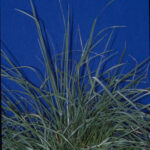
Perennial ryegrass is a short-lived, perennial, cool season bunchgrass. Perennial ryegrass is best suited to areas with cool summers of reasonable moisture without summer drought, and mild winters. It is grown mainly as an annual in western Canada, but as a perennial in southern BC. It is closely related to Italian ryegrass, but is smaller, has folded rather than rolled leaves, and lacks awns.

Perennial ryegrass produces a shallow, fibrous root system, with the majority of roots in the upper 15 cm (6 in) of soil. It tillers freely and produces a dense sod. Perennial ryegrass produces a dense cover of low-growing leaves, and stems that are up to 60 cm (24 in) long with a slender spike up to 30 cm (12 in) long. Leaves are dark green, narrow, hairless, keel-shaped, and folded when young. Lower surface is glossy and smooth, while upper surface is veined and duller coloured. 

There are diploid and tetraploid genetic types (double chromosome types often associated with more vigorous growth but less hardiness) with a tremendous variation in seed size both between and within genetic types. Turf-type perennial ryegrass is not suited for forage use because they are low growing and low yielding – choose a forage-type perennial ryegrass. Crosses between perennial ryegrass and fescues exist.

Perennial ryegrass is a short-lived, perennial, cool season bunchgrass. Perennial ryegrass is best suited to areas with cool summers of reasonable moisture without summer drought, and mild winters. It comes in turf-, pasture- and hay-adapted varieties. The pasture-adapted varieties tend to have finer leaves, smaller and more numerous tillers, and later maturity than the hay varieties. Perennial ryegrass produces a shallow, fibrous root system, with the majority of roots in the upper 15 cm (6 in) of soil. It tillers freely and produces a dense sod.

Perennial ryegrass produces a dense cover of low-growing leaves, and stems that are up to 60 cm (24 in) long with a slender spike up to 30 cm (12 in) long. Leaves are dark green, narrow, hairless, keel-shaped, and folded when young. Lower surface is glossy and smooth, while upper surface is veined and duller coloured.

There are diploid and tetraploid genetic types (double chromosome types often associated with more vigorous growth but less hardiness) with a tremendous variation in seed size both between and within genetic types. Turf-type perennial ryegrass is not suited for forage use because they are low growing and low yielding – choose a forage-type perennial ryegrass. Crosses between perennial ryegrass and fescues exist (see Festulolium). Fertility & moisture needed for high yield.


Type

Tame grass.


Origin

Europe. It is sometimes called English ryegrass.


Longevity

Less than 5 years. Annual in most of western Canada. Short lived in southern British Columbia.

Less than 5 years.

Use

Pasture, saliage, hay. Perennial ryegrass grows quickly so it is well suited for use in pastures, usually under short-term intensively managed grazing and fertilized, irrigated pastures. Can be hayed but tends to be low growing and slow to dry.


Optimal Time of Use

Spring, summer, fall. Perennial ryegrass can be used 2+ months after seeding. Perennial ryegrass produces high quality forage but requires good fertility.


Recovery After Use

Recovery can occur within 30-45 days. Perennial ryegrass can be frequently grazed close to the ground and is adapted for either continuous or rotational grazing systems. Perennial ryegrass requires high fertilizer inputs.

Perennial ryegrass can be frequently grazed close to the ground and is adapted for either continuous or rotational grazing systems. Perennial ryegrass requires high fertilizer inputs.

Palatability/Nutritional Value

Very palatable as perennial ryegrass can be one of the highest quality forage grasses for grazing. Precautions need to be taken to test forage for endophytes and a toxin called lolitrem B, especially if feeding perennial grass seed straws from varieties favoured by the turf industry.

Annual Precipitation min/max (mm)

400mm / 600mm. USDA indicates it withstands up to 65 inches/year.


Drought Tolerance

Poor tolerance. Perennial ryegrass is very intolerant of drought or high temperatures.


Flooding Tolerance

Withstands 1-2 weeks of spring flooding. Moisture is critical for perennial ryegrass success.


Winter Hardiness

Poor hardiness. Usually grown as an annual because lacks winter hardiness.

Poor hardiness. Do not apply nitrogen after July on the forage types of perennial ryegrass. This appears to lower their overwintering ability — a problem associated with perennial ryegrass in Ontario.

Soil Texture Preference

Loamy to clay soils. Moisture must not be limited. 


Erosion Control

Moderate erosion control. Perennial ryegrass is used often in turf and conservation mixes because of its quick green growth and ground cover, early in the year of establishment.


Salinity Tolerance

Slight tolerance.


Acidity Tolerance

Moderate tolerance. Perennial ryegrass produces and thrives best on neutral soils.


Alkalinity Tolerance

Moderate tolerance.

Seeds per kg

530,000 seeds/kg (240,000 seeds/lb)


Suggested Mixtures

Often seeded in a pure stand. Compatible with alfalfa and clovers. Perennial ryegrass may be included in an erosion mix to provide quick cover in the year of establishment.


Ease of Establishment

Perennial ryegrass is easy to establish. It germinates quickly and can be vigorous enough to graze two months after emergence.


Competitiveness

High competitiveness as it produces a dense growth. Low invasiveness.


Management Considerations

If the goal is a longer term stand of perennial ryegrass it will need to be reseeded often (or patch seeded), it requires high fertility, and moisture must not be limited – irrigation is beneficial. Read seed mix labels carefully to understand if and when perennial ryegrass is included in the mix. Select a variety of the forage-type with a low amount of endophyte.

If the goal is a longer term stand of perennial ryegrass it will need to be reseeded often (or patch seeded), it requires high fertility, and moisture must not be limited. If irrigation is possible, consider pure stands of perennial ryegrass. Ryegrass responds well to nitrogen fertility, and the resulting yields could warrant the cost of irrigating. Do not apply nitrogen after July on the forage types of perennial ryegrass. This appears to lower their overwintering ability — a problem associated with perennial ryegrass in Ontario. Graze or cut off any fall growth before winter to lessen the likelihood of snow moulds developing and damaging the ryegrass. Read seed mix labels carefully to understand if and when perennial ryegrass is included in the mix. Select a variety of the forage-type with a low amount of endophyte.

British Columbia Rangeland Seeding Manual, Manitoba Forage Adaptation and Comparison Guide, USDA Plants Database, Alberta Forage Manual, Publication 30-OMAFRA

Perennial ryegrass is adapted to the Sub-Boreal Spruce, Interior Cedar-Hemlock and Sub-Boreal Pine-Spruce zones. In the southern part of the Central Interior region, it is adapted to wetter parts of the Interior Douglas-fir zone and to irrigated and subirrigated areas in the Bunchgrass zone and drier parts of the Interior Douglas-fir zone.

Perennial ryegrass is adapted to dryland applications in the wetter parts of the Interior Douglas-fir zone, the Interior Cedar-Hemlock zone, and to irrigated and subirrigated areas in the Bunchgrass, Ponderosa Pine zones and drier parts of the Interior Douglas-fir zone.

Perennial ryegrass is sometimes grown in the Peace-Liard region, although some varieties may not be long lived. Choose a variety known for winter-hardiness, and consider seeding objectives.

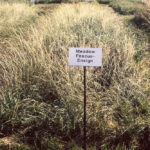
Meadow Fescue

General Description


Meadow fescue is a perennial bunch grass suited to higher precipitation areas, but lacks longevity due to poorer winter hardiness and susceptibility to heavy grazing. It is very closely related to tall fescue, and can be hard to distinguish. Generally, meadow fescue is less persistent, shorter, and finer leaved. It has the ability to cross with perennial and annual ryegrass.

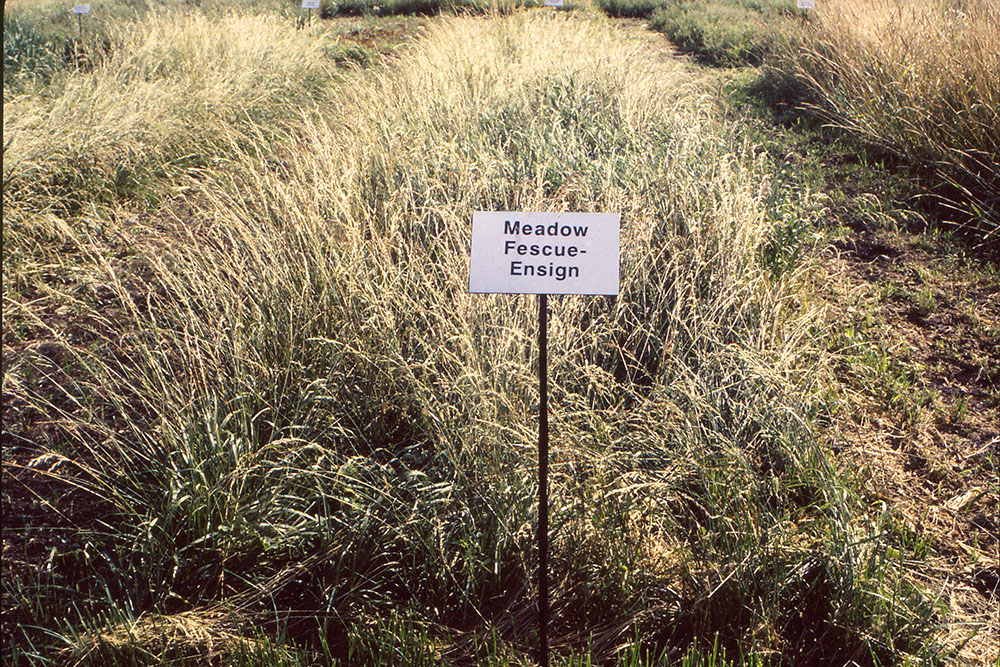
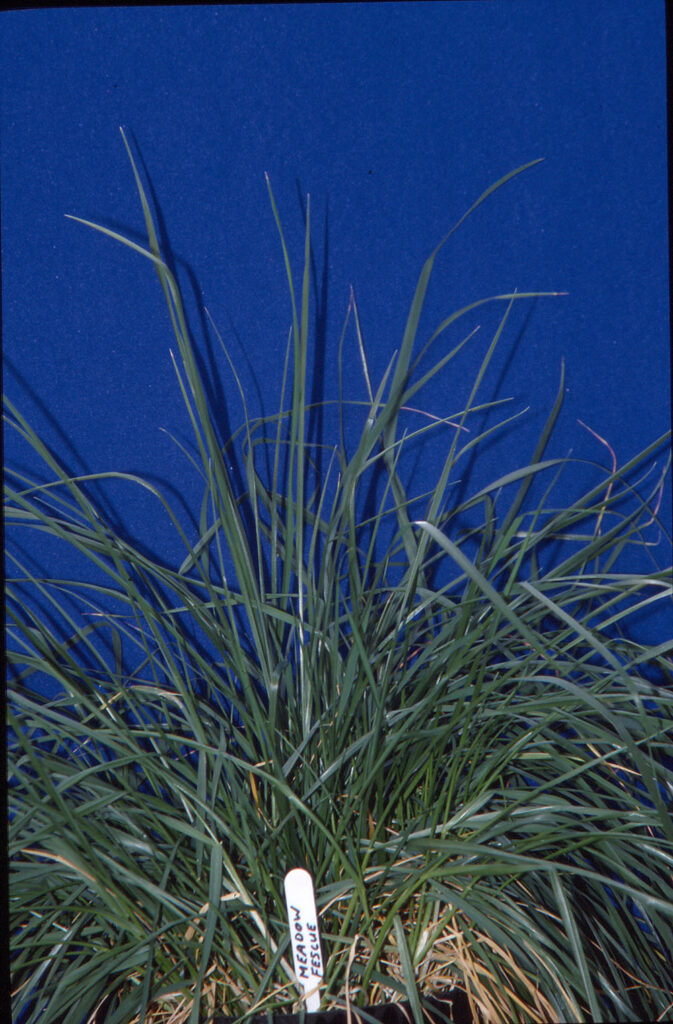
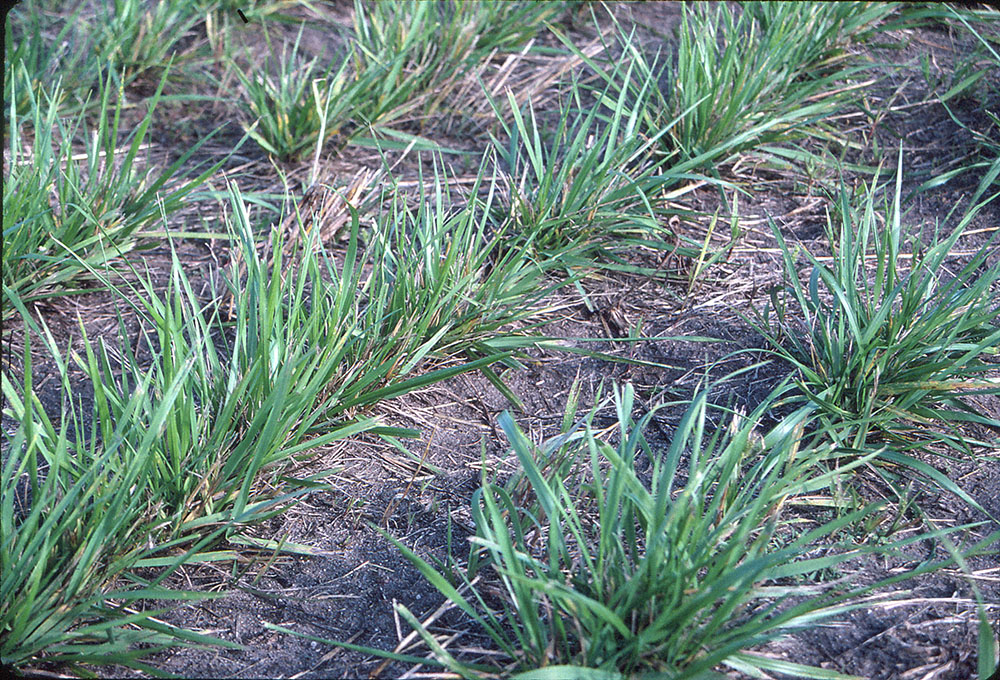
Meadow fescue has bright green leaves with narrow, long (up to 50 cm (20 in) blades and sharp-pointed tips. Meadow fescue is a bunchgrass with short rhizomes that give it a weakly creeping habit. The sheath is split with the margins overlapping at the bottom. The blade is 3-8 mm wide and 10-50 cm (4-20 in) long, the upper side is dull and the lower side shiny. The edges are rough, and the tip is sharp-pointed. The collar is broad and continuous. The auricles are 0.5-1.5 mm long and usually blunt but sometimes claw-like. The ligule is a very short membrane. The stems are round and 60-125 cm (24-50 in) tall. The inflorescence is a slender panicle. Its most distinguishing features are rough leaf edges, short ligules and claw-like auricles. Meadow fescue is a non-jointing grass.


Type

Tame grass.


Origin

Europe.


Longevity

At least 3 years.

Use

Pasture, hay, silage, stockpiled. Meadow fescue is best used as pasture as growth is mainly basal.


Optimal Time of Use

Spring, summer, fall, winter. Meadow fescue has been replaced mainly by new tall fescue varieties that have equal adaptability and more production and longevity. Hay by heading. Meadow fescue is best rotationally grazed but can be continually with care.


Recovery After Use

If hayed, meadow fescue can be grazed or stockpiled thereafter. Leave at least 10 cm (4 in) for regrowth to occur. Good for summer grazing or stockpil¬ing for fall and early winter grazing as it maintains quality well after fall frosts. 

Palatability/Nutritional Value

Meadow fescue has an average total digestible nutrient (TDN) level of 61% and crude protein level of 12.5% in the vegetative state. Meadow fescue has fair palatability. Meadow fescue remains green into the fall.

Drought Tolerance

Moderate tolerance. It is less drought tolerant than tall fescue.


Flooding Tolerance

Withstands 2-5 weeks of spring flooding. It withstands wet soils season long.


Winter Hardiness

Fair hardiness. Meadow fescue longevity is limited by winter hardiness.

Soil Texture Preference

Meadow fescue grows best on deep, fertile soils but will tolerate variable drainage and low fertility. It has a shallower root system, is shorter lived and is not as tolerant of poor conditions as tall fescue.


Erosion Control

Moderate erosion control. Can be used as an initial species in waterways or channels to prevent erosion as it does not impede water movement.


Salinity Tolerance

Moderate tolerance.


Acidity Tolerance

Moderate tolerance.


Alkalinity Tolerance

Low tolerance.

Seeds per kg

507,000 seeds/kg (230,000 seeds/lb).


Suggested Mixtures

Meadow fescue is compatible in mixes. Species include clover, alfalfa birdsfoot trefoil, timothy and bromegrasses. 


Ease of Establishment

Meadow fescue seedlings can establish well in the first season when competition is managed. It is noted to winterkill easily during the establishment year. Seed a pure stand at a rate of 20–25 kg/ha (18–22 lb/acre) and a depth of 1 cm (3/8 in). In a mixed stand, reduce the seeding rate.


Competitiveness

Meadow fescue has moderate competitive ability. Overall, its longevity is limited with cold winter conditions.


Management Considerations

Allow for adequate rest following defoliation. Cold hardiness is its major limitation. May serve well as a short rotation, good producing grass species for late season grazing.

Saskatchewan Dryland Forage Species Adaptation Tool, USDA, Manitoba Forage Adaptation and Comparison Guide, Alberta Forage Manual, OMAFRA Publication 30

Meadow fescue is adapted to warmer and more wetter areas of the Sub-Boreal Spruce, Interior Cedar-Hemlock and Sub-Boreal Pine-Spruce zones. In the southern part of the region, meadow fescue is adapted to the wetter areas of the Interior Douglas-fir zone, and to irrigated and subirrigated areas in the Bunchgrass and drier areas of the Interior Douglas-fir zone.
Meadow fescue is adapted to the wetter parts of the Interior Douglas-fir zone, the Interior Cedar-Hemlock zone, and to irrigated and subirrigated areas in the Bunchgrass and Ponderosa Pine zones, and Interior Douglas-fir zone.

Meadow fescue has some adaptive characteristics suited to the Peace-Liard region, but only fair hardiness is likely to limit its use.

Seeding Rate Calculator

Seeding Rate Calculator

Calculate the seeding
rate & seed cost

Kentucky Bluegrass

General Description

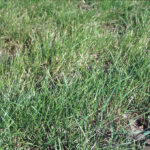
Kentucky bluegrass is a widely adapted, long-lived, persistent, low-growing perennial grass. Its roots are shallow, fibrous and concentrated near the soil surface. It eventually forms a very firm sod from the spread of slender rhizomes. Characteristics of the rhizomes vary with variety. There are numerous other bluegrass species found within western Canada.

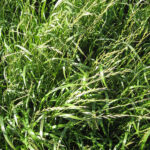
Kentucky bluegrass produces fine stems up to 75 cm (30 in) long. The leaves are basal, soft, and smooth. At the bud stage, leaf blades are folded, flat, or V-shaped, and have a boat-shaped tip. Leaf blades when flattened out are 2 to 5 mm (1/16 to 1/5 in) wide. Seed heads form on bluish-coloured triangular-shaped panicles about 5 to 10 cm (2 to 4 in) long. 


Type

Tame grass & native grass.


Origin

Kentucky bluegrass was introduced to North America from Europe, where it was known as “smooth meadow grass”. It became known as the “white man’s foot grass” to the First Nations, because it followed settlement as it moved west. Many people consider it a native species in some soil zones.


Longevity

At least 20 years.

Use

Pasture, reclamation.


Optimal Time of Use

Spring, fall. Kentucky bluegrass can be grazed continually or rotationally. Lower production in summer does not lend to optimal use in summer. Snow cover will restrict winter grazing although quality can hold.


Recovery After Use

Requires a minimum of 30 days of recovery after use. Highly resistant to grazing. Under moist conditions, recovery and regrowth after grazing are quick. Grazing Kentucky bluegrass to a height of 5 to 15 cm (2 to 6 in) helps maintain its forage quality.

Palatability/Nutritional Value

In the vegetative stage, Kentucky bluegrass is noted to have 10 to 12% protein and a TDN of about 67%. While dry in the summer palatability is lessened, but fall usage can see good palatability and nutritional quality.

Annual Precipitation min/max (mm)

350mm / 1100mm


Drought Tolerance

Moderate tolerance. Kentucky bluegrass goes dormant with no growth during periods of dryness or drought.


Flooding Tolerance

Withstands up to 2 to 5 weeks of spring flooding and waterlogged soils. Kentucky bluegrass is highly moisture dependant.


Winter Hardiness

Excellent hardiness.

Soil Texture Preference

Prefers well-drained, fertile, moist soils. Because of its need for moisture, Kentucky bluegrass often grows better on clay, silty, or peat soils, but can adapt to moist sandy soils.


Erosion Control

Moderate ability to control erosion. Forms a rhizomatous mat once established.


Salinity Tolerance

Not tolerant.


Acidity Tolerance

Moderate tolerance.


Alkalinity Tolerance

Low tolerance.

Seeds per kg

4,800,000 seeds/kg (2,177,000 seeds/lb)


Suggested Mixtures

Can be compatible with legumes such as birdsfoot trefoil, alsike clover, and white clover.


Ease of Establishment

Kentucky bluegrass easily germinates and can begin to establish, but requires good moisture to help the fine seedlings root. Rhizomes begin growing the year after establishment.


Competitiveness

Highly competitive. It is considered a minor upland invasive in the E-Flora Invasive, Noxious and Problem Plants of British Columbia 2012 Update. Its competitiveness means that it can invade pastures and native range, especially when closely grazed. It can persist in the lower part of the plant community and increases as taller species decline.


Management Considerations

Select variety based on performance traits that are desired, such as yield. Kentucky bluegrass has a high demand for moisture, nitrogen, and phosphorus. Most commonly used for turf grass in Canada. Once established, it can be difficult to remove from a stand, however that may be area dependant.

British Columbia Rangeland Seeding Manual, Saskatchewan Dryland Forage Species Adaptation Tool, USDA Plants Database, Manitoba Forage Adaptation and Comparison Guide, Alberta Forage Manual

Kentucky bluegrass is adapted to the Sub-Boreal Spruce, Interior Cedar-Hemlock and Sub-Boreal Pine-Spruce zones. In the southern part of the region it is adapted to wetter parts of the Interior Douglas-fir zone, and to irrigated and subirrigated areas in the Bunchgrass zone and drier parts of the Interior Douglas-fir zone. It will commonly occupy moist depressions in heavily grazed pastures in the drier zones.
Kentucky bluegrass is adapted to the wetter parts of the Interior Douglas-fir zone and the Interior Cedar-Hemlock zone, and to irrigated and subirrigated areas in the Bunchgrass, Ponderosa Pine zones and drier parts of the Interior Douglas-fir zone. It will commonly occupy moist depressions in heavily grazed pastures in the drier zones of the interior.
Double Cut Red Clover

General Description

Red clover is an introduced, commonly grown, shorter-lived perennial legume. Red clover needs adequate moisture in the growing season and moderate summer temperatures. It can thrive in cooler temperatures and more acidic soils than alfalfa. Single cut types, also called mammoth or late-flowering red clover, are generally hardier and most commonly grown. Double cut varieties produce multiple cuts as the name implies but lack persistence in adapted soil zones.

Each red clover crown produces many branched, hairy stems, which grow to 75 cm (30 in) in length. Leaves are made up of three hairy leaflets attached at one point and often have white “V-shaped” watermarks. Red clover produces globe-shaped, purple, cross-pollinated flowers. Once it flowers it stops growing (determinant growth) like alfalfa.


Type

Tame legume.


Origin

Europe and Turkey. Varieties such as Altaswede developed in Canada.


Longevity

Less than 5 years in the Black soil zone; however, at least 10 years is now common in rotationally grazed pastures in the Grey soil zone. Red clover crowns and roots that are close to the surface, easily damaged, and break down naturally which limits longevity.

Use

Pasture, hay, stockpiled, reclamation. Red clover can cause bloat, however, the risk of bloat is lower than for alfalfa. It is used for soil improvement in site rehabilitation in a variety of contexts.


Optimal Time of Use

Summer, fall. Delay grazing until a full canopy of leaves has developed. Delaying grazing until full bloom can prevented bloat and increased the stand persistence. Hay single cut red clover varieties at 25%+ bloom with regrowth used in fall.


Recovery After Use

Recovery after use may be varied depending on the site, moisture availability and management. Some sources indicate red clover recovers well after mid-season cutting and can be left for fall grazing. Still others advise against its use for grazing because of its inability to resist traffic from grazing animals. It is recommended to leave at least 10 cm (4 in) to allow for regrowth as recovery may depend on where the growing tip is in relation to cutting or defoliation from grazing.

Palatability/Nutritional Value

Red clover is highly palatable and may be grazed preferentially. When red clover is cut or utilized at 25% bloom, crude protein can be 19% and dry matter 65% to 70%. Weight gains on red clover are similar to gains on alfalfa.

Annual Precipitation min/max (mm)

400mm / 1600mm


Drought Tolerance

Low tolerance. Red clover is more drought tolerant than alsike clover but less than alfalfa.


Flooding Tolerance

Withstands 1 to 2 weeks of excess moisture, early in growing season; but intolerant of flooding during its actively growing period. Requires adequate moisture all season long.


Winter Hardiness

Good hardiness in single cut varieties. Fair tolerance in double cut varieties.

Soil Texture Preference

Most suited to heavier wet, fertile soils. Will grow on sandy textured soils as long as moisture is sufficient.


Erosion Control

Little ability to control erosion. Red clover has value for soil improvement in erosion control seeding and may be included in a mix.


Salinity Tolerance

Not tolerant.


Acidity Tolerance

High tolerance. Red clover can tolerate pH levels as low as 5.0 but yield is reduced significantly. Prefers pH of 6.0 to 7.0.


Alkalinity Tolerance

Moderate tolerance.

Seeds per kg

600,000 seeds/kg (272,000 seeds/lb)


Suggested Mixtures

Often grown in a mix with meadow bromegrass, timothy, smooth bromegrass, tall fescue or hybird bromegrass. Including grass in hay mixes assists with dry-down of windrows. In the Peace River Region red clover is often grown in the place of alfalfa in mixes because of its better acidity tolerance.


Ease of Establishment

Red clover is very easy to establish with moist conditions and moderate temperatures. Seedlings tend to be vigorous and shade tolerant. Use red clover the year after establishment. Red clover is successfully sod seeded.


Competitiveness

Red clover is competitive and can grow dominantly in a pasture situation for the first few years but can then decrease depending on grazing strategy. Persistence is dependent on how well the plant’s crown is maintained. Red clover is not invasive.


Management Considerations

Red clover is high in moisture and hay stands benefit from having a grass species in the mix to assist with drying-down. Short duration rotational gazing is beneficial for red clover longevity as grazing of newly emerging regrowth could be avoided. New growth is required to sustain the plant. Seed should be inoculated with Rhizobium trifolii for better nodulation and nitrogen fixing.

British Columbia Rangeland Seeding Manual, Saskatchewan Dryland Forage Species Adaptation Tool, USDA Plants Database, Manitoba Forage Adaptation and Comparison Guide, Alberta Forage Manual

Red clover is adapted to the Sub-Boreal Spruce, Sub-Boreal Pine-Spruce and Interior Cedar-Hemlock zones. It is less drought tolerant than white clover, and needs moderate temperatures. In the southern part of the Central Interior it is suited to wetter parts of the Interior Douglas-fir zone, and to irrigated and subirrigated areas in the Bunchgrass zone and dry parts of the Interior Douglas-fir zone.
Red clover is less drought tolerant than white clover, and needs moderate temperatures. This limits its suitability to the Interior Cedar-Hemlock, wetter parts of the Interior Douglas-fir zone, and to higher elevation irrigated and subirrigated areas in the Bunchgrass, Ponderosa Pine and dry Interior Douglas-fir zones.

Single Cut Red Clover

General Description

Red clover is an introduced, commonly grown, shorter-lived perennial legume. Red clover needs adequate moisture in the growing season and moderate summer temperatures. It can thrive in cooler temperatures and more acidic soils than alfalfa. Single cut types, also called mammoth or late-flowering red clover, are generally hardier and most commonly grown.  Double cut varieties produce multiple cuts as the name implies but lack persistence in adapted soil zones.

Each red clover crown produces many branched, hairy stems, which grow to 75 cm (30 in) in length. Leaves are made up of three hairy leaflets attached at one point and often have white “V-shaped” watermarks. Red clover produces globe-shaped, purple, cross-pollinated flowers. Once it flowers it stops growing (determinant growth) like alfalfa.


Type

Tame legume.


Origin

Europe and Turkey. Varieties such as Altaswede developed in Canada.


Longevity

Less than 5 years in the Black soil zone; however, at least 10 years is now common in rotationally grazed pastures in the Grey soil zone. Red clover crowns and roots that are close to the surface, easily damaged, and break down naturally which limits longevity.

Use

Pasture, hay, stockpiled, reclamation. Red clover can cause bloat, however, the risk of bloat is lower than for alfalfa. It is used for soil improvement in site rehabilitation in a variety of contexts.


Optimal Time of Use

Summer, fall. Delay grazing until a full canopy of leaves has developed. Delaying grazing until full bloom can prevented bloat and increased the stand persistence. Hay single cut red clover varieties at 25%+ bloom with regrowth used in fall.


Recovery After Use

Recovery after use may be varied depending on the site, moisture availability and management. Some sources indicate red clover recovers well after mid-season cutting and can be left for fall grazing. Other sources say using red clover twice a season can reduce longevity. Still others advise against its use for grazing because of its inability to resist traffic from grazing animals. It is recommended to leave at least 10 cm (4 in) to allow for regrowth as recovery may depend on where the growing tip is in relation to cutting or defoliation from grazing.

Palatability/Nutritional Value

Red clover is highly palatable and may be grazed preferentially. When red clover is cut or utilized at 25% bloom, crude protein can be 19% and dry matter 65% to 70%. Weight gains on red clover are similar to gains on alfalfa.

Annual Precipitation min/max (mm)

400mm / 1600mm.


Drought Tolerance

Low tolerance. Red clover is more drought tolerant than alsike clover but less than alfalfa.


Flooding Tolerance

Withstands 1 to 2 weeks of excess moisture, early in growing season; but intolerant of flooding during its actively growing period. Requires adequate moisture all season long.


Winter Hardiness

Good hardiness in single cut varieties. Fair tolerance in double cut varieties.

Soil Texture Preference

Most suited to heavier wet, fertile soils. Will grow on sandy textured soils as long as moisture is sufficient.


Erosion Control

Little ability to control erosion. Red clover has value for soil improvement in erosion control seeding and may be included in a mix.


Salinity Tolerance

Not tolerant.


Acidity Tolerance

High tolerance. Red clover can tolerate pH levels as low as 5.0 but yield is reduced significantly. Prefers pH of 6.0 to 7.0.


Alkalinity Tolerance

Moderate tolerance.

Seeds per kg

600,000 seeds/kg (272,000 seeds/lb).


Suggested Mixtures

Often grown in a mix with meadow bromegrass, timothy, smooth bromegrass, tall fescue or hybird bromegrass. Including grass in hay mixes assists with dry-down of windrows. In the Peace River Region red clover is often grown in the place of alfalfa in mixes because of its better acidity tolerance.


Ease of Establishment

Red clover is very easy to establish with moist conditions and moderate temperatures. Seedlings tend to be vigorous and shade tolerant. Use red clover the year after establishment. Red clover is successfully sod seeded.


Competitiveness

Red clover is competitive and can grow dominantly in a pasture situation for the first few years but can then decrease depending on grazing strategy. Persistence is dependent on how well the plant’s crown is maintained. Red clover is not invasive.


Management Considerations

Red clover is high in moisture and hay stands benefit from having a grass species in the mix to assist with drying-down. Short duration rotational gazing is beneficial for red clover longevity as grazing of newly emerging regrowth could be avoided. New growth is required to sustain the plant. Seed should be inoculated with Rhizobium trifolii for better nodulation and nitrogen fixing.

British Columbia Rangeland Seeding Manual, Saskatchewan Dryland Forage Species Adaptation Tool, USDA Plants Database, Manitoba Forage Adaptation and Comparison Guide, Alberta Forage Manual

Red clover is adapted to the Sub-Boreal Spruce, Sub-Boreal Pine-Spruce and Interior Cedar-Hemlock zones. It is less drought tolerant than white clover, and needs moderate temperatures. In the southern part of the Central Interior it is suited to wetter parts of the Interior Douglas-fir zone, and to irrigated and subirrigated areas in the Bunchgrass zone and dry parts of the Interior Douglas-fir zone.
Red clover is less drought tolerant than white clover, and needs moderate temperatures. This limits its suitability to the Interior Cedar-Hemlock, wetter parts of the Interior Douglas-fir zone, and to higher elevation irrigated and subirrigated areas in the Bunchgrass, Ponderosa Pine and dry Interior Douglas-fir zones.

Fodder Galega

General Description

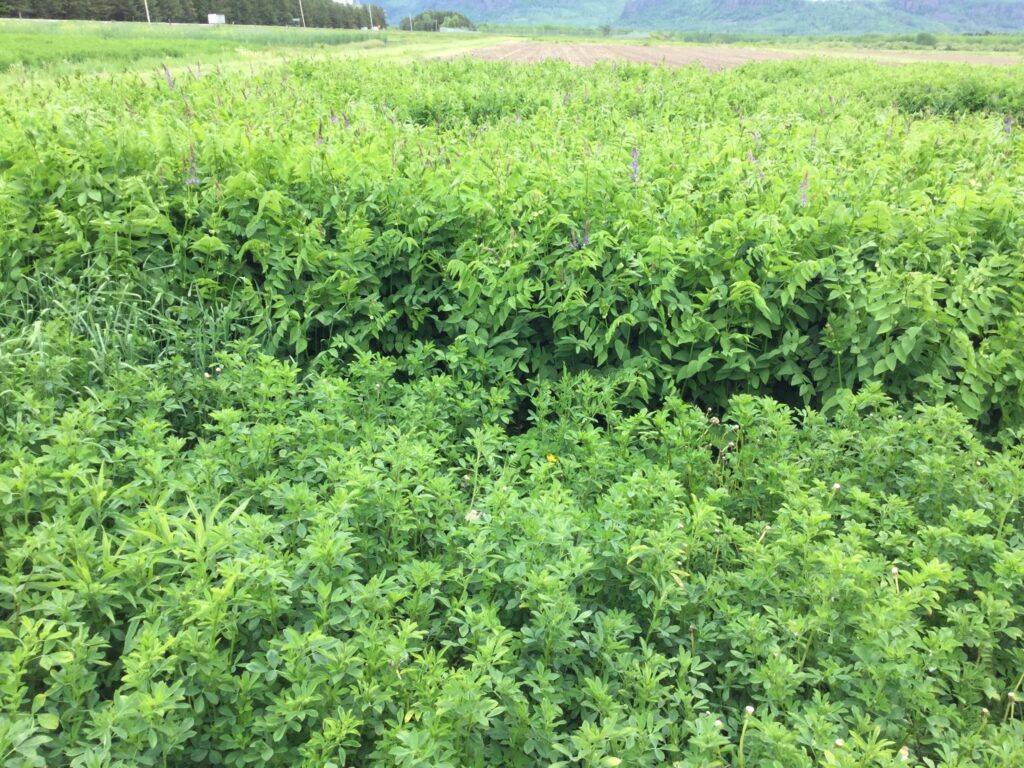
Fodder galega (pronounced guh-LAY-guh) is a perennial legume. It is winter hardy and tolerant of acidic soils. It can persist for over ten years.

Fodder galega has a large root system. It has a taproot and can spread by underground runners (rhizomes) or reproduce by seed. Galega can grow up to 150 cm (60 in) tall. Primary stems bend at the nodes. Leaves are broader than alfalfa, compound and set on stems. Flowers are purple-blue and grow in an elongated bunch. Five to eight seeds develop per pod, and seeds are kidney shaped.

Do not confuse fodder galega with its close relative goat’s rue (Galega officinalis). Goat’s rue is poisonous to ruminants.


Type

Tame legume.


Origin

Native to the Caucasus region of Europe and Asia (Armenia, Georgia, Azerbaijan, and southern Russia).


Longevity

3-10 years. Galega is slow to establish, so is not recommended for fast rotations where it will be grown for less than three years.

Use

Hay, silage.


Optimal Time of Use

Spring, summer, fall. Fodder galega matures about two weeks earlier than alfalfa or red clover.


Recovery After Use

Fodder galega is suitable for up to two cuts per year. European researchers taking three cuts sometimes report reduced yield.

Expected averages

6.9 tonnes DM/ha (average of Truro, Charlottetown & St. John’s, Fairey et al 2000).

Expected averages

9.7 tonnes DM/ha (Ste Foy, Fairey et al 2000).

Expected averages

Not recommended due to summerkill (Elora, personal communication).

Expected averages

8 tonnes DM/ha.

Expected averages

No yield data available. (Emo, personal communication).

Yield

Note that all yield data is from inoculated plots. Without Rhizobium galegae inoculant, galega yields are approximately half those of inoculated stands.

The long-term fodder galega plots (established 2011) at Lakehead University Agriculture Research Station show that production declines over time, with strong yields for the first 5 production years. Yield dropped by about half in the sixth year and stabilized again for production years 6-10.


Palatability/Nutritional Value

Very palatable to ruminants. Feed value similar to alfalfa or red clover.

Annual Precipitation min/max (mm)

Trials across Canada suggest that galega may not be productive in the semi-arid climate of the central prairies. 500mm / 1550mm


Drought Tolerance

Good drought tolerance.


Flooding Tolerance

Somewhat tolerant of flooding, but does not tolerate waterlogged soils.


Winter Hardiness

Very winter hardy. European research suggests that fodder galega varieties will tolerate air temperatures as low as -20C without snow cover, and -40C when the crowns are insulated by snow.

Soil Texture Preference

Adapted to moist soils of any texture.


Erosion Control

Fodder galega is sometimes used in eastern Europe to protect fallow fields that will be out of production for a few years. However, it is slow to establish, so may not be suited to soils at high risk of erosion.


Salinity Tolerance

Unknown.


Acidity Tolerance

Tolerant of acidic soils above pH 4.5. Grow best in pH above 6.0.


Alkalinity Tolerance

Up to pH 7.5.

Seeds per kg

111,000 to 181,800 seeds/kg (50,455 to 82,635 seeds/lb)


Suggested Mixtures

Canadian trials have been on pure stands only. Fodder galega does not compete well in the establishment year. Researchers in Estonia have had success seeding galega with timothy or smooth bromegrass.


Ease of Establishment

Galega seedlings grow slowly initially, so do not use a companion crop. Weed management ahead of seeding is essential for successful establishment. Early seeding improves yields. Seed as soon as soil conditions are fit to carry equipment in the spring. Seed at a rate of 25-35 kg/ha (22.5-31.5 lb/acre) and 1-2 cm (1/2 to 3/4 in) deep.


Competitiveness

Poor competitor in the establishment year. Once established, galega’s ability to spread by rhizomes helps maintain a thick stand.


Management Considerations

Fodder galega requires its own specific Rhizobium galegae inoculant to fix nitrogen, which is not available in Canada at the time of the eastern Canadian Forage U-Pick release. Some European researchers also recommend scarifying the seeds to improve germination.

Fairey, N.A., L.P. Lefkovitch, B.E. Coulman, D.T. Fairey, T. Kunelius, D.B. McKenzie, R. Michaud, and W.G.Thomas (2000). Cross-Canada comparison of the productivity of fodder galega (Galega orientalis Lam.) with traditional herbage legumes. Canadian Journal of Plant Science. 80:793-800.

Lattemae, P., H. Meripold, U. Tamm, and S. Tamm. (2013). The effect of different fodder galega-grass mixtures and nitrogen fertilization on forage yield and chemical composition. Grassland Science in Europe. 18:168-170.

Sahota, T.S. Annual reports from 2016 to 2021 for the Thunder Bay Agricultural Research Station/Lakehead University Agricultural Research Station.

Varis, E. 1986. Goat’s rue (Galega orientalisLam.), a potential pasture legume for temperate conditions. Journal of Agricultural Science in Finland. 58:83-101.

Zarczynski, P.J., S. Sienkiewicz, J. Wierzbowska, and S.J. Krzebietke (2021). Fodder galega – a versatile plant. Agronomy. 11:1797-1809.

NA

Seeding Rate Calculator

Seeding Rate Calculator

Calculate the seeding
rate & seed cost

Ribwort Plantain

General Description

Perennial plant with an upright habit of the Plantaginaceae family.

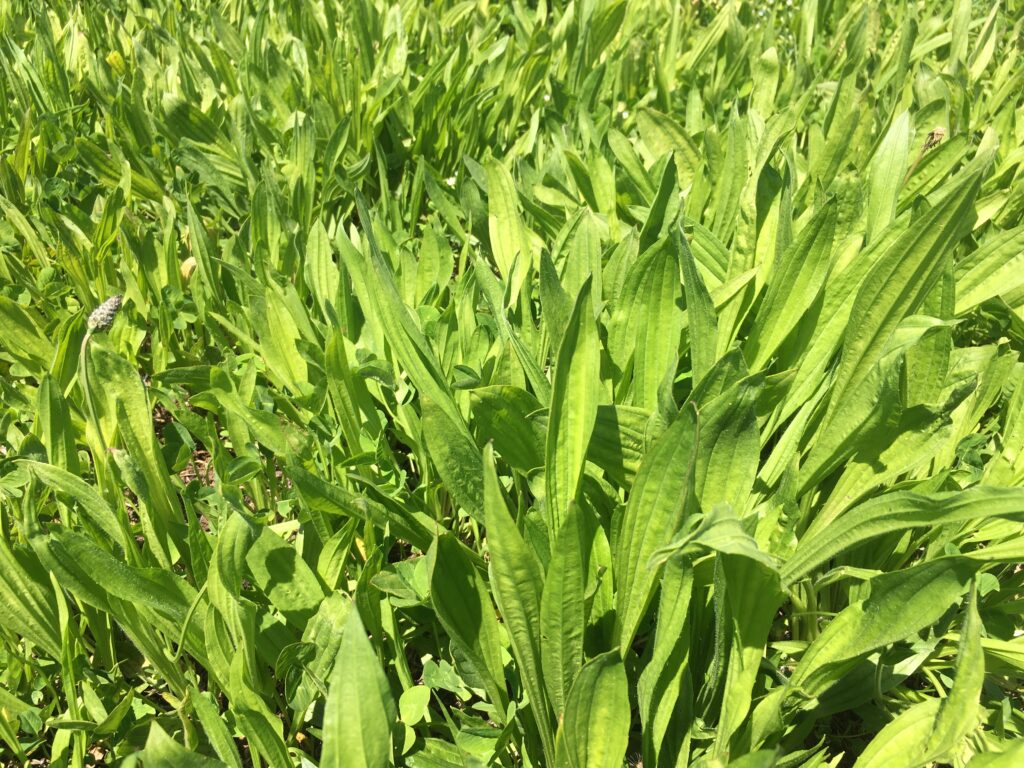
The leaves are located at the base of the plants and form a rosette. The blade is lanceolate and has 3 to 7 longitudinal veins. It is furnished with a few long hairs and is green in colour, but rather purplish at the base. The stem measuring 15 to 50 cm is pubescent, hollow, unbranched and grooved. The inflorescence is a cylindrical spike 2-8 cm long, formed by flowers of white color with long stamens, at the end of a long stalk. Ribwort plantain has both a taproot and a very dense fasciculate root system.


Type

Forbs (non-graminoid herbaceous plants).


Origin

Eurasia.


Longevity

3 years.

Use

Pasture.


Optimal Time of Use

Ribwort plantain has a good recovery.


Recovery After Use

Tolerates overgrazing.

Yield

Generally gives less yield than grasses.


Palatability/Nutritional Value

Ribwort plantain contains condensed tannins which reduce the risk of bloat and gastrointestinal parasitism. Rich in sugars, minerals and proteins, lanceolate plantain is very palatable.

Annual Precipitation min/max (mm)

N/A


Drought Tolerance

Good resistance to heat and drought, but performs better in cool climates.


Flooding Tolerance

Sensitive to poor drainage.


Winter Hardiness

Moderate. More resistant to winter conditions when sown in a multi-species mixture.

Soil Texture Preference

Tolerates heavy soils.


Erosion Control

Moderate.


Salinity Tolerance

Moderate.


Acidity Tolerance

Moderate. Tolerates slightly acidic or calcareous soils (pH 5.5 to 8.0).


Alkalinity Tolerance

Moderate.

Seeds per kg

440,000 seeds/kg (968,000 seeds/lb)


Suggested Mixtures

It is recommended to always sow plantain in association with at least one legume, such as white clover or red clover, and ideally in a multispecies mix also including grasses and/or other forbs. Although it does not give the highest yields, plantain is present in multi-species mixes and helps to control weeds


Ease of Establishment

Easy. It establishes quickly.


Competitiveness

Uncompetitive.


Management Considerations

Tolerates overgrazing.

Guide des plantes fourragères, CRAAQ, 2022 (in press).

NA

Seeding Rate Calculator

Seeding Rate Calculator

Calculate the seeding
rate & seed cost

Chicory

General Description

Chicory is a warm-climate perennial plant of the Asteraceae family. It is a non-legume species.

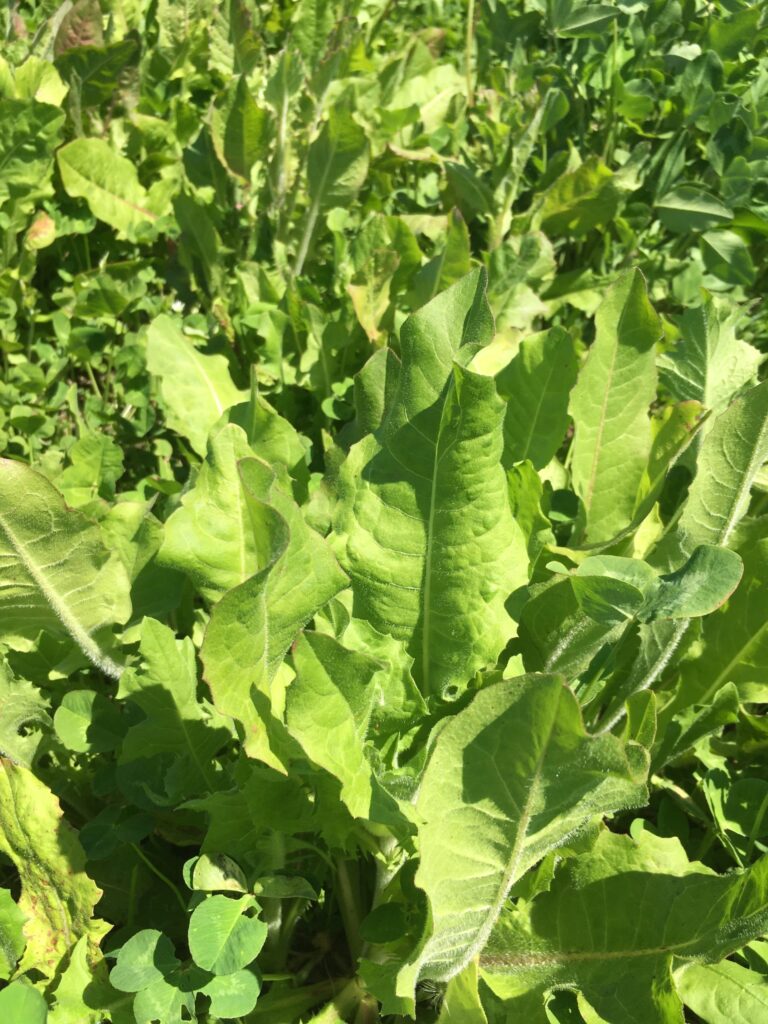
Chicory produces a rosette of basal leaves the first year, then an erect stem the second year which can then flower. The leaves are mostly located at the base of the plants. The blade is pubescent, very wide, lanceolate, toothed or lobed and green in colour. The single stem measuring 40 to 100 cm is hollow, green to reddish brown and pubescent at the base. The inflorescence is a capitulum formed of ligulate flowers of blue color, rarely white or pink, of 3 cm at the end of the stem or in the axils. Chicory has a deep, branching taproot.


Type

Forbs (non-graminoid herbaceous plants).


Origin

Central Europe.


Longevity

3 years.

Use

Pasture. Once well established, it resists trampling well. It is difficult to dry because it has a high moisture content. Used in rotations, chicory improves soil structure and aeration.

Pasture. This species is especially interesting in pasture. Once well established, it resists trampling well. It is difficult to dry because it is rich in water. Used in rotations, chicory improves soil structure and aeration. 


Optimal Time of Use

Spring, summer, autumn.


Recovery After Use

Must be cut or grazed frequently to avoid the development of less palatable stems. Not resistant to overgrazing. 

Yield

Chicory has good productivity, although lower than that of alfalfa or red clover.


Palatability/Nutritional Value

Chicory contains sesquiterpene lactones which reduce the risk of bloat and gastrointestinal parasitism. It is rich in water, therefore very tasty. Its nutritional value is excellent due to its low fibre content and high content of sugars, proteins and minerals.

All parts of the plant secrete a bitter milky substance which can negatively affect consumption when in too high a concentration. The content of this substance varies according to growing conditions and cultivar. Few cultivars are currently available on the market.

Annual Precipitation min/max (mm)

N/A


Drought Tolerance

High tolerance to dryness thanks to its deep taproot.


Flooding Tolerance

Sensitive to poor drainage.


Winter Hardiness

Good.

Soil Texture Preference

It grows well on well-drained soils of medium to high fertility and performs less well in heavy soil.


Erosion Control

Poor in pure stand, but good if chicory is sown in mixture with grasses and legumes.


Salinity Tolerance

Good.


Acidity Tolerance

Moderate. Tolerates slightly acidic or calcareous soils (pH 5.5 to 8.0).


Alkalinity Tolerance

Moderate.

Seeds per kg

935,000 seeds/kg (2,057,000 seeds/lb)


Suggested Mixtures

It is not advisable to use chicory in pure culture. Sown in association with legumes and/or grasses, or even with plantain, chicory contributes very well to the yield of the mixture for two years of production following establishment.


Ease of Establishment

Easy.


Competitiveness

Uncompetitive.


Management Considerations

It must be managed intensively to avoid the development of less palatable stems, but it is not resistant to overgrazing.

Guide des plantes fourragères, CRAAQ, 2022 (in press).

NA

Seeding Rate Calculator

Seeding Rate Calculator

Calculate the seeding
rate & seed cost

Timothy

General Description

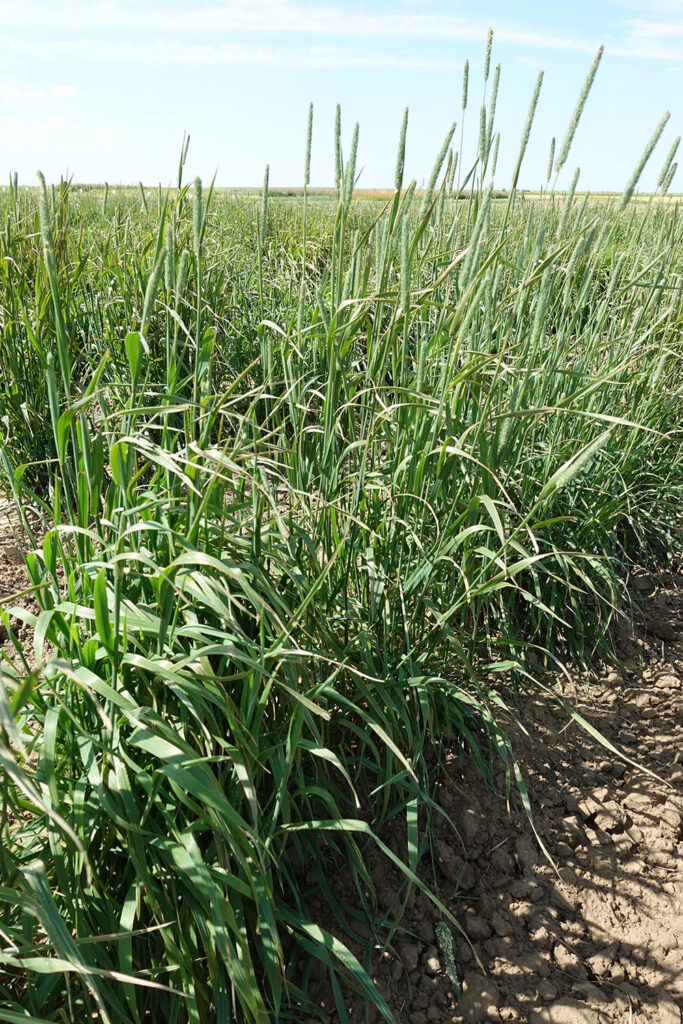
Timothy is a widely adapted, cool season perennial bunchgrass. It is best adapted to cooler, higher rainfall regions or wetter areas. It is considered hardy and reliable, but does not tolerate drought well. Timothy persists in a stand long-term through self seeding and seedling establishment. 

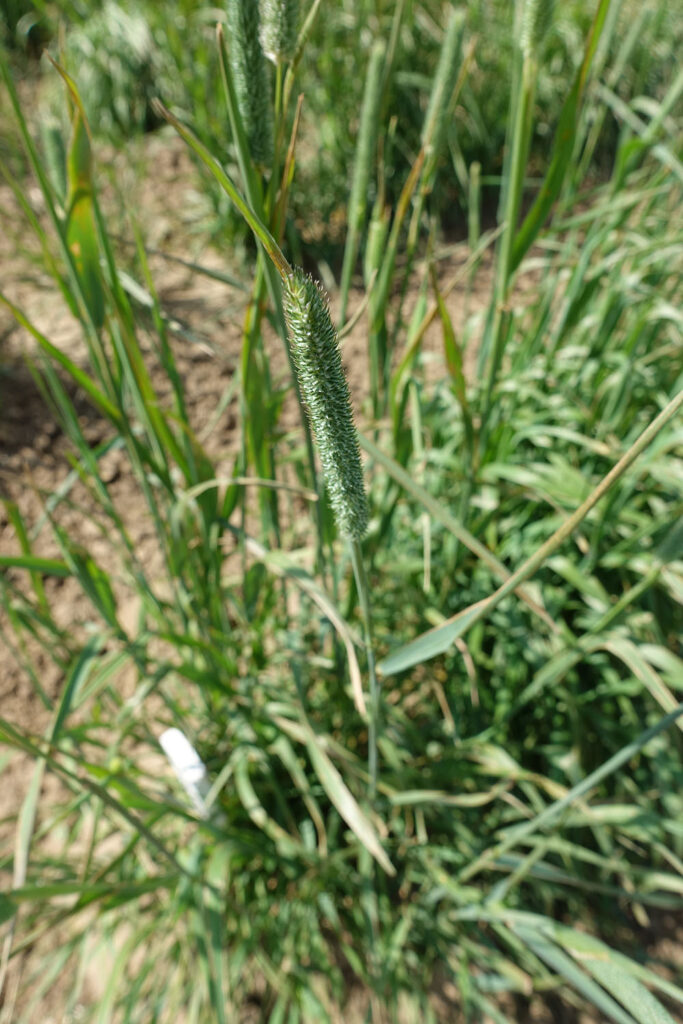
Timothy roots are wide spreading, shallow and fibrous with heaviest concentration of roots within top 7.5 cm (3 in) of soil. Swollen bulbs or corms develop just below the surface and store nutrients for winter survival and regrowth after cutting or grazing. Timothy has strong tall stems up to 120 cm (47 in) tall. Leaves are hairless and rolled during the bud stage. They are relatively wide, up to 12 mm, and flat. The seed head is a spike of densely packed, bristle-like spikelets, each producing a tiny, dark brown seed. 


Type

Tame grass.


Origin

Europe. Most varieties used in Canada come from American breeders.


Longevity

At least 5 years to 10 years depending on the location and management. Within the Peace River Region, timothy is considered a very long-lived grass with stands 20 years old.

10+ years depending on the location and management.

Use

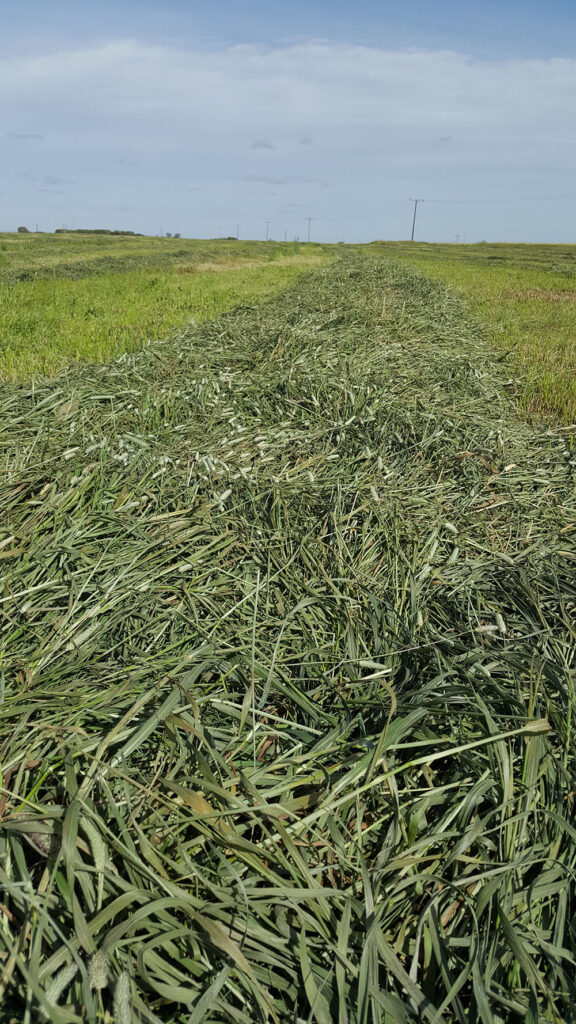
Pasture, hay. In the Peace River Region timothy is also used for stockpiled grazing due to its high adaptability in the region. There is a select timothy hay export and pet food market that continues to grow.

Pasture, hay, silage, stockpiled grazing. There is a select timothy hay export and pet food market that continues to grow.


Optimal Time of Use

Summer; some fall use soil zone dependant. Hay the first cut between the headed and blooming. Second cut of a lower yield may be taken or regrowth may be grazed. Timothy is often grazed early in summer for most livestock but graze after stem elongation. Growth slows later in the summer but can be lightly re-grazed. Once the plant is dormant, timothy stands can be grazed in late fall and winter, but it does not hold its feed quality.


Recovery After Use

Requires a minimum 60-80 days of recovery after use. Timothy responds best to a full season of rest in the black soil zone (used once). Leave at least 10 cm (4 in) of grassy residue to aid in regrowth. Timothy regrows slowly if cut or grazed in late summer. Because timothy is not sod producing, it is intolerant of grazing hoof damage. Fall grazing should be light as nutrient reserves are accumulated in the corms (root bulbs) for winter.

Leave at least 10 cm (4 in) of grassy residue to aid in regrowth. Timothy regrows slowly if cut or grazed in late summer. Because timothy is not sod producing, it is intolerant of grazing hoof damage. Fall grazing should be light as nutrient reserves are accumulated in the corms (root bulbs) for winter.

Palatability/Nutritional Value

If used early in the season before flowering, timothy has good quality, 11% crude protein, and 61% digestibility. Timothy pasture is very palatable in the vegetative stage. At later growth stages, quality and nutritional value decline rapidly. Overall, a highly palatable and preferred species for cattle and horses.

Annual Precipitation min/max (mm)

400mm / 1650mm


Drought Tolerance

Generally poor drought tolerance. Although some varieties have some drought hardiness, most timothy cannot tolerate short periods of moisture stress.


Flooding Tolerance

Withstands 2-5 weeks of spring flooding. There are differing views in the literature on its tolerance to flooding later in the growing season. Timothy does grow well on moister soils.


Winter Hardiness

Good to excellent tolerance. Winter hardiness is enhanced with adequate snow cover.

Soil Texture Preference

Timothy is well adapted for all soil textures when moisture is plentiful (Grey or Black soils).


Erosion Control

Moderate erosion control. Timothy is noted for use in wetland upland areas when seeded with other species.


Salinity Tolerance

Not tolerant.


Acidity Tolerance

High tolerance. Timothy tolerates soil pH as low as 4.5.


Alkalinity Tolerance

Low tolerance.

Seeds per kg

2,564,000 seeds/kg (1,163,000 seeds/lb)


Suggested Mixtures

Timothy is often grown as a pure stand for premium hay. It can be seeded in a mix with legumes such as alfalfa, alsike clover, red clover or birdsfoot trefoil. In the Peace River Region, timothy is usually include it in most mixes at 5-10% as it establishes very well in the low wet spots of the field.

Timothy is often grown as a pure stand for premium hay. It can be seeded in a mix with legumes such as alfalfa, alsike clover, red clover or birdsfoot trefoil.


Ease of Establishment

The small seeds of timothy must be seeded shallow for establishment. Timothy is relatively easy to establish early in the spring. Heat and drought will cause seedlings to die.


Competitiveness

Poor to moderate competitiveness while establishing so weeds must be managed. Timothy has moderate competitiveness once established. Timothy can co-exist with native species where it is well adapted, but it generally is not considered invasive.


Management Considerations

Drought tolerance is the major limitation with timothy. Timothy responds positively to fertilization. Allow timothy to drop seed occassionally to increase stand longevity. Timothy is best rotationally grazed but can be difficult to manage to not graze too early or during stem elongation and to consider that regrowth potential is low.

British Columbia Rangeland Seeding Manual, Saskatchewan Dryland Forage Species Adaptation Tool, USDA Plants Database, Manitoba Forage Adaptation and Comparison Guide, Alberta Forage Manual, Publication 30-OMAFRA

Timothy is adapted to the Sub-Boreal Spruce, Sub-Boreal Pine-Spruce and Interior Cedar-Hemlock zones. In the southern part of the Central Interior region, it is adapted to wetter parts of the Interior Douglas-fir zone and to irrigated and subirrigated areas in the Bunchgrass zone and drier parts of the Interior Douglas-fir zone.

Timothy is adapted to the wetter parts of the Interior Douglas-fir zone and the Interior Cedar-Hemlock zone, and to irrigated and subirrigated areas in the Bunchgrass, Ponderosa Pine zones and drier parts of the Interior Douglas-fir zone.

Some timothy stands managed for seed production in the Peace-Liard region have been established for 18 years or more.