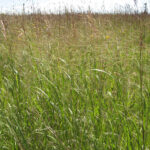
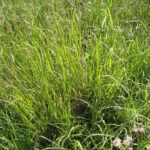
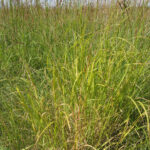
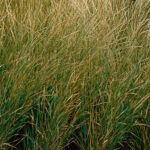
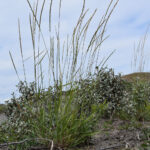
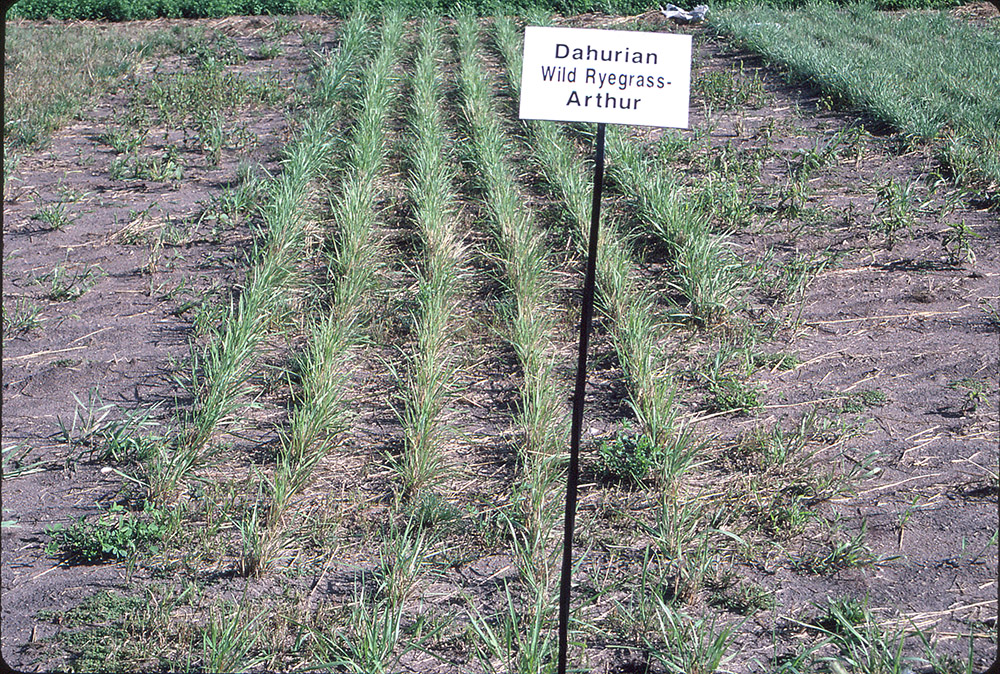
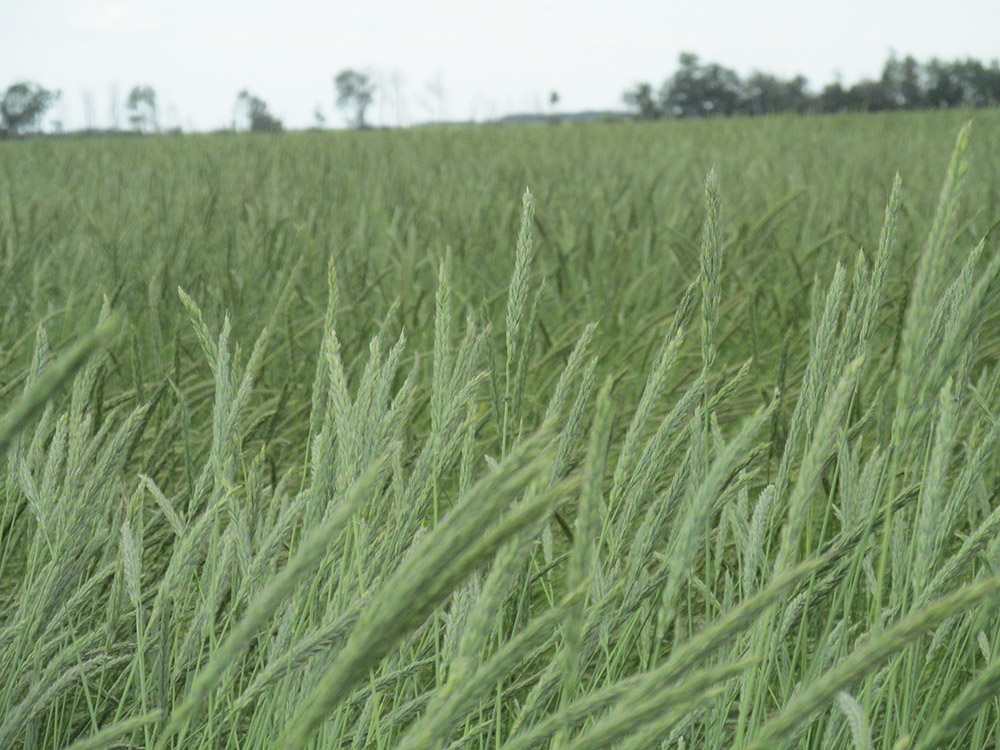
Timothy

General Description

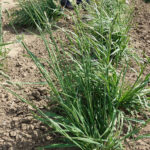
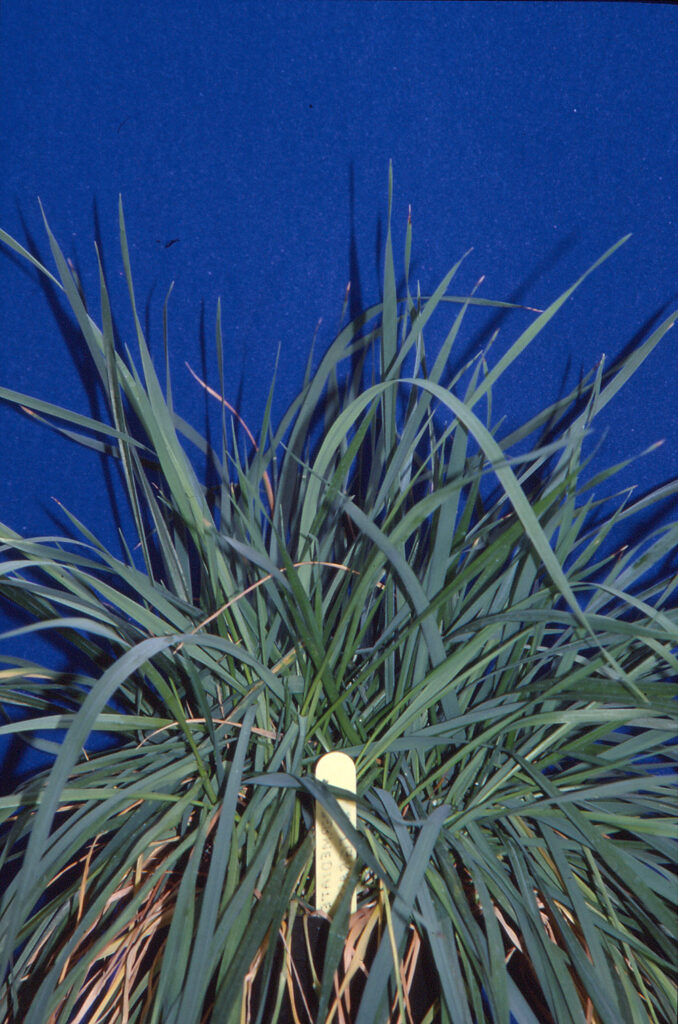
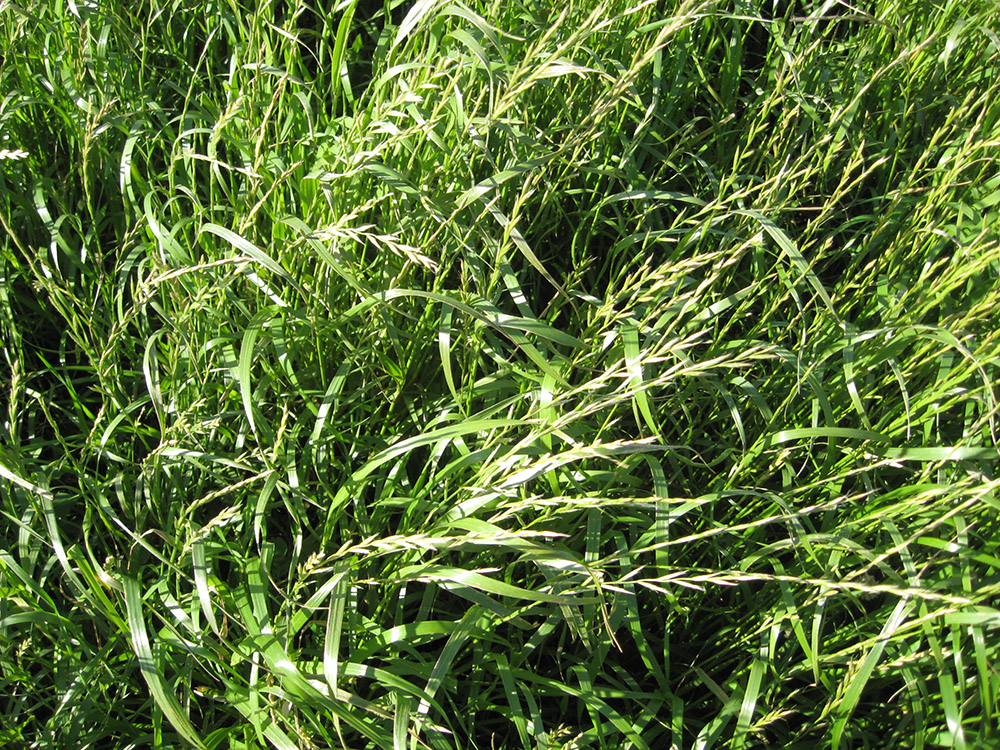
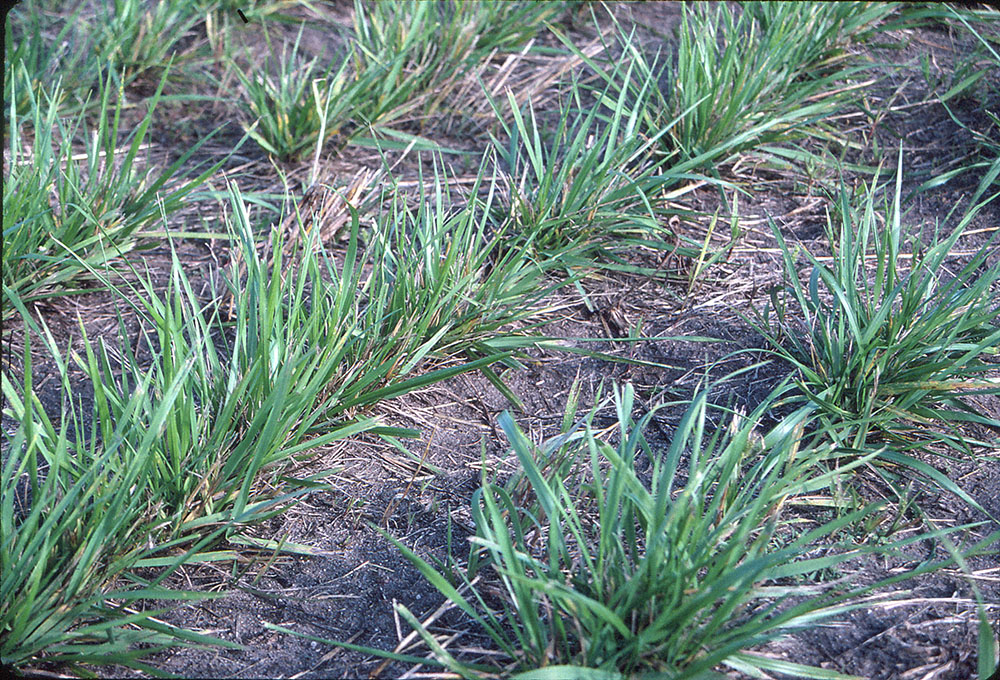
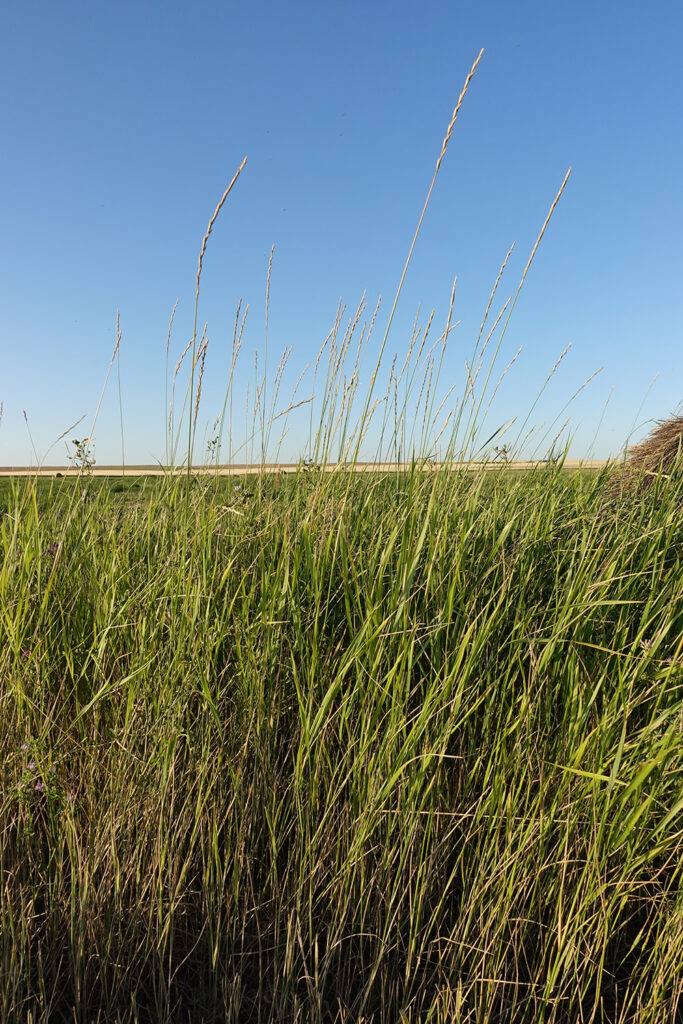
Timothy is a widely adapted, cool season perennial bunchgrass. It is best adapted to cooler, higher rainfall regions or wetter areas. It is considered hardy and reliable, but does not tolerate drought well. Timothy persists in a stand long-term through self seeding and seedling establishment. 

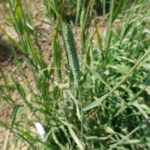
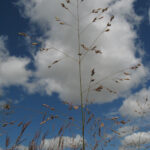
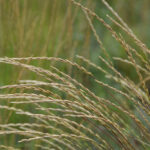
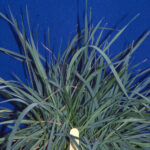
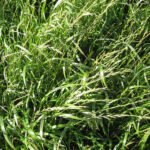
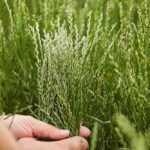
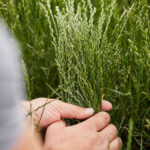
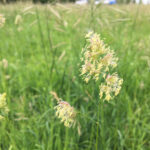
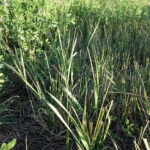
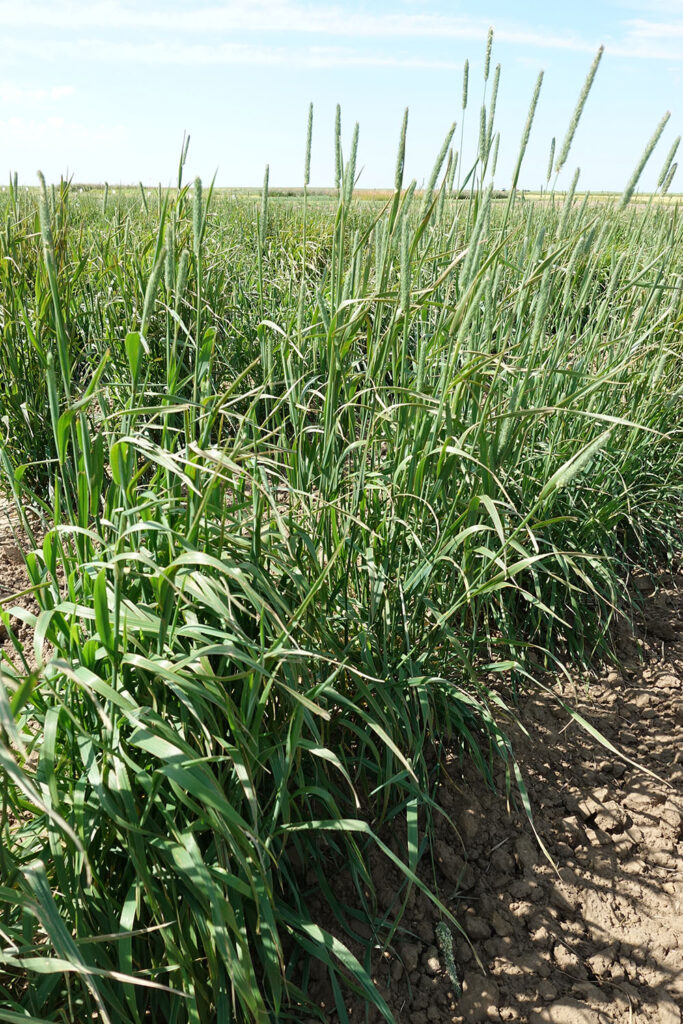
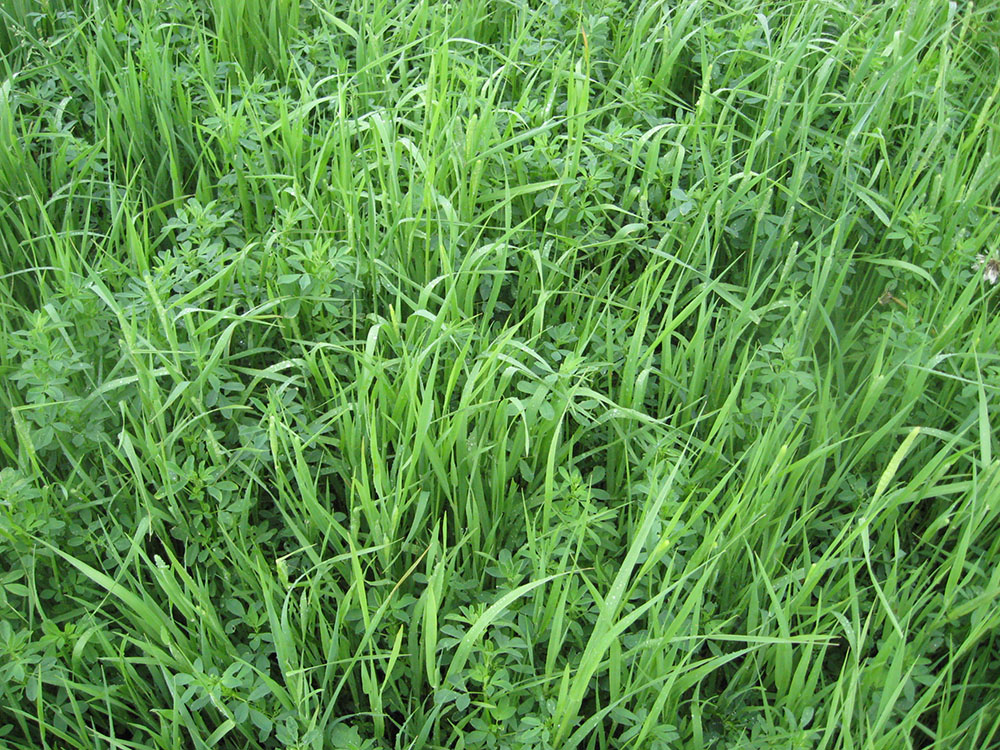
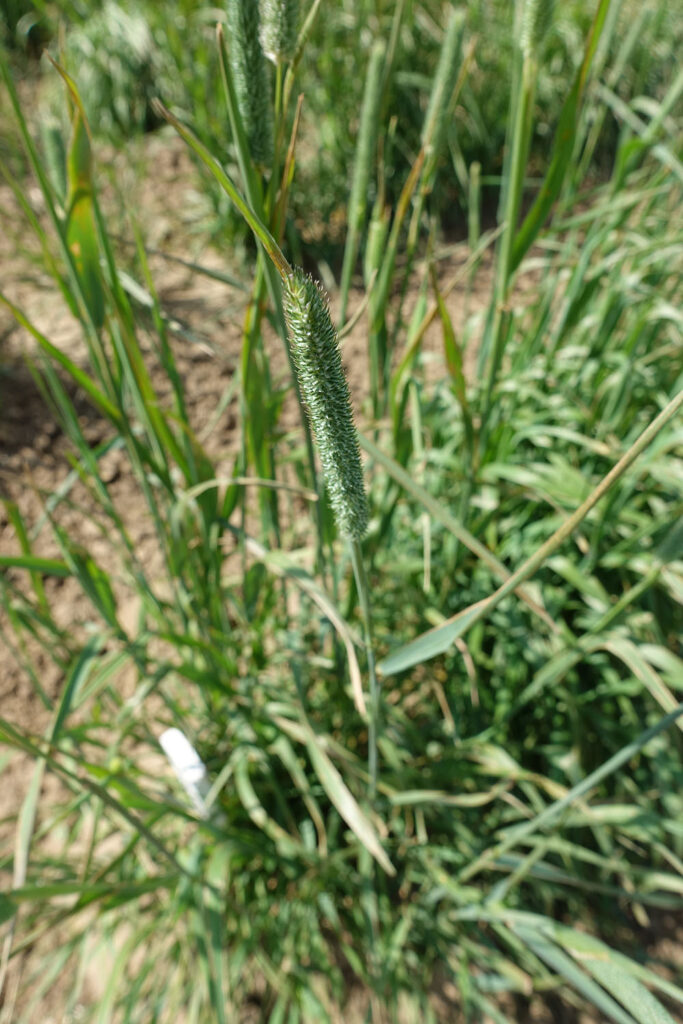
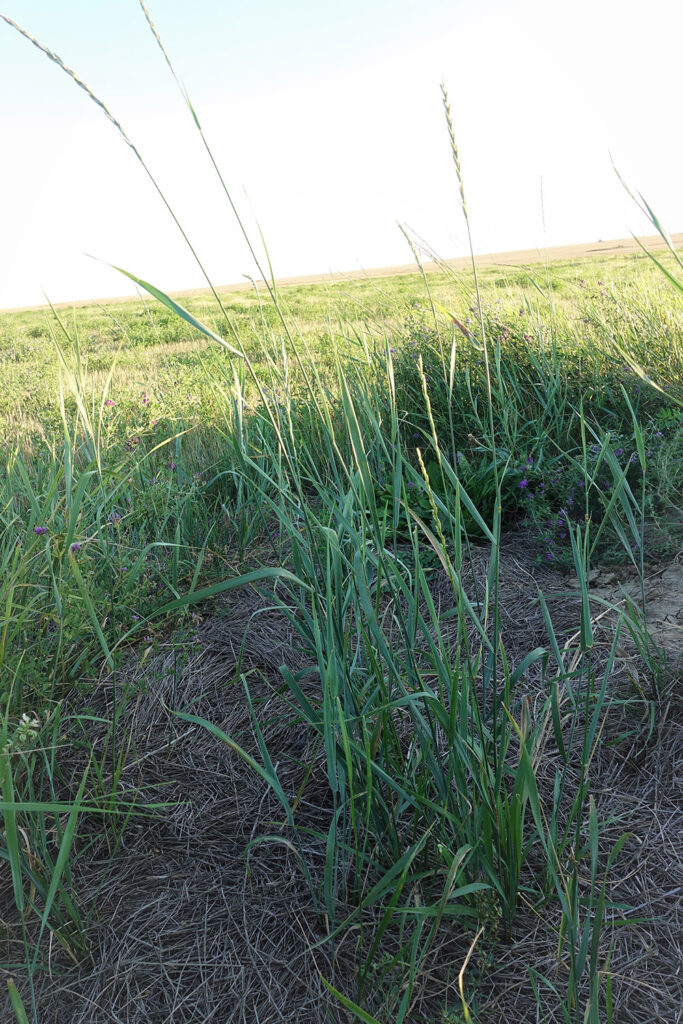
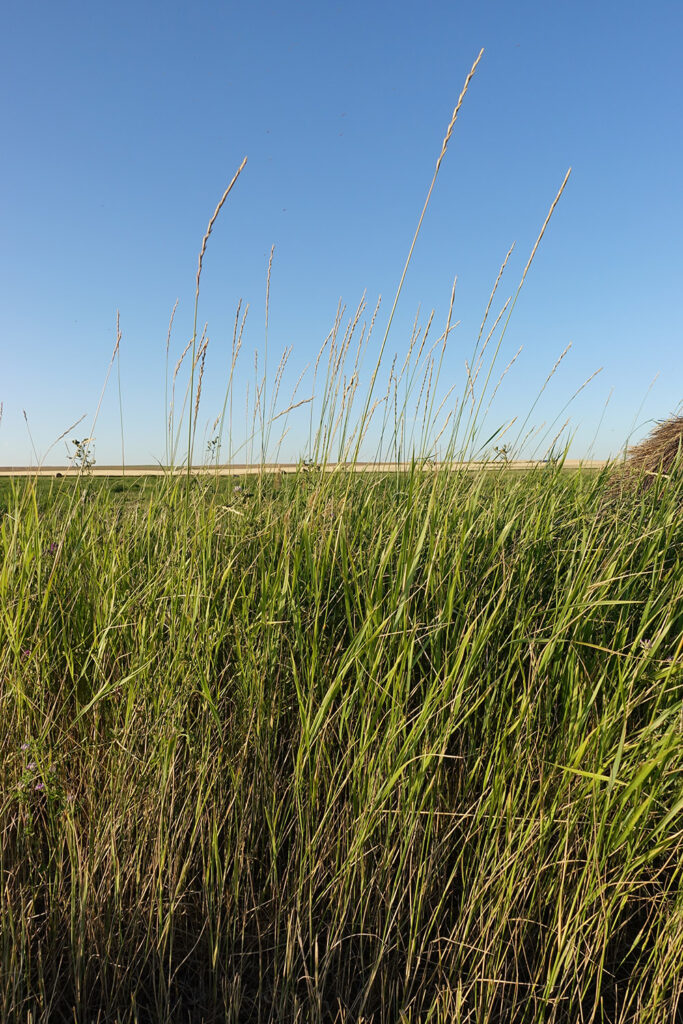
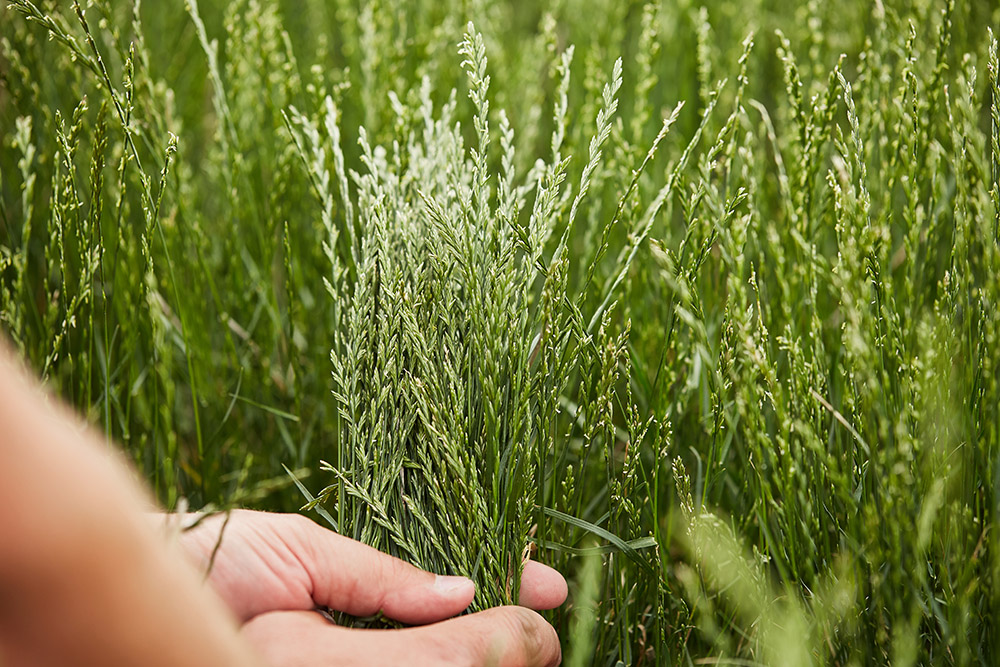
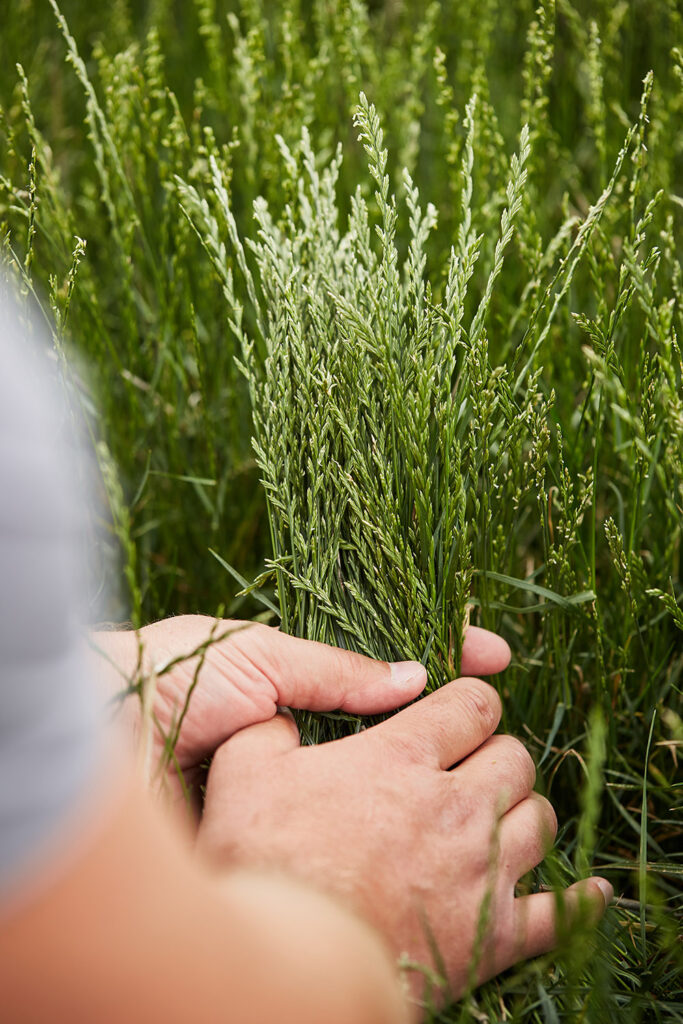
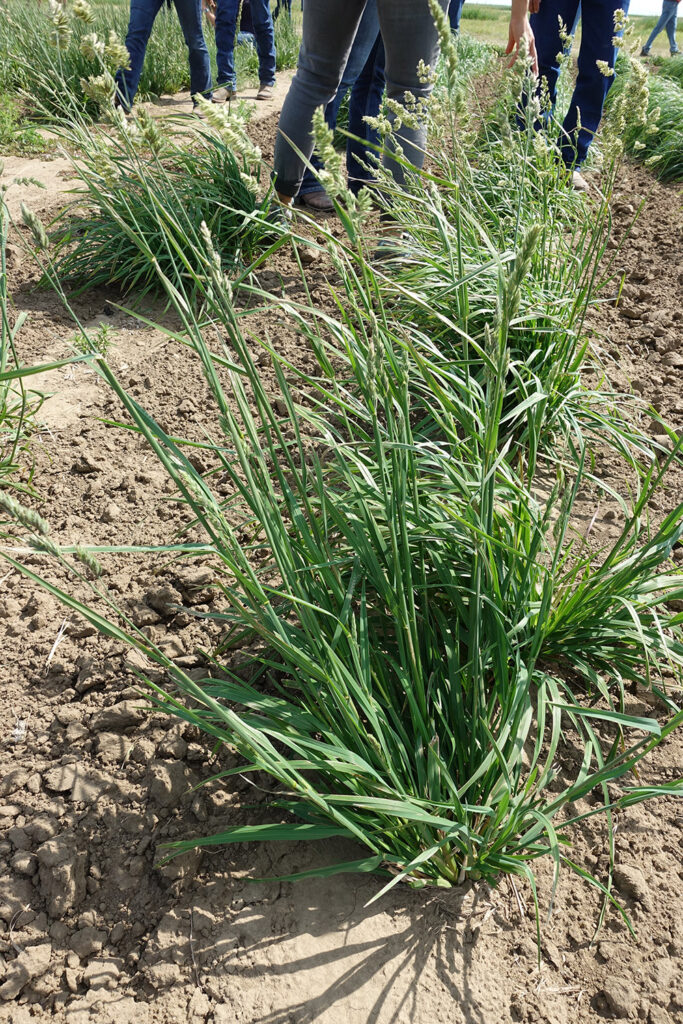
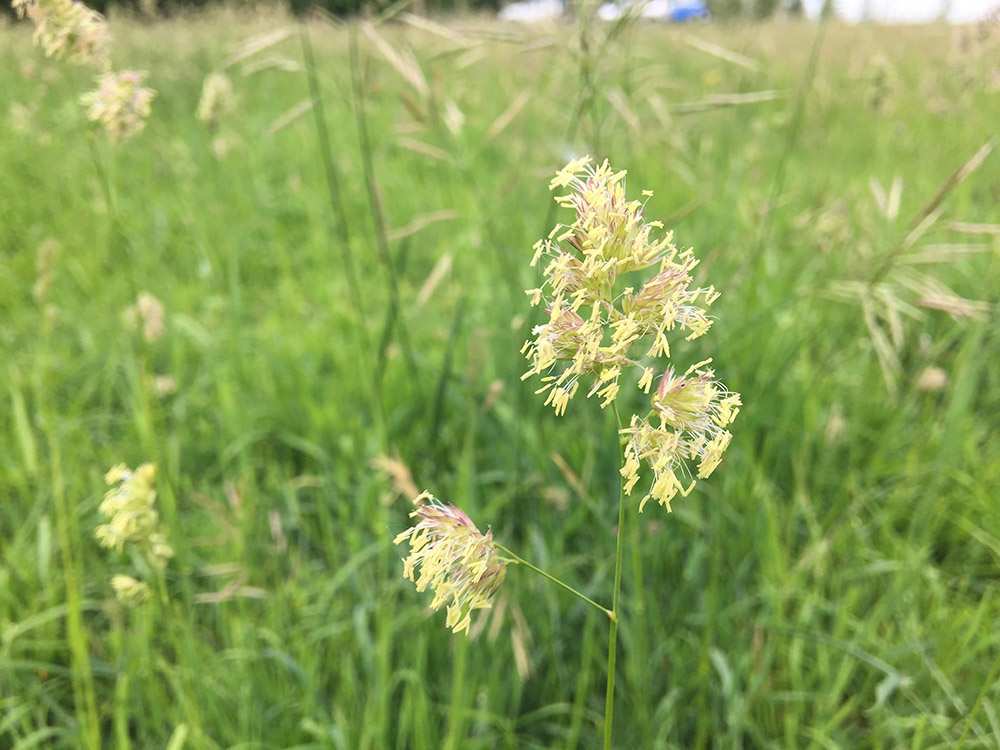
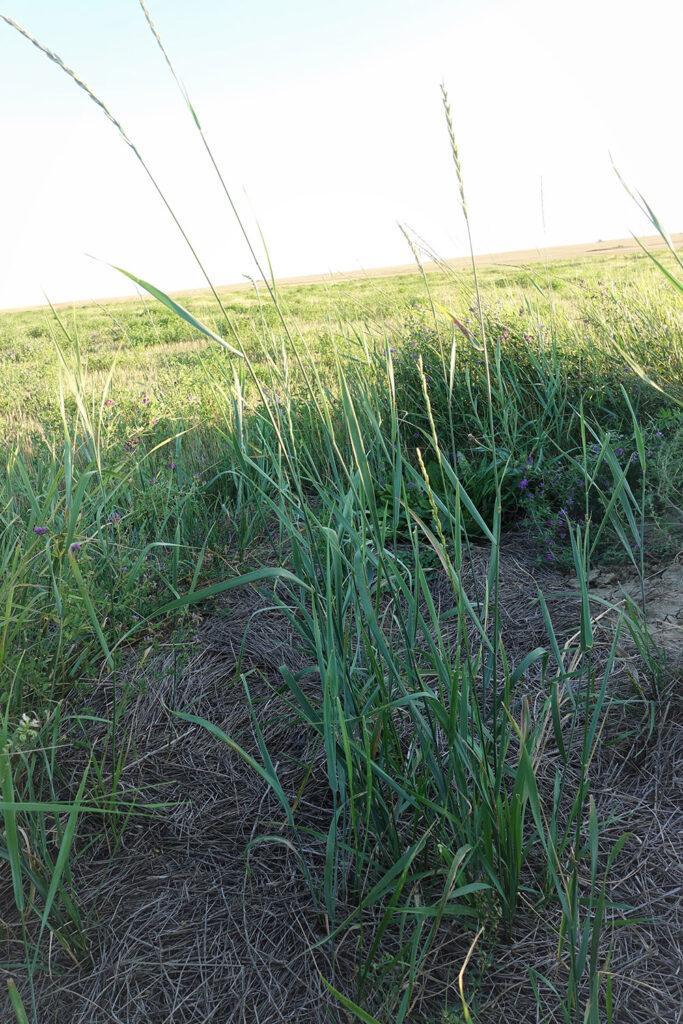
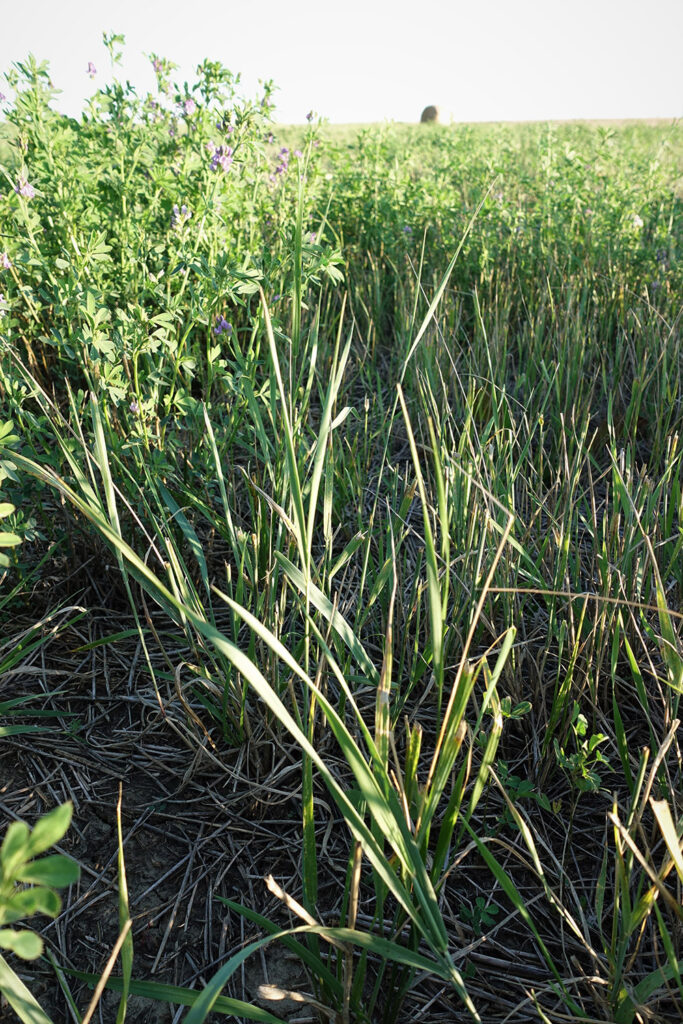
Timothy roots are wide spreading, shallow and fibrous with heaviest concentration of roots within top 7.5 cm (3 in) of soil. Swollen bulbs or corms develop just below the surface and store nutrients for winter survival and regrowth after cutting or grazing. Timothy has strong tall stems up to 120 cm (47 in) tall. Leaves are hairless and rolled during the bud stage. They are relatively wide, up to 12 mm, and flat. The seed head is a spike of densely packed, bristle-like spikelets, each producing a tiny, dark brown seed. 


Type

Tame grass.


Origin

Europe. Most varieties used in Canada come from American breeders.


Longevity

At least 5 years to 10 years depending on the location and management. Within the Peace River Region, timothy is considered a very long-lived grass with stands 20 years old.

10+ years depending on the location and management.

Use

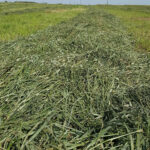
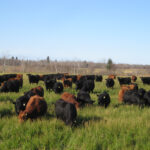
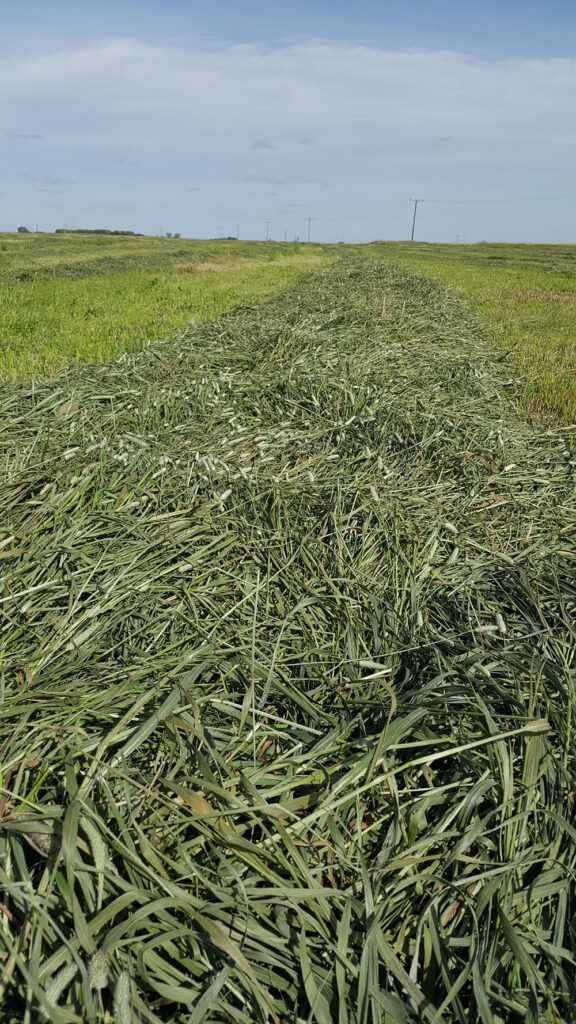
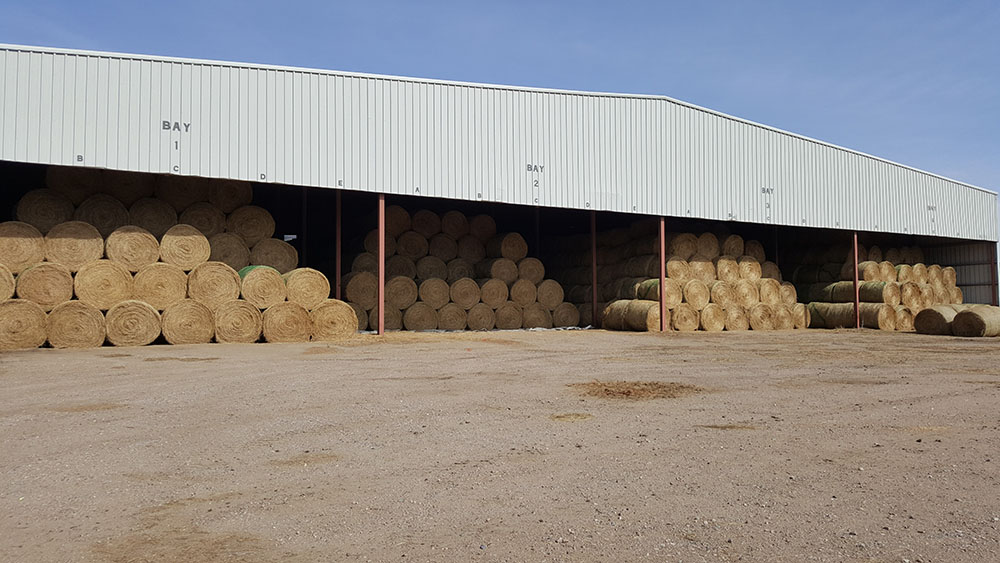
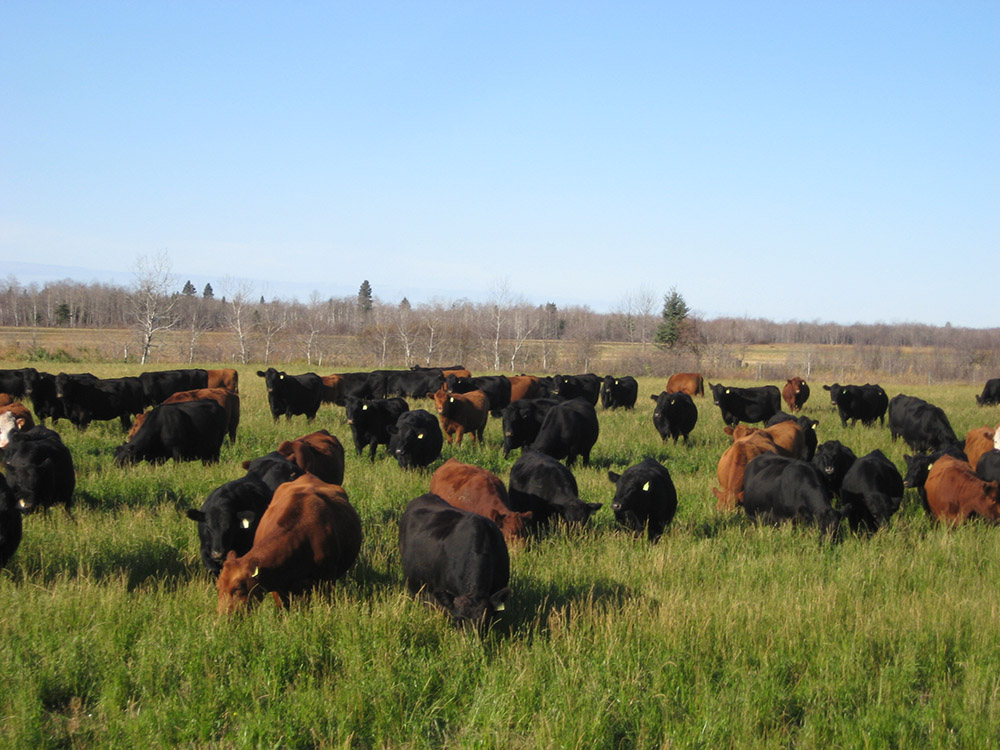
Pasture, hay. In the Peace River Region timothy is also used for stockpiled grazing due to its high adaptability in the region. There is a select timothy hay export and pet food market that continues to grow.

Pasture, hay, silage, stockpiled grazing. There is a select timothy hay export and pet food market that continues to grow.


Optimal Time of Use

Summer; some fall use soil zone dependant. Hay the first cut between the headed and blooming. Second cut of a lower yield may be taken or regrowth may be grazed. Timothy is often grazed early in summer for most livestock but graze after stem elongation. Growth slows later in the summer but can be lightly re-grazed. Once the plant is dormant, timothy stands can be grazed in late fall and winter, but it does not hold its feed quality.


Recovery After Use

Requires a minimum 60-80 days of recovery after use. Timothy responds best to a full season of rest in the black soil zone (used once). Leave at least 10 cm (4 in) of grassy residue to aid in regrowth. Timothy regrows slowly if cut or grazed in late summer. Because timothy is not sod producing, it is intolerant of grazing hoof damage. Fall grazing should be light as nutrient reserves are accumulated in the corms (root bulbs) for winter.

Leave at least 10 cm (4 in) of grassy residue to aid in regrowth. Timothy regrows slowly if cut or grazed in late summer. Because timothy is not sod producing, it is intolerant of grazing hoof damage. Fall grazing should be light as nutrient reserves are accumulated in the corms (root bulbs) for winter.

Palatability/Nutritional Value

If used early in the season before flowering, timothy has good quality, 11% crude protein, and 61% digestibility. Timothy pasture is very palatable in the vegetative stage. At later growth stages, quality and nutritional value decline rapidly. Overall, a highly palatable and preferred species for cattle and horses.

Annual Precipitation min/max (mm)

400mm / 1650mm


Drought Tolerance

Generally poor drought tolerance. Although some varieties have some drought hardiness, most timothy cannot tolerate short periods of moisture stress.


Flooding Tolerance

Withstands 2-5 weeks of spring flooding. There are differing views in the literature on its tolerance to flooding later in the growing season. Timothy does grow well on moister soils.


Winter Hardiness

Good to excellent tolerance. Winter hardiness is enhanced with adequate snow cover.

Soil Texture Preference

Timothy is well adapted for all soil textures when moisture is plentiful (Grey or Black soils).


Erosion Control

Moderate erosion control. Timothy is noted for use in wetland upland areas when seeded with other species.


Salinity Tolerance

Not tolerant.


Acidity Tolerance

High tolerance. Timothy tolerates soil pH as low as 4.5.


Alkalinity Tolerance

Low tolerance.

Seeds per kg

2,564,000 seeds/kg (1,163,000 seeds/lb)


Suggested Mixtures

Timothy is often grown as a pure stand for premium hay. It can be seeded in a mix with legumes such as alfalfa, alsike clover, red clover or birdsfoot trefoil. In the Peace River Region, timothy is usually include it in most mixes at 5-10% as it establishes very well in the low wet spots of the field.

Timothy is often grown as a pure stand for premium hay. It can be seeded in a mix with legumes such as alfalfa, alsike clover, red clover or birdsfoot trefoil.


Ease of Establishment

The small seeds of timothy must be seeded shallow for establishment. Timothy is relatively easy to establish early in the spring. Heat and drought will cause seedlings to die.


Competitiveness

Poor to moderate competitiveness while establishing so weeds must be managed. Timothy has moderate competitiveness once established. Timothy can co-exist with native species where it is well adapted, but it generally is not considered invasive.


Management Considerations

Drought tolerance is the major limitation with timothy. Timothy responds positively to fertilization. Allow timothy to drop seed occassionally to increase stand longevity. Timothy is best rotationally grazed but can be difficult to manage to not graze too early or during stem elongation and to consider that regrowth potential is low.

British Columbia Rangeland Seeding Manual, Saskatchewan Dryland Forage Species Adaptation Tool, USDA Plants Database, Manitoba Forage Adaptation and Comparison Guide, Alberta Forage Manual, Publication 30-OMAFRA

Timothy is adapted to the Sub-Boreal Spruce, Sub-Boreal Pine-Spruce and Interior Cedar-Hemlock zones. In the southern part of the Central Interior region, it is adapted to wetter parts of the Interior Douglas-fir zone and to irrigated and subirrigated areas in the Bunchgrass zone and drier parts of the Interior Douglas-fir zone.

Timothy is adapted to the wetter parts of the Interior Douglas-fir zone and the Interior Cedar-Hemlock zone, and to irrigated and subirrigated areas in the Bunchgrass, Ponderosa Pine zones and drier parts of the Interior Douglas-fir zone.

Some timothy stands managed for seed production in the Peace-Liard region have been established for 18 years or more.
Switchgrass

General Description

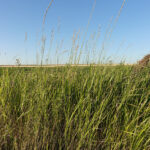
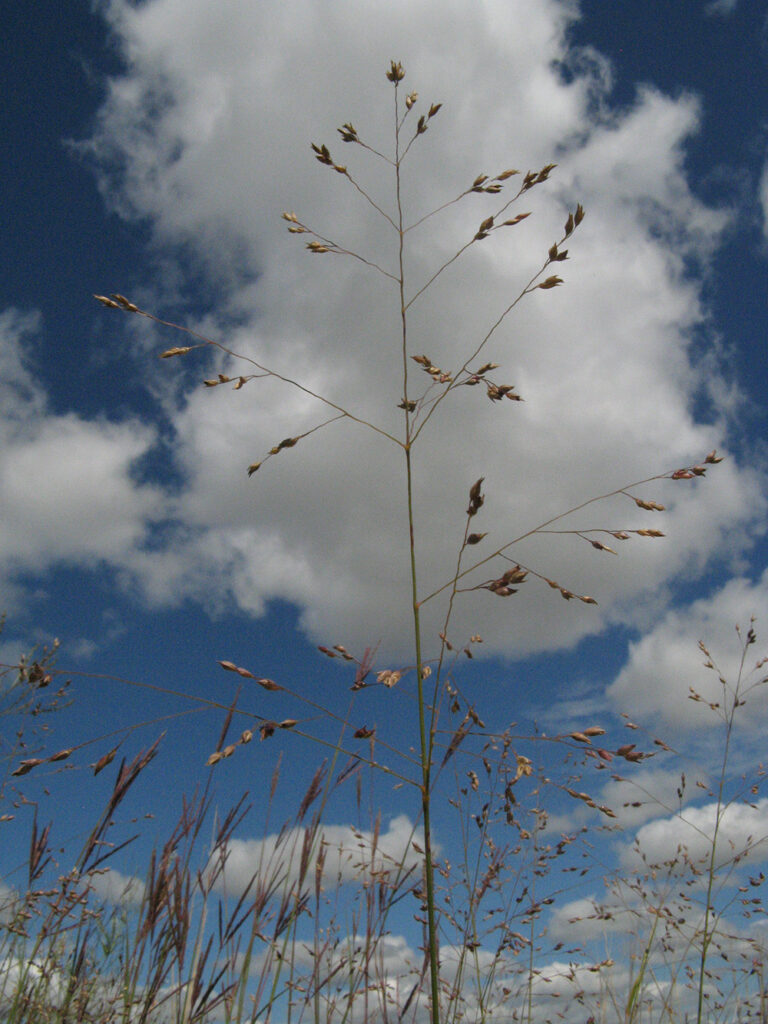
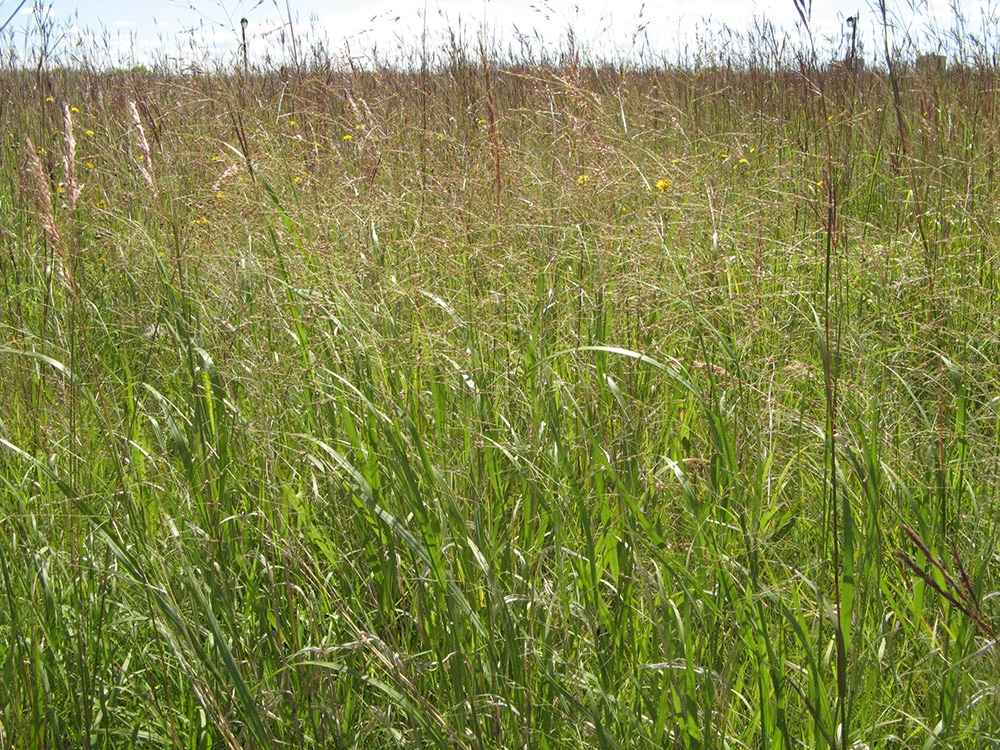
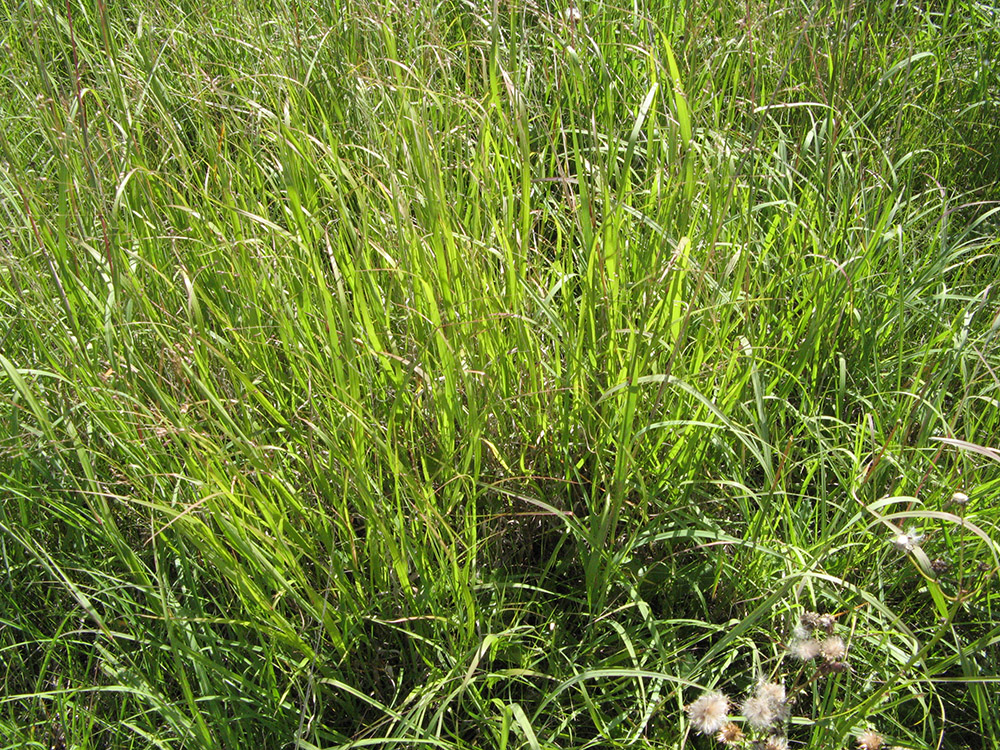
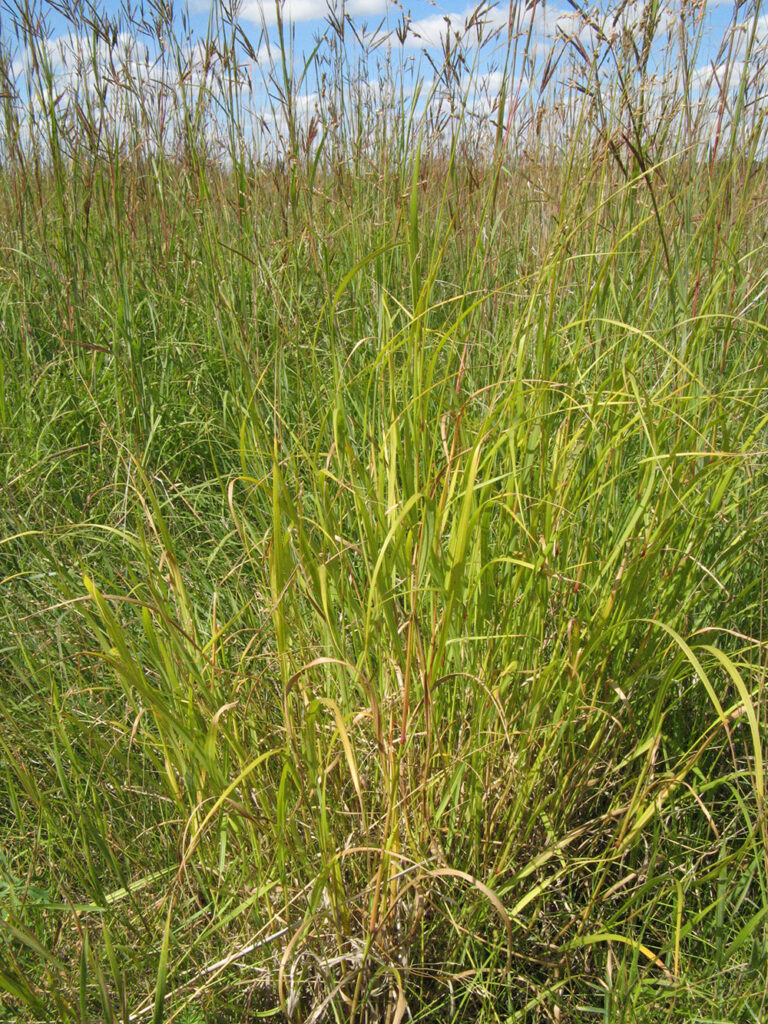
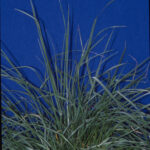
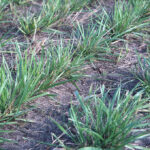
Switchgrass is a native warm season perennial grass. Forage production is notably high for this species due to its height and leaf production. The upland type with more bunch-like characteristics and shorter rhizomes is more common in Canada than the lowland types which are highly rhizomatous. Switchgrass grows from 60 to 150 cm (2 to 5 ft) tall. It has stiff stems that support numerous leaves and abundant seeds. A white patch of hair can be found where the leaf attaches to the stem.  Leaves are 10 to 50 cm (4 to 20 in) long and to 1 cm (0.4 in) wide. The leaves are generally long and flat, green, becoming golden into the fall. Switch grass seed heads are large spreading, branched panicles atop stems. An abundance of clean, small to medium-sized seeds are produced yearly. Short rhizomes help spread the plant vegetatively. 

Switchgrass is suitable for grazing, hay or silage. Switchgrass can produce relatively good yields in the 2,100–2,700 corn heat units (CHU) areas and will perform better in longer-season regions.


Type

Native grass.


Origin

Native to eastern Mixed Grass Prairie and Tall Grass Prairie of Saskatchewan and Manitoba. Cultivars have been developed.


Longevity

At least 10 years (seeded). Can be long-lived in native stands.

Use

Reclamation, pasture. Historically, switchgrass was used for hay, but poor palatability at maturity makes it less suitable. Switchgrass has been tried in some areas of Canada and the United States as a biofuel.

Optimal Time of Use

Summer. Switchgrass is a warm season grass and does not begin growing until early summer. It becomes coarse quickly as it matures. Switch grass has the ability to produce a large quantity of forage.  


Recovery After Use

Requires a minimum 60-80 days of recovery after use. It grows rapidly once its growth is initiated. Leave at least eight inches (200 mm) of plant growth after grazing to enhance winter hardiness.

It grows rapidly once its growth is initiated. Leave at least eight inches (200 mm) of plant growth after grazing to enhance winter hardiness.

Palatability/Nutritional Value

Switchgrass becomes unpalatable after maturity. As seed heads emerge, palatability decreases. While crude protein is good early in the summer (up to 15%) it can drop to less than 4% by later summer/early fall. When old, stiff stems accumulate they will have lower quality and will actually deter livestock use. Switchgrass tends to have low crude protein and digestibility, and animal rates of gain and intake are modest.

Annual Precipitation min/max (mm)

305mm / 1525mm


Drought Tolerance

Low tolerance.


Flooding Tolerance

Switchgrass can withstand up to 5 weeks of flooding in spring.


Winter Hardiness

Fair hardiness. Native upland types are most hardy compared to lowland types for the Canadian climate.

Soil Texture Preference

Switch grass is adapted to loam soils (sandy-loam through clay-loam). In Canadian climate, moist, but well drained soils are preferred. Switchgrass is frequently found in moist areas in native stands. 


Erosion Control

Moderate ability to control erosion. Produces short rhizomes and good above ground cover. Switchgrass was used widely for erosion control and wildlife habitat across the United States and Canada in the 1990’s. 


Salinity Tolerance

Moderate tolerance.


Acidity Tolerance

Low tolerance.


Alkalinity Tolerance

Moderate tolerance.

Seeds per kg

858,000 seeds/kg (389,000 seeds/lb)


Suggested Mixtures

Plant with adapted warm and cool season native species for reclamation and grazing. Successful if seeded by itself.


Ease of Establishment

Switchgrass establishment has not been experimented with in plot trials in the eastern Prairies. Ducks Unlimited Canada has included it in many of their native habitat plantings. American sources state switchgrass seedlings have low vigor as they grow from small seeds and have mixed ability to root quickly. Good weed control is needed for establishment as cool season weed species can easily outcompete the switchgrass (warm season grass). Some self-seeding and spread by short rhizomes can occur.

Good site preparation is key for establishing a successful switchgrass field. Field preparation should typically include one or two secondary tillage passes followed by packing or cultipacking. Packing the soil before and after planting is highly recommended on all soil types. American sources state switchgrass seedlings have low vigor as they grow from small seeds and have mixed ability to root quickly. Good weed control is needed for establishment as cool season weed species can easily outcompete the switchgrass (warm season grass). Some self-seeding and spread by short rhizomes can occur.


Competitiveness

Switchgrass is not a strong competitor in the first few years but becomes more competitive as the stand ages. Cool season grasses are at peak production when switchgrass begins to grow.


Management Considerations

Switchgrass is particularly sensitive to improper management. Rotational grazing systems that allow for plenty of rest between grazing periods have demonstrated that native switchgrass (among other native warm season species) can become more abundant in a stand that had seemingly lost the species. Early-summer grazing or mowing of cool-season species in the mixture is likely to give this warm-season grass the opportunity to co-exist with aggressive cool-season grasses. Switchgrass initiates growth later in the season than cool season grasses so allow for adequate plant growth before grazing (at least 12 inches tall), but before seed heads develop in August. Switchgrass responds positively to fertilization.

Manitoba Forage Adaptation and Comparison Guide, USDA Plants Database, Switchgrass Agronomy 2016 (Ontario), Grasses of Saskatchewan, AAFC data unpublished, Publication 30-OMAFRA

Seeding Rate Calculator

Seeding Rate Calculator

Calculate the seeding
rate & seed cost

Slender Wheatgrass

General Description

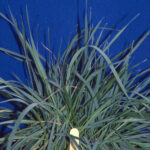
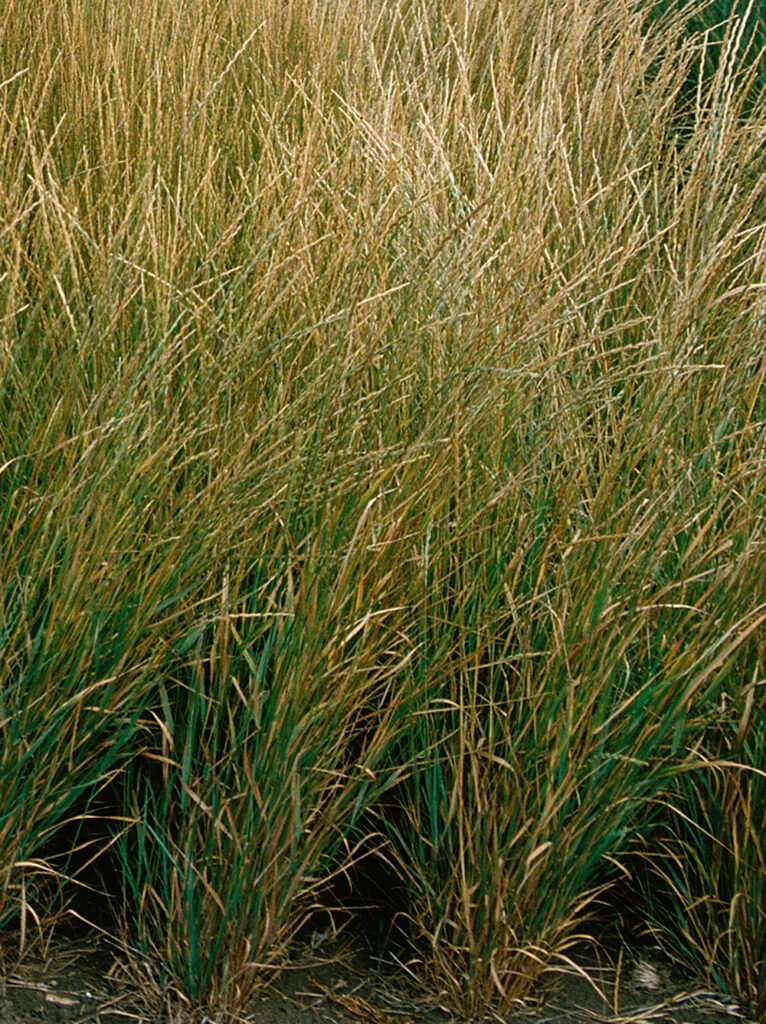
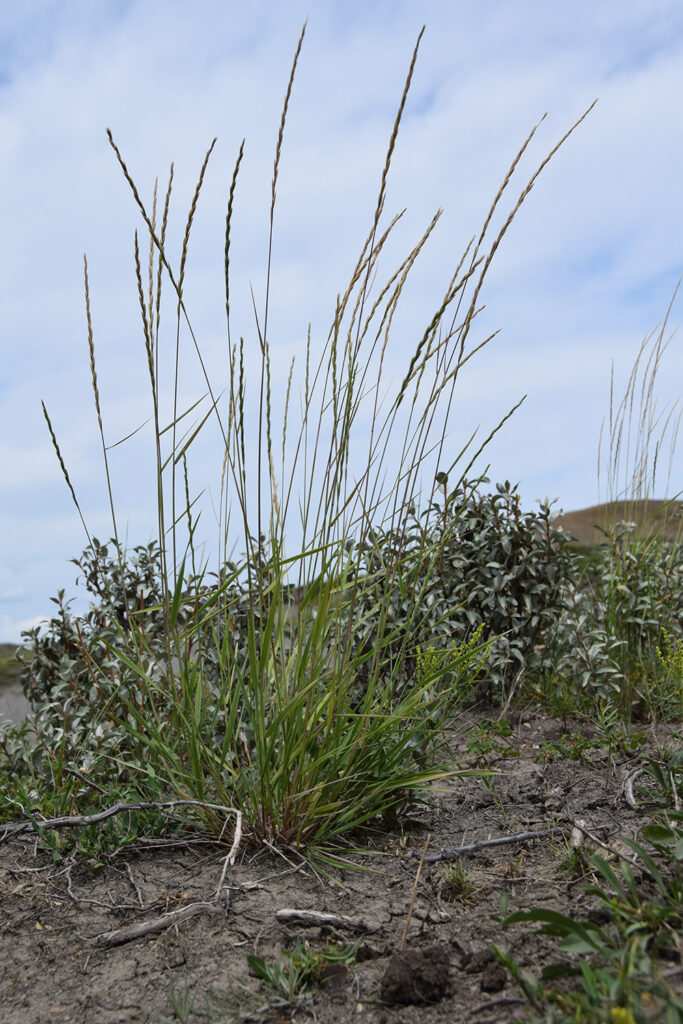
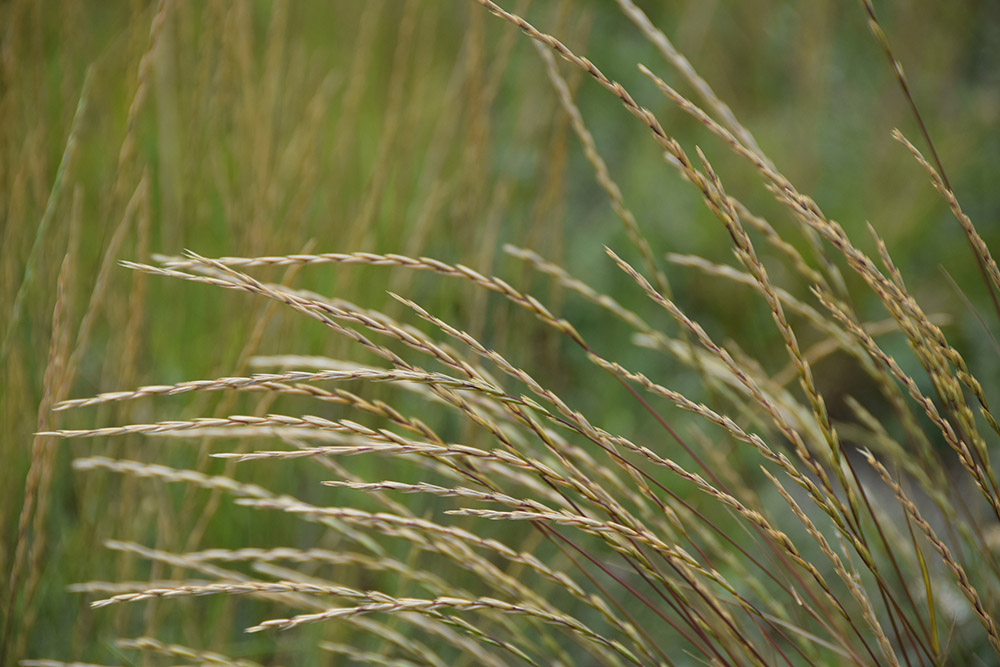
Slender wheatgrass is a cool season, native perennial bunchgrass. Its roots are fibrous, sometimes with short rhizomes. Awned wheatgrass is considered a subspecies of slender wheatgrass. Slender wheatgrass (awnless) was propagated for seed production by the 1920s on the prairies and was known as western ryegrass. It was an important forage species until the introduction of crested wheatgrass in the 1930s. Stems typically range from 30 to 120 cm (12 to 47 in). Leaves are usually flat, medium green. Seed heads are slender and 8 to 20 cm (3 to 8 in) long with overlapping spikelets. Slender wheatgrass is widely adapted to moderately moist to dry grasslands, meadows, forest openings, rocky ridges, and slopes throughout western Canada. 


Type

Native & tame grass. Long standing tame cultivars exist.


Origin

Native to North America.


Longevity

Short lived (3-4 years). Seed set every other year would increase persistence.

Use

Pasture, hay, reclamation. Often used to increase production in the first few years when establishing less vigorous species. Suitable forage for including in short crop rotations. Good choice for hay and silage when cut soon after heading. Best in single cut management systems.


Optimal Time of Use

Spring, summer. Slender wheatgrass has its main production occurring by early summer. Can be grazed as early as the 4-leaf stage. Hay slender wheatgrass soon after head emergence for the best forage quality and yield. 


Recovery After Use

Recovery can occur within 60-80 days in cultivars. Slender wheatgrass is considered excellent forage but has low tolerance to heavy or repeated grazing.

Palatability/Nutritional Value

Slender wheatgrass is utilized by both livestock and wildlife. Average digestibility with crude protein ranging from 11% before heading to 9.5% at maturity. Palatability decreases once it heads and becomes stemmy and coarse.

Annual Precipitation min/max (mm)

350mm / 600mm


Drought Tolerance

Fair tolerance. Slender wheatgrass may not be able to survive dry conditions on coarser soils in the Brown soil zone.


Flooding Tolerance

Slender wheatgrass is well suited to drained low lying areas, but can stand spring flooding of 2-5 weeks.


Winter Hardiness

Good hardiness. Slender wheatgrass’ cold tolerance is similar to crested wheatgrass.

Soil Texture Preference

Slender wheatgrass prefers fine- to moderately-textured soils (clay to sandy-loams).


Erosion Control

Excellent for erosion control. Slender wheatgrass is often used in erosion control applications because it is quick to establish and has good seedling vigour. It is effective for erosion control following fire. Inclusion of longer-lived species is suggested for long-term stabilization. 


Salinity Tolerance

Good salinity tolerance. It is often used for reclamation on saline soils.


Acidity Tolerance

Moderate. Tolerates soil pH levels as low as 5.6.


Alkalinity Tolerance

High tolerance.

Seeds per kg

298,000 seeds/kg (135,000 seeds/lb)


Suggested Mixtures

Slender wheatgrass is often included in seed mixes, with slower-establishing, longer-lived species like Russian or altai wildrye. Limit percentage of seed (10% or less) in mixes with longer-lived species. Mix with alfalfa or shorter-lived legumes for short duration hay mixes. In saline areas mix with smooth bromegrass, green wheatgrass, tall wheatgrass, and/or tall fescue.


Ease of Establishment

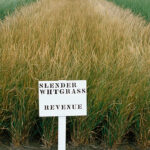
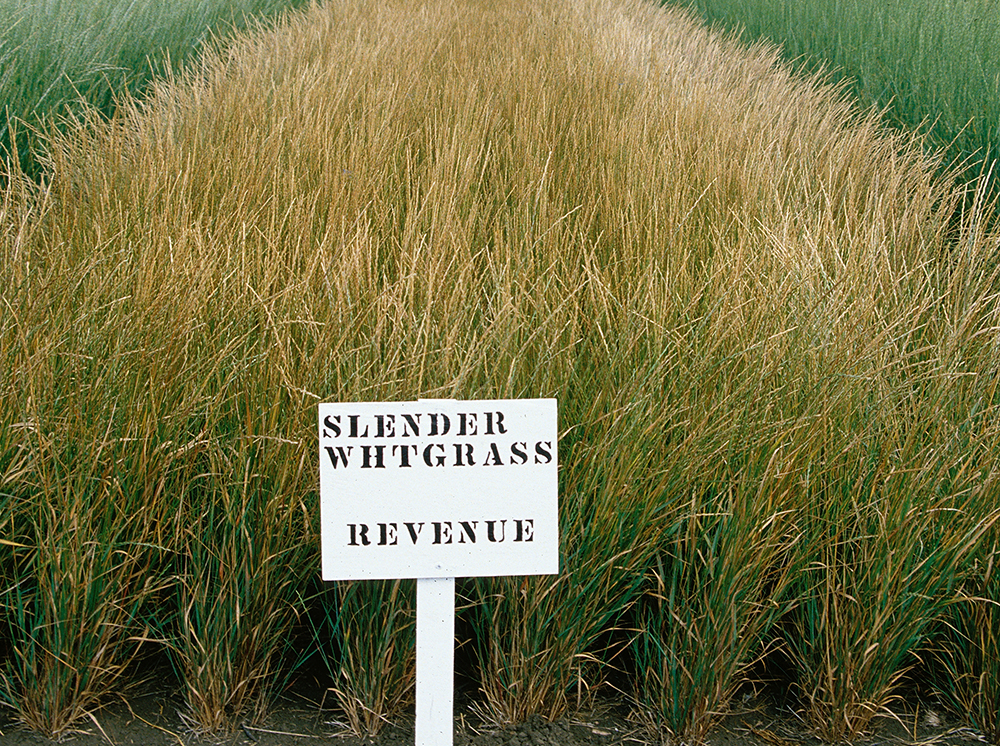
Slender wheatgrass establishes easily. “Adanac” and “Revenue” are two common Canadian varieties and were both developed in Saskatchewan by Agriculture and Agri-Food Canada. The Alberta Environmental Centre released “AEC Hillcrest” in 1994. This variety originates from the awned subspecies, and was developed for more difficult site conditions and shorter growing seasons.


Competitiveness

Slender wheatgrass is not particularly competitive and generally decreases in abundance over time. However, limit slender wheatgrass in seed mixes with slower to establish species as seedlings are aggressive.


Management Considerations

In situations where slender wheatgrass longevity is desired, rest the stand to allow for seed set and seed drop every 2-3 years to maximize persistence. Including slender wheatgrass in a mix maximizes initial forage production of a stand.

Saskatchewan Dryland Forage Species Adaptation Tool, AAFC Field Guide to Selected Native Forages, USDA Plants Database, British Columbia Rangeland Seeding Manual, Alberta Forage Manual

Slender wheatgrass (awnless) is uncommmon in most areas of the Central Interior. It can be found in native grassland communities in the Sub-Boreal Spruce zone on the north shores of Francois, Ootsa, Cheslatta and Ntalkuz lakes. 

Slender wheatgrass (awnless) can be found in most all zones of the Southern Interior, but is not dominant in native grassland communities in this region. Inclusion of slender wheatgrass may be considered in dryland range or pasture seed mixes following timber harvest in wetter parts of the Interior Douglas-fir zone. Slender wheatgrass is expected to be short-lived in these applications.

Slender wheatgrass is commonly found in native grassland communities in the Peace-Liard region.

Pubescent Wheatgrass

General Description

Intermediate wheatgrass and pubescent wheatgrass are tall, spreading, perennial grasses with high yield potential. Pubescent wheatgrass, with its hairy seed heads, is currently considered to be a type of intermediate wheatgrass instead of a separate forage species. Pubescent wheatgrass and intermediate wheatgrass are still often marketed as distinct species. 

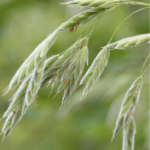
Intermediate wheatgrass forms deep, extensive fibrous roots with rhizomes of varying vigour so is often mistaken as a bunchgrass. Stems are 50 to 150 cm (20 to 60 in) tall. Leaves are blue-green to green and 2 to 10 mm wide with thickened and hardened margins. The seed heads are about 5 to 25 cm (2 to 10 in) long in a narrow-shaped spike. “Intermediate wheatgrass” produces smooth seed heads, while “pubescent wheatgrass” has fine hairs on the seed head. Suitable for drier sites with a variety of soils textures.


Type

Tame grass.


Origin

Central Europe, the Balkans, and Asia minor. Varieties developed in Canada.


Longevity

At least 10 years. Persistence is highly related to individual site conditions (longevity noted from 4-52 years).

Use

Hay, pasture, stockpiled. Generally short lived in grazing systems and longer lived in haying systems. Stockpile previously grazed or hayed intermediate wheatgrass. It has also been used in many applications of rangeland rehabilitation seeding as well as for erosion control.


Optimal Time of Use

Spring, summer, fall, winter. Plants should be allowed to reach a height of 20 cm (8 in) before grazing. Best grazed before stem elongation for palatability. Hay intermediate wheatgrass from early heading to flowering- generally later in the year than smooth bromegrass. If to be used as a stockpiled forage, intermediate wheatgrass should be used early in the season then stockpiled to maintain quality. 


Recovery After Use

Requires a minimum 60-80 days of recovery after use. Regrowth can be vigorous in the spring with adequate residues (10 cm or 4 in), moisture and fertility, however regrowth slows later in the season making it difficult to maintain in continuous or high frequency rotational grazing system. Grazing or cutting intermediate wheatgrass more than once per year will reduce stand vigour and persistence in the stand.

Palatability/Nutritional Value

Intermediate wheatgrass is highly palatable to livestock and wildlife. Typically, intermediate wheatgrass has crude protein of 12–15% at haying and protein may be as high as 11% later in the season. Intermediate wheatgrass matures later than other grasses, providing a high quality hay when it is grown in a mixture with a legume.

Annual Precipitation min/max (mm)

330mm / 1120mm


Drought Tolerance

Good tolerance. Some pubescent varieties have been noted to have higher drought tolerance.


Flooding Tolerance

Intermediate wheatgrass does not tolerate flooding, but can withstand submergence for about 1 week in the spring.


Winter Hardiness

Good hardiness.

Soil Texture Preference

Intermediate wheatgrass is best suited to well drained sandy-loam to clay soils. 


Erosion Control

High ability to control erosion. Intermediate wheatgrass produces a dense deep root system, especially on moister sites. Root production may be reduced on drier sites.


Salinity Tolerance

Moderate tolerance.


Acidity Tolerance

Slight tolerance. Intermediate wheatgrass tolerates soil pH to 5.6.


Alkalinity Tolerance

Moderate to high tolerance.

Seeds per kg

176,500 seeds/kg (80,000 seeds/lb)


Suggested Mixtures

Intermediate wheatgrass mixes well with a legume for hay production.


Ease of Establishment

Intermediate wheatgrass establishes easily. Rhizomes will spread to fill in space between plants.


Competitiveness

Competitiveness has been variable depending on site conditions, and is thought to be less competitive than western wheatgrass. Its lack of competitiveness makes it a good candidate for mixing with legumes like alfalfa. Intermediate wheatgrass is not considered invasive, although in some situations it has been known to increase in sites where it is planted.


Management Considerations

Intermediate wheatgrass is not suited to continuous grazing. Successful pastures are usually managed for light grazing in a rotation with long rest periods. Hayed intermediate wheatgrass can be stockpile grazed successfully.

British Columbia Rangeland Seeding Manual, Saskatchewan Dryland Forage Species Adaptation Tool, USDA Plants Database, Alberta Forage Manual, Manitoba Forage Adaptation and Comparison Guide

Pubescent (intermediate) wheatgrass is adapted to all zones in the Central Interior, but is less adapted to the driest (semi-arid) parts of the bunchgrass zone in the southern part of the region. 

Pubescent (intermediate) wheatgrass is adapted to all zones in the Southern Interior, but is less adapted to the driest (semi-arid) parts of the bunchgrass zone. 

Perennial Ryegrass

General Description


Perennial ryegrass is a short-lived, perennial, cool season bunchgrass. Perennial ryegrass is best suited to areas with cool summers of reasonable moisture without summer drought, and mild winters. It is grown mainly as an annual in western Canada, but as a perennial in southern BC. It is closely related to Italian ryegrass, but is smaller, has folded rather than rolled leaves, and lacks awns.

Perennial ryegrass produces a shallow, fibrous root system, with the majority of roots in the upper 15 cm (6 in.) of soil. It tillers freely and produces a dense sod. Perennial ryegrass produces a dense cover of low-growing leaves, and stems that are up to 60 cm (24 in.) long with a slender spike up to 30 cm (12 in.) long. Leaves are dark green, narrow, hairless, keel-shaped, and folded when young. Lower surface is glossy and smooth, while upper surface is veined and duller coloured. 

There are diploid and tetraploid genetic types (double chromosome types often associated with more vigorous growth but less hardiness) with a tremendous variation in seed size both between and within genetic types. Turf-type perennial ryegrass is not suited for forage use because they are low growing and low yielding- choose a forage-type perennial ryegrass. Crosses between perennial ryegrass and fescues exist.


Type

Tame grass.


Origin

Europe. It is sometimes called English ryegrass.


Longevity

Less than 5 years. Annual in most of western Canada. Short lived in southern British Columbia.

Use

Pasture, hay. Perennial ryegrass grows quickly so it is well suited for use in pastures, usually under short-term intensively managed grazing and fertilized, irrigated pastures. Can be hayed but tends to be low growing and slow to dry.


Optimal Time of Use

Spring, summer, fall. Perennial ryegrass can be used 2+ months after seeding. Perennial ryegrass produces high quality forage but requires good fertility.


Recovery After Use

Recovery can occur within 30-45 days. Perennial ryegrass can be frequently grazed close to the ground and is adapted for either continuous or rotational grazing systems. Perennial ryegrass requires high fertilizer inputs.

Palatability/Nutritional Value

Very palatable as perennial ryegrass can be one of the highest quality forage grasses for grazing. Precautions need to be taken to test forage for endophytes and a toxin called lolitrem B, especially if feeding perennial grass seed straws from varieties favoured by the turf industry.

Annual Precipitation min/max (mm)

400mm / 600mm. USDA indicates it withstands up to 65 inches/ year.


Drought Tolerance

Poor tolerance. Perennial ryegrass is very intolerant of drought or high temperatures.


Flooding Tolerance

Withstands 1-2 weeks of spring flooding. Moisture is critical for perennial ryegrass success.


Winter Hardiness

Poor hardiness. Usually grown as an annual because lacks winter hardiness.

Soil Texture Preference

Loamy to clay soils. Moisture must not be limited. 


Erosion Control

Moderate erosion control. Perennial ryegrass is used often in turf and conservation mixes because of its quick green growth and ground cover, early in the year of establishment.


Salinity Tolerance

Slight tolerance.


Acidity Tolerance

Moderate tolerance. Perennial ryegrass produces and thrives best on neutral soils.


Alkalinity Tolerance

Moderate tolerance.

Seeds per kg

530,000 seeds/kg (240,000 seeds/lb)


Suggested Mixtures

Often seeded in a pure stand. Compatible with alfalfa and clovers. Perennial ryegrass may be included in an erosion mix to provide quick cover in the year of establishment.


Ease of Establishment

Perennial ryegrass is easy to establish. It germinates quickly and can be vigorous enough to graze two months after emergence.


Competitiveness

High competitiveness as it produces a dense growth. Low invasiveness.


Management Considerations

If the goal is a longer term stand of perennial ryegrass it will need to be reseeded often (or patch seeded), it requires high fertility, and moisture must not be limited – irrigation is beneficial. Read seed mix labels carefully to understand if and when perennial ryegrass is included in the mix. Select a variety of the forage-type with a low amount of endophyte.

British Columbia Rangeland Seeding Manual, Manitoba Forage Adaptation and Comparison Guide, USDA Plants Database, Alberta Forage Manual

Perennial ryegrass is adapted to the Sub-Boreal Spruce, Interior Cedar-Hemlock and Sub-Boreal Pine-Spruce zones. In the southern part of the Central Interior region, it is adapted to wetter parts of the Interior Douglas-fir zone and to irrigated and subirrigated areas in the Bunchgrass zone and drier parts of the Interior Douglas-fir zone.

Perennial ryegrass is adapted to dryland applications in the wetter parts of the Interior Douglas-fir zone, the Interior Cedar-Hemlock zone, and to irrigated and subirrigated areas in the Bunchgrass, Ponderosa Pine zones and drier parts of the Interior Douglas-fir zone.

Perennial ryegrass is sometimes grown in the Peace-Liard region, although some varieties may not be long lived. Choose a variety known for winter-hardiness, and consider seeding objectives.

Orchardgrass

General Description

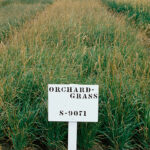
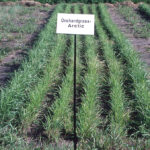
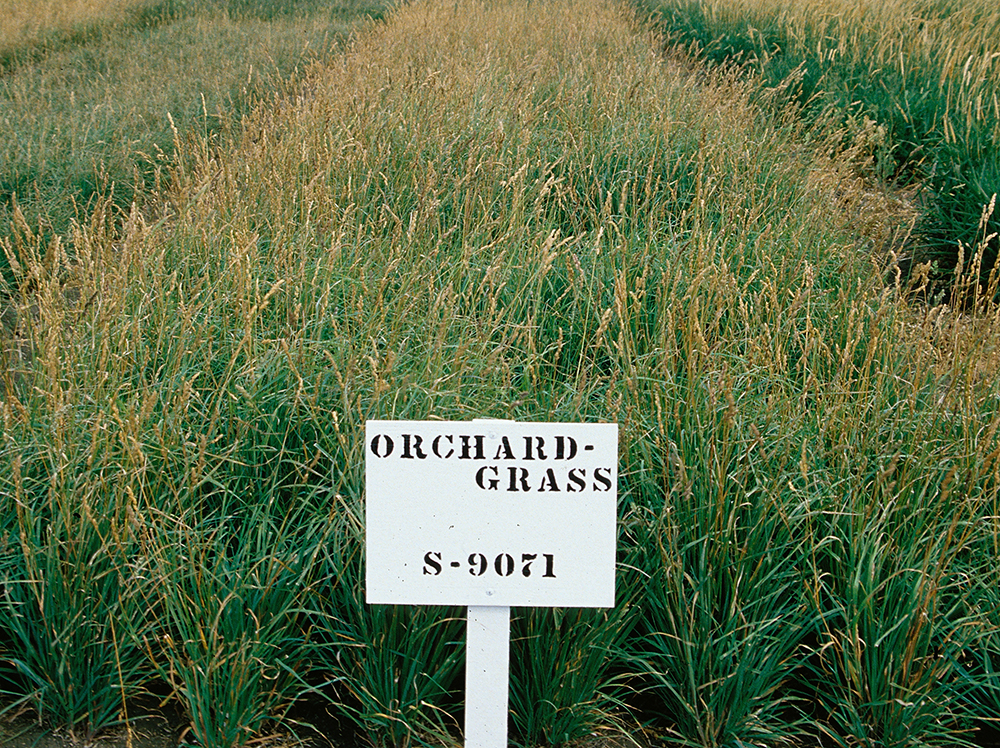
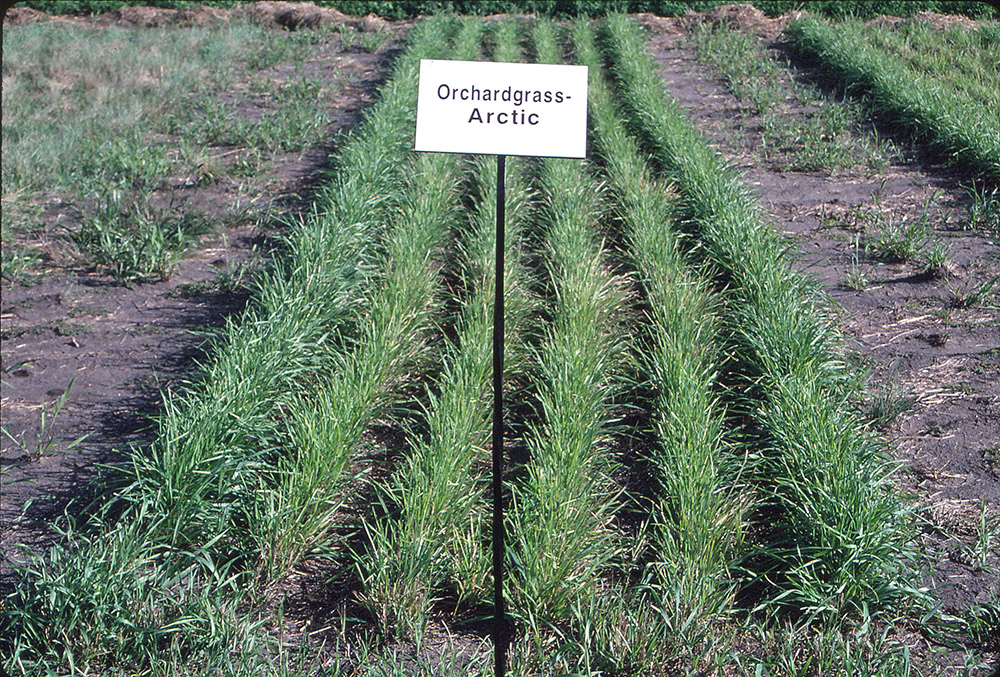
Orchardgrass is a very productive, highly palatable, perennial bunchgrass. Root systems are extensive and fibrous with a distinctive bunch growth. Crowns increase in size over time through tiller production.

Stems are 100 cm (39 in) tall or more, and are distinctive in their flattening near the soil surface. Lots of basal leaves are produced, with smooth, folded leaves. Young leaves have boat-like tips, while older leaves have pointed tapered tips. Leaves are soft, hairless, light green to blue green and up to 1 cm (3/8 in) in width. 

It has long, wide leaf blades and a coarsely tufted panicle. The cross-section of the stems is oval-shaped. The sheath is split part way and is green on the top and pale green or white on the lower part. The blade is 5-12.5 mm (1/4-1/2 in) wide and 7.5-40 cm (3-16 in) long. It is V-shaped Leaves are soft, hairless, light green to blue green and up to 1 cm (3/8 in) in width near the base, but flat towards the sharp, pointed tip. The yellow-green collar is broad and divided by a midrib. There are no auricles. The ligule is a white membrane that usually has an awn-like point at the top. The stems are flat and 90-150 cm (36-60 in) tall. The inflorescence is a panicle made.

Seed heads are up to 20 cm (8 in) long with clustered spikelets. Seeds are small but light, awned and chaffy. Orchardgrass is widespread in fields, meadows, and roadsides in regions with high annual rainfall.


Type

Tame grass.


Origin

Europe, Africa, and Asia. Varieties developed in Canada.


Longevity

At least 5 years. Persistence of orchardgrass is very dependent on the ecosystem and variety.

Use

Pasture, hay. Can be grazed in a rotational or continuous grazing system. Orchardgrass is also commonly used for seeding of roadsides, log landings, skid trails, and forested sites. Orchardgrass is fine-leaved and does not stand up to late fall/ winter stockpiled grazing.


Optimal Time of Use

Summer, fall. Can be grazed in the late spring once plants reach 20 to 25 cm (8 to 10 in) in height, and repeatedly through mid-autumn. It can be grazed later in the fall, but should be left to accumulate reserves in late summer and early fall. Orchargrass should be cut for hay at early heading. 


Recovery After Use

Requires a minimum 30-45 days of recovery after use. Adequate moisture and fertility are needed for quick recovery. In the drier dark brown soil zone longer recovery periods are needed. Regrowth after haying is often grazed. If livestock are allowed to continuously graze orchardgrass, stocking rates should be matched to production so it is grazed lightly and not too closely.

Adequate moisture and fertility are needed for quick recovery. In the drier dark brown soil zone longer recovery periods are needed. Regrowth after haying is often grazed. If livestock are allowed to continuously graze orchardgrass, stocking rates should be matched to production so it is grazed lightly and not too closely.

Palatability/Nutritional Value

Orchard grass is one of the most palatable tame grasses. Crude protein ranges from 13 to 15% and digestibility is approximately 67% when in vegetative stage. Quality drops off quickly when it forms seed heads. Livestock do very well on orchardgrass and seek it out in mixed stands.

Annual Precipitation min/max (mm)

400mm / 1650mm


Drought Tolerance

Moderate tolerance. Orchardgrass is more drought tolerant than timothy, but not as much as bromegrasses. However, once a dry period ends, it can recover quickly.


Flooding Tolerance

Withstands 1-2 weeks of spring flooding. Does best with high annual rainfall.


Winter Hardiness

Fair to good hardiness. Winter hardiness is dependent on snow cover conditions, carryover stubble height, and variety improvements. Orchardgrass winter hardiness has been good in the Peace River Region even with little snow cover. Carry over stubble height should be should be at least 20 cm (8 in) in colder regions. In most regions, select an orchardgrass variety noted for hardiness.

Soil Texture Preference

Orchard grass is suited to loamy to clay soils with a high water holding capacity, and does well in areas with high precipitation.


Erosion Control

No erosion control.


Salinity Tolerance

No salinity tolerance.


Acidity Tolerance

Moderate tolerance. Tolerates soil pH levels as low as 5.0.


Alkalinity Tolerance

Low tolerance.

Seeds per kg

942,000 seeds/kg (427,000 seeds/lb)


Suggested Mixtures

Often is included as a small proportion of a mix to serve as a higher producing grass while others establish. Mix with legumes such as alfalfa, cicer milkvetch, sainfoin or the clovers, and other grasses such as the bromegrasses, northern wheatgrass, tall fescue, slender wheatgrass or timothy.

Often is included as a small proportion of a mix to serve as a higher producing grass while others establish. Mix with legumes such as alfalfa, clovers, and other grasses such as the bromegrasses, tall fescue, or timothy.


Ease of Establishment

Orchardgrass grows as vigorous seedlings that establish quickly, are shade tolerant, and will tolerate a companion or nurse crop. Spring growth thereafter is slower than other grasses. Orchardgrass seed viability declines rapidly in storage.


Competitiveness

Lack of winter hardiness may limit competitiveness in colder areas. In southern interior regions orchardgrass will co-exist with native species in most ecosystems. Orchardgrass is generally considered to be non-invasive.

Lack of winter hardiness may limit competiveness in colder areas. Orchardgrass is generally considered to be non-invasive, In more complex mixtures, 3.5-4.5 kg/ha (3-4 lb/acre) is sufficient. Its aggressive seedlings make orchardgrass easy to establish.


Management Considerations

Orchardgrass responds well to nitrogen fertilizer and is most productive overall with rotational grazing. Orchardgrass must go into the winter with enough residue to store carbohydrates in the stem to survive. Leaving standing residue over winter can help increase snow cover which is important to insulate the crowns. Select varieties with noted winter hardiness.

British Columbia Rangeland Seeding Manual, Saskatchewan Dryland Forage Species Adaptation Tool, USDA Plants Database, Manitoba Forage Adaptation and Comparison Guide, Alberta Forage Manual

Orchardgrass is adapted to the Sub-Boreal Spruce, Interior Cedar-Hemlock and Sub-Boreal Pine-Spruce zones. In the southern part of the Central Interior region, it is adapted to wetter parts of the Interior Douglas-fir zone and to irrigated and subirrigated areas in the Bunchgrass zone and drier parts of the Interior Douglas-fir zone.

Orchardgrass is adapted to dryland applications in the wetter parts of the Interior Douglas-fir zone, the Interior Cedar-Hemlock zone, and to irrigated and subirrigated areas in the Bunchgrass, Ponderosa Pine zones and drier parts of the Interior Douglas-fir zone.

Orchardgrass is adapted to warmer, sheltered sites in the Peace-Liard region. It is important to choose varieties noted for winter hardiness. On marginal sites, orchardgrass may not be as competitive as other species and may not persist in a stand.

Meadow Fescue

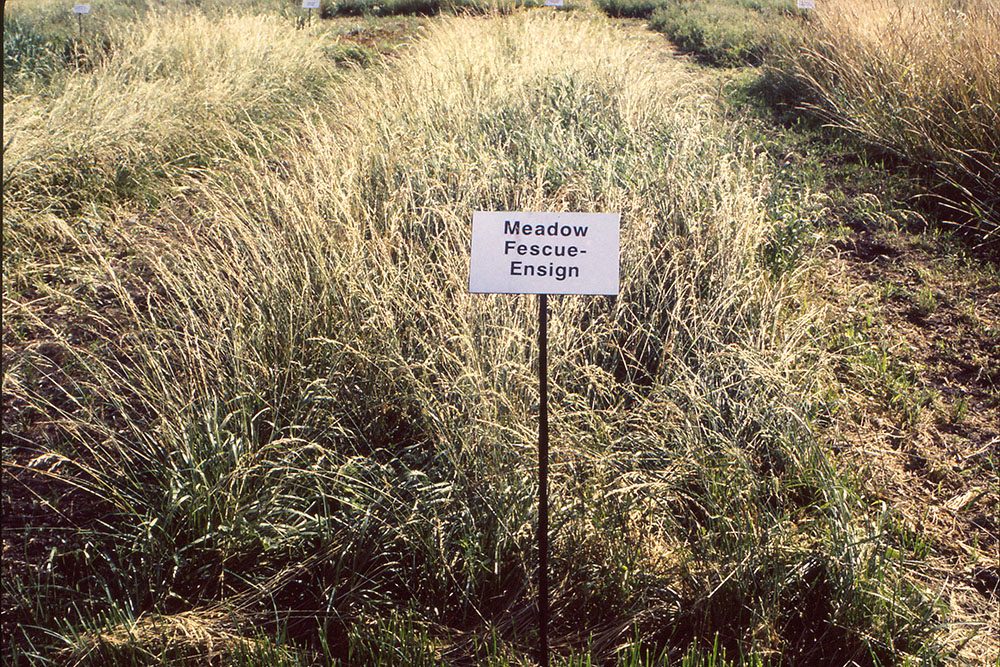
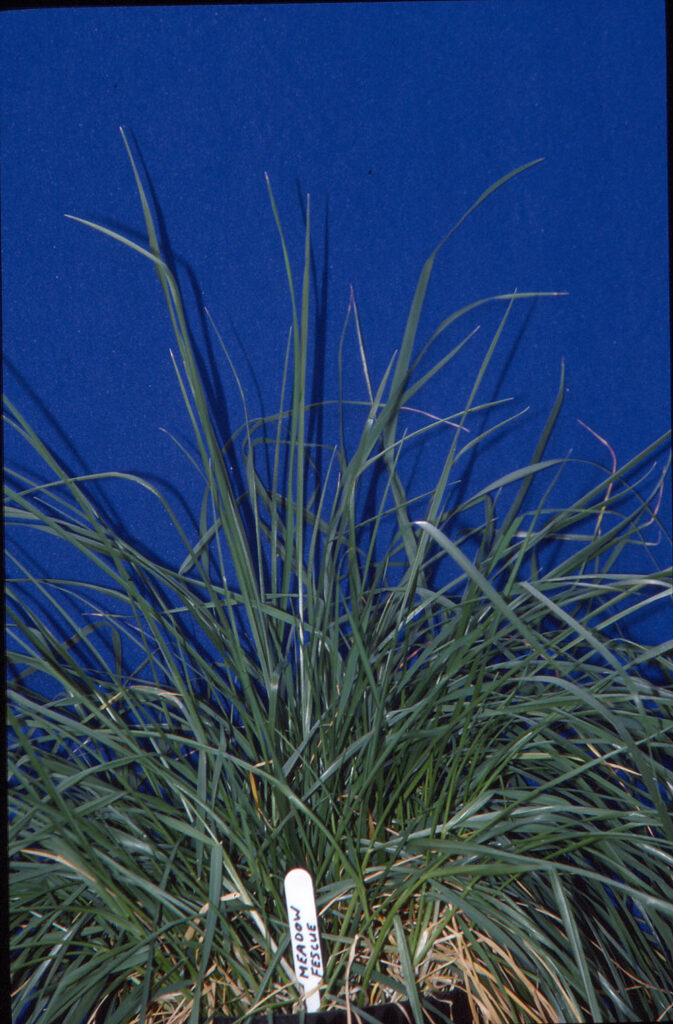
General Description


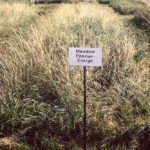
Meadow fescue is a perennial bunch grass suited to higher precipitation areas, but lacks longevity due to poorer winter hardiness and susceptibility to heavy grazing. It is very closely related to tall fescue, and can be hard to distinguish. Generally, meadow fescue is less persistent, shorter, and finer leaved. It has the ability to cross with perennial and annual ryegrass.

Stems grow up to 1 m (40 in) tall. Leaves are mostly basal, with blades that are flat, dark green and have veins running down them. The leaf undersides are glossy and the edges are rough. Seed heads develop with 6 to 10 flowers per spikelet. Meadow fescue is cross-pollinated (and can cross with grasses) and the seed shatters easily.


Type

Tame grass.


Origin

Europe.


Longevity

At least 5 years.

Use

Pasture, hay, stockpiled. Meadow fescue is best used as pasture as growth is mainly basal.


Optimal Time of Use

Spring, summer, fall, winter. Meadow fescue has been replaced mainly by new tall fescue varieties that have equal adaptability and more production and longevity. Hay by heading. Meadow fescue is best rotationally grazed but can be continually with care. Leave at least 10 cm (4 in) for regrowth to occur. Good for summer grazing or stockpiling for fall and early winter grazing as it maintains quality well after fall frosts. 


Recovery After Use

Requires a minimum 45-60 days of recovery after use. If hayed, meadow fescue can be grazed or stockpiled thereafter.

Palatability/Nutritional Value

Meadow fescue has an average total digestible nutrient (TDN) level of 61% and crude protein level of 12.5% in the vegetative state. Meadow fescue has fair palatability. Meadow fescue remains green into the fall.

Annual Precipitation min/max (mm)

500mm minimum


Drought Tolerance

Moderate tolerance. It is less drought tolerant than tall fescue.


Flooding Tolerance

Withstands 2-5 weeks of spring flooding. It withstands wet soils season long.


Winter Hardiness

Fair hardiness. Meadow fescue longevity is limited by winter hardiness.

Soil Texture Preference

Meadow fescue is best suited to moist or wet clay-loam to clay soils, but will grow on light textured soils with high moisture. Moisture is meadow fescue’s limiting factor.


Erosion Control

Moderate erosion control. Can be used as an initial species in waterways or channels to prevent erosion as it does not impede water movement.


Salinity Tolerance

Moderate tolerance.


Acidity Tolerance

Moderate tolerance.


Alkalinity Tolerance

Low tolerance.

Seeds per kg

507,000 seeds/kg (230,000 seeds/lb)


Suggested Mixtures

Meadow fescue is compatible in mixes. Species include alsike clover, birdsfoot trefoil, timothy and bromegrasses.


Ease of Establishment

Meadow fescue seedlings can establish well in the first season when competition is managed. It is noted to winterkill easily during the establishment year.


Competitiveness

Meadow fescue has moderate competitive ability. Overall, its longevity is limited with cold winter conditions.


Management Considerations

Allow for adequate rest following defoliation. Cold hardiness is its major limitation making it a grass not frequently used in Western Canada. May serve well as a short rotation, good producing grass species for late season grazing.

Saskatchewan Dryland Forage Species Adaptation Tool, USDA, Manitoba Forage Adaptation and Comparison Guide, Alberta Forage Manual

Meadow fescue is adapted to warmer and more wetter areas of the Sub-Boreal Spruce, Interior Cedar-Hemlock and Sub-Boreal Pine-Spruce zones. In the southern part of the region, meadow fescue is adapted to the wetter areas of the Interior Douglas-fir zone, and to irrigated and subirrigated areas in the Bunchgrass and drier areas of the Interior Douglas-fir zone.

Meadow fescue is adapted to the wetter parts of the Interior Douglas-fir zone, the Interior Cedar-Hemlock zone, and to irrigated and subirrigated areas in the Bunchgrass and Ponderosa Pine zones, and Interior Douglas-fir zone.

Meadow fescue has some adaptive characteristics suited to the Peace-Liard region, but only fair hardiness is likely to limit its use.

Seeding Rate Calculator

Seeding Rate Calculator

Calculate the seeding
rate & seed cost

Intermediate Wheatgrass

General Description

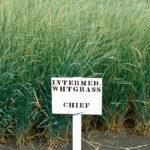
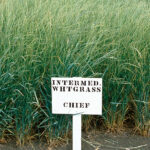
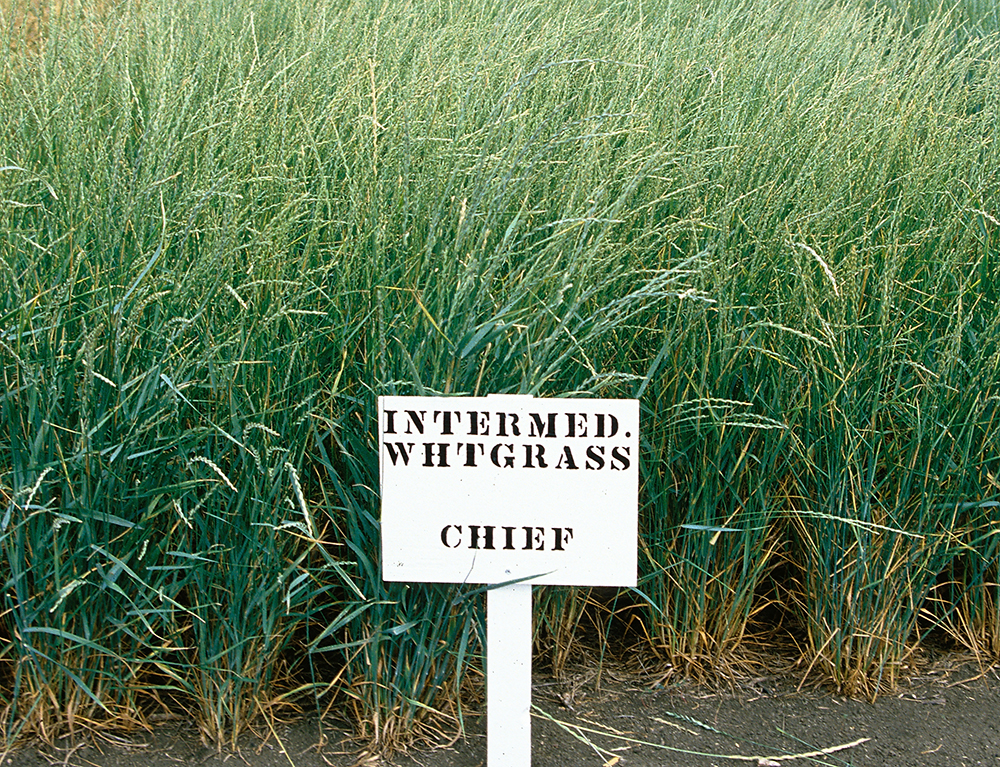
Intermediate wheatgrass and pubescent wheatgrass are tall, spreading, perennial grasses with high yield potential. Pubescent wheatgrass, with its hairy seed heads, is currently considered to be a type of intermediate wheatgrass instead of a separate forage species. Pubescent wheatgrass and intermediate wheatgrass are still often marketed as distinct species. 

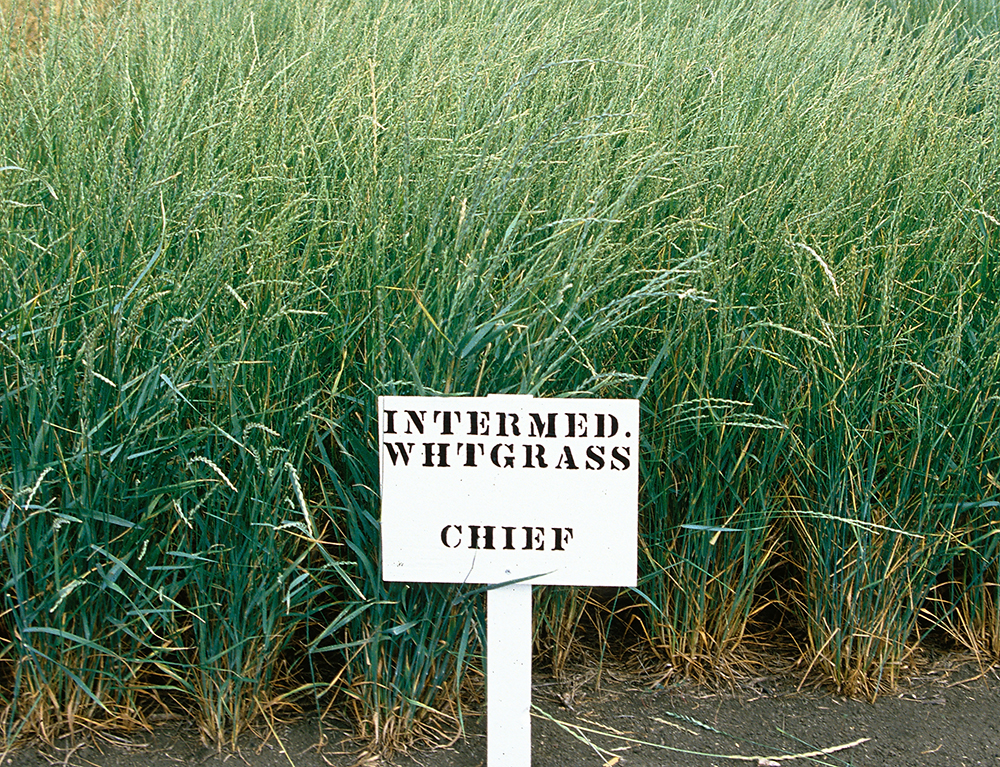
Intermediate wheatgrass forms deep, extensive fibrous roots with  rhizomes of varying vigour so is often mistaken as a bunchgrass. Stems are 50 to 150 cm (20 to 60 in) tall. Leaves are blue-green to green and 2 to 10 mm wide with thickened and hardened margins. The seed heads are about 5 to 25 cm (2 to 10 in) long in a narrow-shaped spike. “Intermediate wheatgrass” produces smooth seed heads, while “pubescent wheatgrass” has fine hairs on the seed head. Suitable for drier sites with a variety of soils textures.


Type

Tame grass.


Origin

Central Europe, the Balkans, and Asia minor. Varieties developed in Canada.


Longevity

At least 10 years. Persistence is highly related to individual site conditions (longevity noted from 4-52 years).

Use

Hay, pasture, stockpiled. Generally short lived in grazing systems and longer lived in haying systems. Stockpile previously grazed or hayed intermediate wheatgrass. It has also been used in many applications of rangeland rehabilitation seeding as well as for erosion control.


Optimal Time of Use

Spring, summer, fall, winter. Plants should be allowed to reach a height of 20 cm (8 in) before grazing. Best grazed before stem elongation for palatability. Hay intermediate wheatgrass from early heading to flowering- generally later in the year than smooth bromegrass. If to be used as a stockpiled forage, intermediate wheatgrass should be used early in the season then stockpiled to maintain quality. 


Recovery After Use

Requires a minimum 60-80 days of recovery after use. Regrowth can be vigorous in the spring with adequate residues (10 cm/4 in), moisture and fertility, however regrowth slows later in the season making it difficult to maintain in continuous or high frequency rotational grazing system. Grazing or cutting intermediate wheatgrass more than once per year will reduce stand vigour and persistence in the stand.

Palatability/Nutritional Value

Intermediate wheatgrass is highly palatable to livestock and wildlife. Typically, intermediate wheatgrass has crude protein of 12–15% at haying and protein may be as high as 11% later in the season. Intermediate wheatgrass matures later than other grasses, providing a high quality hay when it is grown in a mixture with a legume.

Annual Precipitation min/max (mm)

330mm / 1120mm


Drought Tolerance

Good tolerance. Some pubescent varieties have been noted to have higher drought tolerance.


Flooding Tolerance

Intermediate wheatgrass does not tolerate flooding, but can withstand submergence for about 1 week in the spring.


Winter Hardiness

Good hardiness.

Soil Texture Preference

Intermediate wheatgrass is best suited to well drained sandy-loam to clay soils. 


Erosion Control

High ability to control erosion. Intermediate wheatgrass produces a dense deep root system, especially on moister sites. Root production may be reduced on drier sites.


Salinity Tolerance

Moderate tolerance.


Acidity Tolerance

Slight tolerance. Intermediate wheatgrass tolerates soil pH to 5.6.


Alkalinity Tolerance

Moderate to high tolerance.

Seeds per kg

176,500 seeds/kg (80,000 seeds/lb)


Suggested Mixtures

Intermediate wheatgrass mixes well with a legume for hay production.


Ease of Establishment

Intermediate wheatgrass establishes easily. Rhizomes will spread to fill in space between plants.


Competitiveness

Competitiveness has been variable depending on site conditions, and is thought to be less competitive than western wheatgrass. Its lack of competitiveness makes it a good candidate for mixing with legumes like alfalfa. Intermediate wheatgrass is not considered invasive, although in some situations it has been known to increase in sites where it is planted.


Management Considerations

Intermediate wheatgrass is not suited to continuous grazing. Successful pastures are usually managed for light grazing in a rotation with long rest periods. Hayed intermediate wheatgrass can be stockpile grazed successfully.

British Columbia Rangeland Seeding Manual, Saskatchewan Dryland Forage Species Adaptation Tool, USDA Plants Database, Alberta Forage Manual, Manitoba Forage Adaptation and Comparison Guide

Intermediate wheatgrass is adapted to all zones in the Central Interior, but is less adapted to the driest (semi-arid) parts of the bunchgrass zone in the southern part of the region. 

Intermediate wheatgrass is adapted to all zones in the Southern Interior, but is less adapted to the driest (semi-arid) parts of the bunchgrass zone. 

Intermediate wheatgrass is adapted to the Peace-Liard region, especially those varieties developed at Saskatoon, Saskatchewan (e.g., Chief and Clarke).

Fringed Bromegrass

General Description

Fringed bromegrass is a tall, loosely tufted, cool season, perennial native bunchgrass. It is found growing native on wet streambanks and lake margins, and in open coniferous or deciduous woodlands and meadows- especially mesic or moist areas. It is effective for erosion control and valued in revegetation mixes for disturbed sites. 

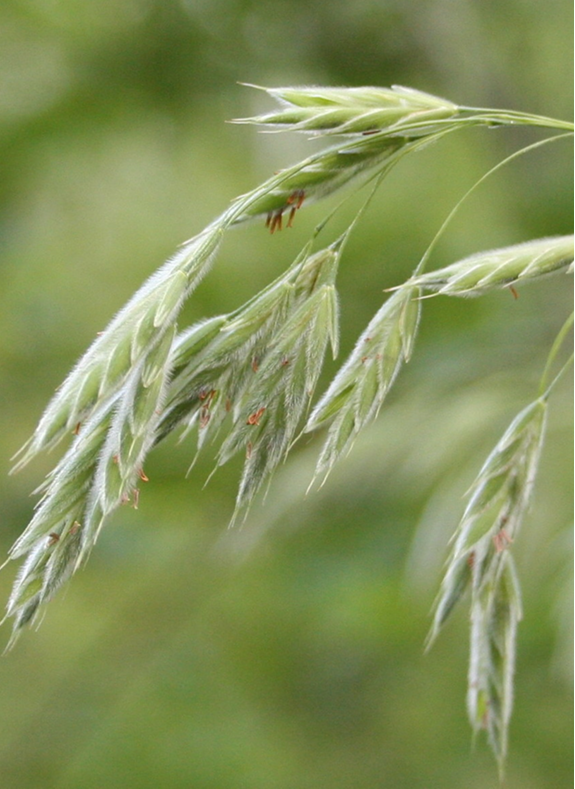
Fringed bromegrass is a bunchgrass with fibrous roots. Stems grow to 60 to 100 cm (24 to 39 in) tall, frequently with hairy nodes. Leaves are dark green, 10 cm (4 in) wide and hairy at least on one side. The veining is prominent on both sides of the leaf. It produces some basal growth but mostly leaves up its stem. Seed heads form in open panicles that are 10 to 20 cm (4 to 8 in) long with 4 to 10 long spikelets. Seeds are large and fuzzy when mature in mid-August.


Type

Native grass.


Origin

Native to North America.


Longevity

Less than 5 years. Seed drop prolongs stand lifespan.

Use

Reclamation, pasture. Widely used for reclamation and erosion control. Excellent forage for both ungulate wildlife and livestock as it holds its nutritional value throughout the growing season.


Optimal Time of Use

Summer, fall. Can be grazed throughout the summer and fall seasons as leaves hold their palatability. 


Recovery After Use

Fringed bromegrass should be rested for an entire growing season following use. It is considered a decreaser after grazing.

Palatability/Nutritional Value

Excellent palatability for both ungulate wildlife and livestock from emergence through seed set. Plant protein levels average 20% in early June, 9% in July, and 3% in late August to October. In contrast, digestible carbohydrate increases over the growing season. Cattle will strip the leaves off the stems and sheep will seek out and graze the seed heads.

Annual Precipitation min/max (mm)

400mm / 1000mm


Drought Tolerance

Moderate drought tolerance, but is best adapted to moist areas.


Flooding Tolerance

Withstands 1-2 weeks of flooding in the spring. Prefers moist soils thereafter and can be found on subirrigated soils.


Winter Hardiness

High winter hardiness.

Soil Texture Preference

Fringed bromegrass grows best on sandy through clay-loam soils. It is often found growing wet streambanks and lake margins, open coniferous or deciduous woodlands and meadows, especially mesic or moist areas.


Erosion Control

Fringed bromegrass provides excellent erosion control. It is favoured in revegetation mixes for disturbed sites, especially in foothill and boreal forests. Very effective for erosion control. Long term revegetation potential is considered high.


Salinity Tolerance

No tolerance.


Acidity Tolerance

Moderate tolerance.


Alkalinity Tolerance

Low tolerance.

Seeds per kg

301,000 seeds/kg (137,000 seeds/lb)


Suggested Mixtures

Often included in native seeding mixtures as it can establish in shade and open locations. It can compliment longer-living species.


Ease of Establishment

Easily establishes. 85% of seed germinates in 10 to 15 days. Seeds are hairy so can bridge together unless seeded with a carrier.


Competitiveness

Noted for high weed resistance and ability to establish in reclamation situations. Fringed bromegrass does not easily recover after fire. Fringed bromegrass must set seed to remain a major species component in a stand.


Management Considerations

Persistence of fringed bromegrass in a stand is increased if plants are allowed to set seed and establish seedlings. Palatability is high so diligent grazing management should be considered.

USDA FEIS Database, British Columbia Rangeland Seeding Manual, USDA Plants Database

Fringed bromegrass is most suited for dryland range, pasture or reclamation applications where native species are desired in the Sub-Boreal Spruce, Sub-Boreal Pine-Spruce and Interior Cedar-Hemlock zones. It is adapted to wetter areas of the Interior Douglas-fir zone in the southern part of the region.

Fringed bromegrass is most suited to range, pasture or reclamation applications where native species are desired in wetter areas of the Interior Douglas-fir zone and in the Interior Cedar-Hemlock zone.

Fringed bromegrass is found in native plant communities of the Peace-Liard region, locally common in meadows and open forest.

Seeding Rate Calculator

Seeding Rate Calculator

Calculate the seeding
rate & seed cost

Dahurian Wildrye

General Description

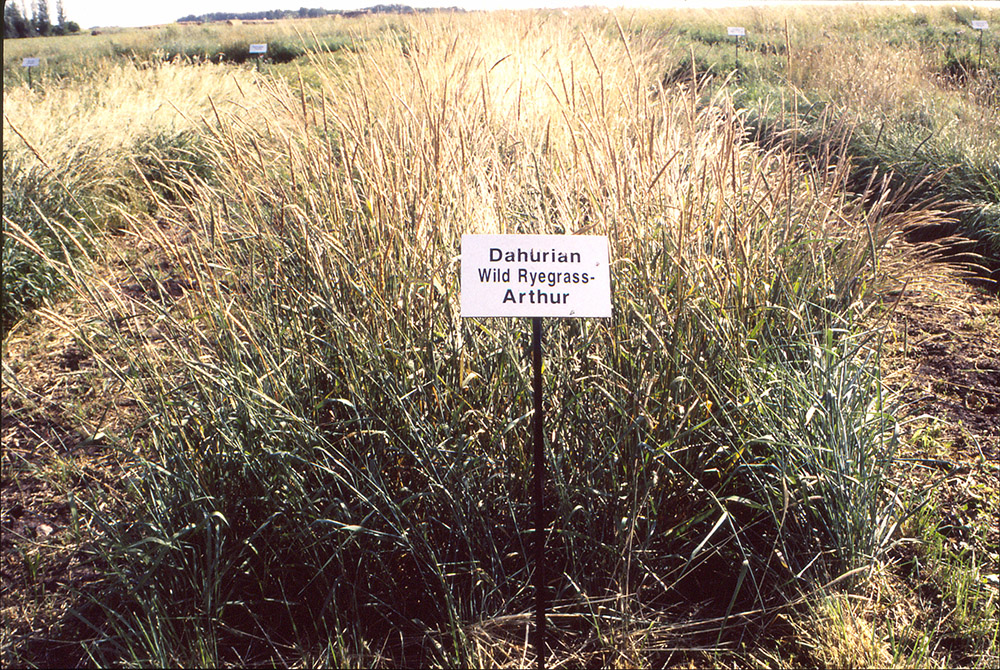
Dahurian wildrye is a short-lived, shallow-rooted perennial bunchgrass. It tends to be a less used species even through it establishes quickly. Dahurian wildrye and slender wheatgrass are now classified within the same genus.  

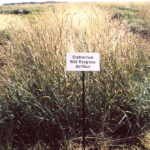
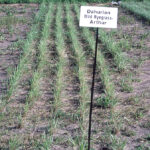
The stems of Dahurian wildrye are erect and can grow to 100 to 150 cm (39 to 60 in) high. The leaves are 11 to 15 mm wide with prominent veining, and lax with long (130 to 235 mm or 5 to 9 in) leaf sheaths and internodes. The leaves are high on the stem. The seed is generally longer and wider than that of Russian wildrye, Psathyrostachys juncea, and frequently has awns 10 to 20 mm (.4 to .8 in) in length.


Type

Tame grass.


Origin

Siberia, Mongolia, China. Varieties “James” and “Arthur” developed in Canada.


Longevity

Less than 5 years. Low persistence.

Use

Pasture, hay. Dahurian wildrye is used primarily for short-term pasture or hay forage, but because of its adaptability, ease of establishment, and shorter life span, it may have some application in restoration. It can establish very quickly.


Optimal Time of Use

Spring, summer. Dahurian wildrye can be continually grazed, but responds best to rotational grazing for maximized regrowth. Dahurian wildrye begins growth early and should be grazed before it gets coarse. It can be used in the year of establishment, especially under moister site conditions. Hay at heading for best palatabilty.


Recovery After Use

Requires a minimum 30 to 60 days of recovery after use. Dahurian wildrye is quick to regrow and can be grazed 2 to 3 times within the season, soil zone dependant.

Palatability/Nutritional Value

Dahurian wildrye is quite palatable and has good forage quality when it is growing. Palatability decreases after heading. Unlike Russian wildrye, it does not cure well standing, although when cut at the immature stage hay quality may be as good as crested wheatgrass.

Annual Precipitation min/max (mm)

300mm / 600mm


Drought Tolerance

Good tolerance.


Flooding Tolerance

Withstand up to 4 weeks of flooding in the spring. Tolerates moist soils well.


Winter Hardiness

Good hardiness. Short longevity overall.

Soil Texture Preference

Dahurian wildrye can be grown on a wide range of soil textures.


Erosion Control

Dahurian wildrye is not suitable for erosion control. 


Salinity Tolerance

High tolerance.


Acidity Tolerance

Low tolerance.


Alkalinity Tolerance

Moderate tolerance.

Seeds per kg

194,000 seeds/kg (88,000 seeds/lb)


Suggested Mixtures

Suitable for mixtures. Dahurian wildrye can be paired with other short lived forages for a short lived stand. Otherwise, use Dahurian wildrye as a short lived, starter species with long lived forages that will take over a stand as Dahurian wildrye dies out. Darhurian wildrye will compete strongly in a new stand.


Ease of Establishment

Dahurian wildrye is easily established, has excellent seedling vigour, and is very competitive with other crops such as legumes.


Competitiveness

Dahurian wildrye is very competitive in the year of establishment but becomes less competitive as the stand ages. It will die out of the stand in less than 5 years. Dahurian wildrye is not considered invasive.


Management Considerations

Dahurian wildrye is sometimes seeded in wide or perpendicular rows with other longer-lived perennials to provide additional forage in the first year of establishment. Manage for short term use.

British Columbia Rangeland Seeding Manual, Saskatchewan Dryland Forage Species Adaptation Tool, USDA Plants Database, Manitoba Forage Adaptation and Comparison Guide, Alberta Forage Manual

Dahurian wildrye is adapted to all zones in the Central Interior, but is less adapted to the driest (semi-arid) parts of the bunchgrass zone. 

Dahurian wildrye is adapted to all zones in the Southern Interior, but is less adapted to the driest (semi-arid) parts of the bunchgrass zone. 

Dahurian wildrye has moderate to high winter hardiness, but can winter kill in very severe winters. Trials with this species would help establish its suitability for use in the Peace-Liard region.