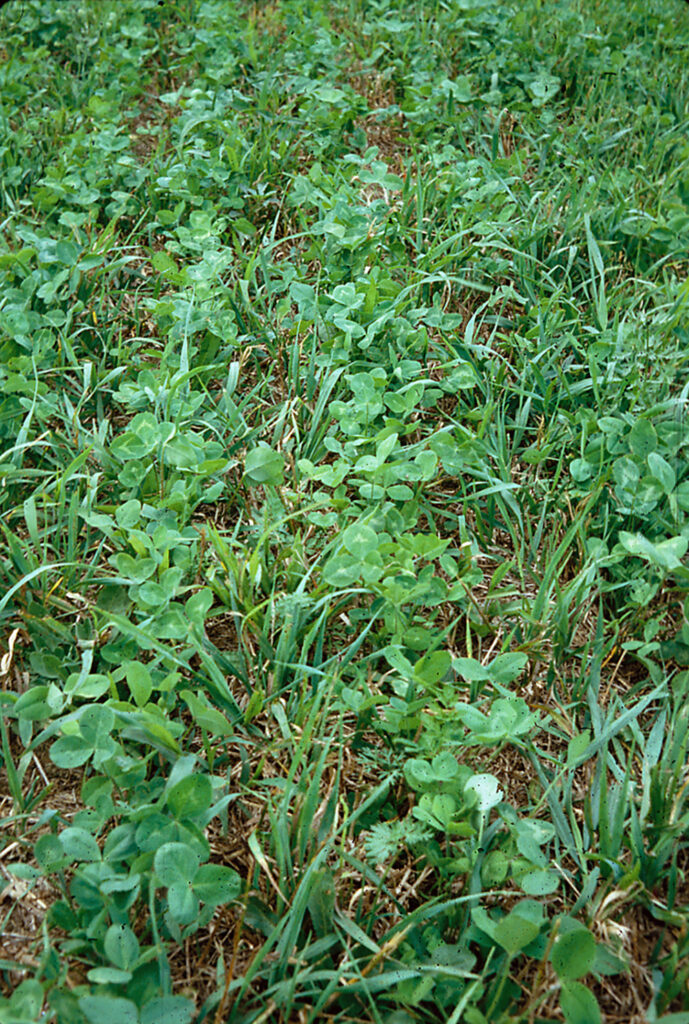
White Clover

General Description

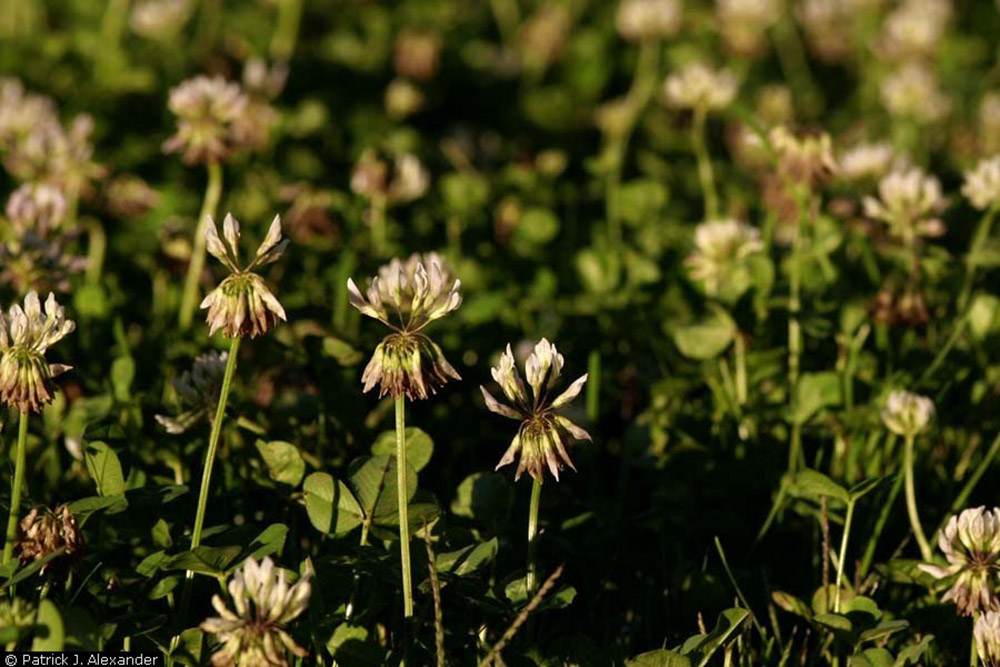
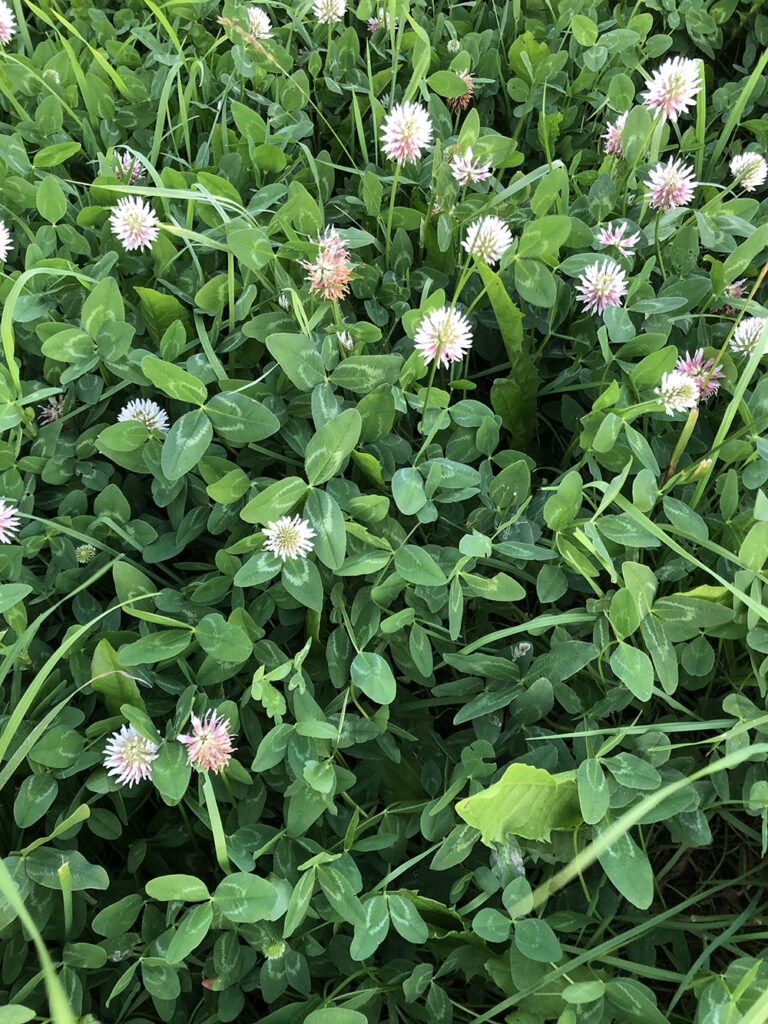
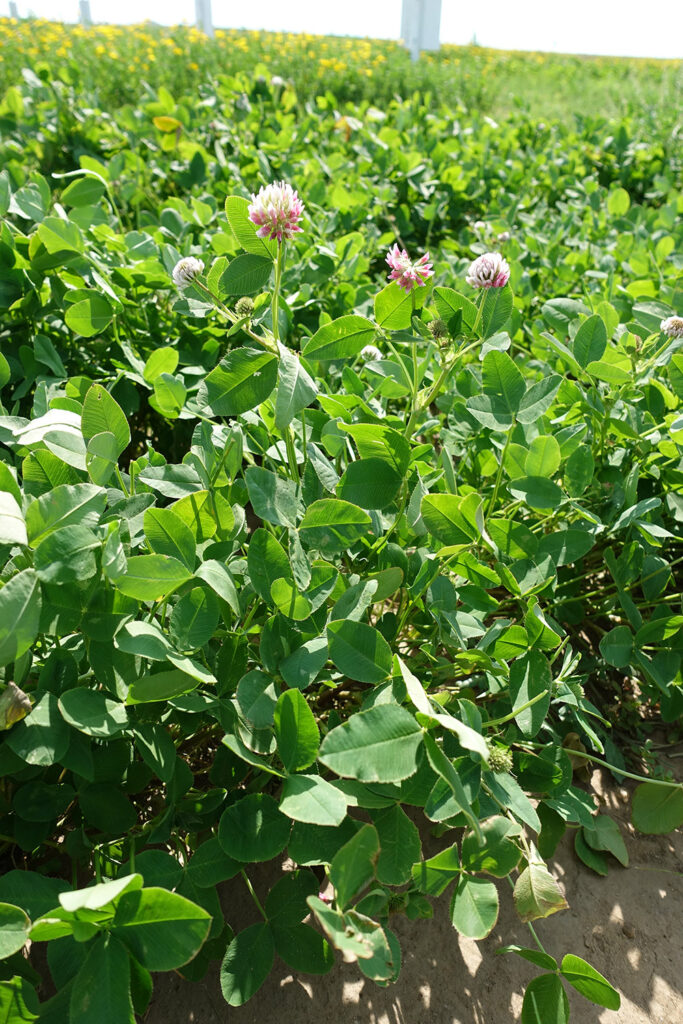
White clover requires adequate growing season moisture and moderate summer temperatures. White clover is widely distributed, especially in cool temperate climates. The plant has stolons or creeping stems near the soil surface. Leaves, flowers, and roots grow directly from these stolons. It is a relatively short plant with indeterminate growth, although taller types can grow up to 25 cm (10 in).


There are three types of white clover which vary mostly in height and persistence. The small type is commonly found in lawn mixes, or naturalized in disturbed or heavily grazed moist areas. It is highly persistent. The large type, often called Ladino, is larger (four-times) than the small type. With its low persistence it is rarely used, but can be seeded for short term hayland especially under irrigation. The intermediate type, also called common or Dutch, yields well, is a prolific seed producer, and is often used for pasture in high moisture regions. 

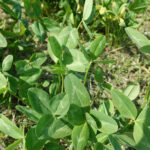
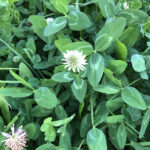
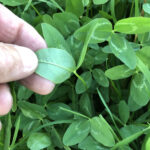
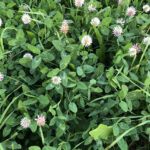
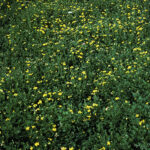
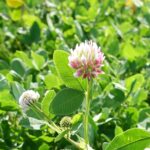
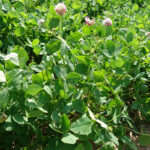
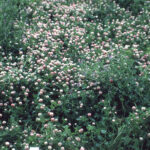
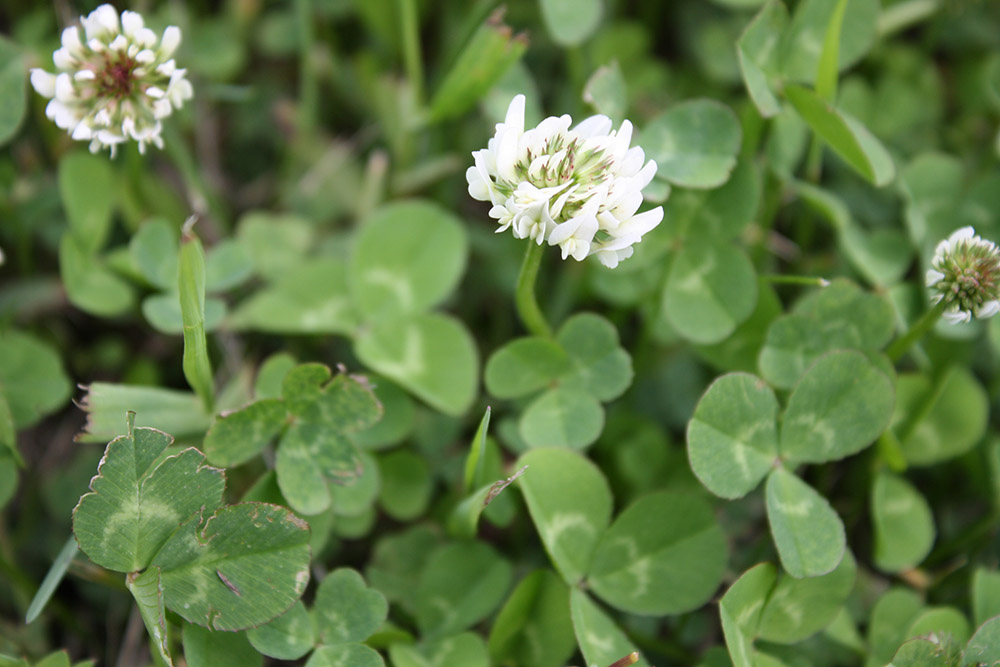
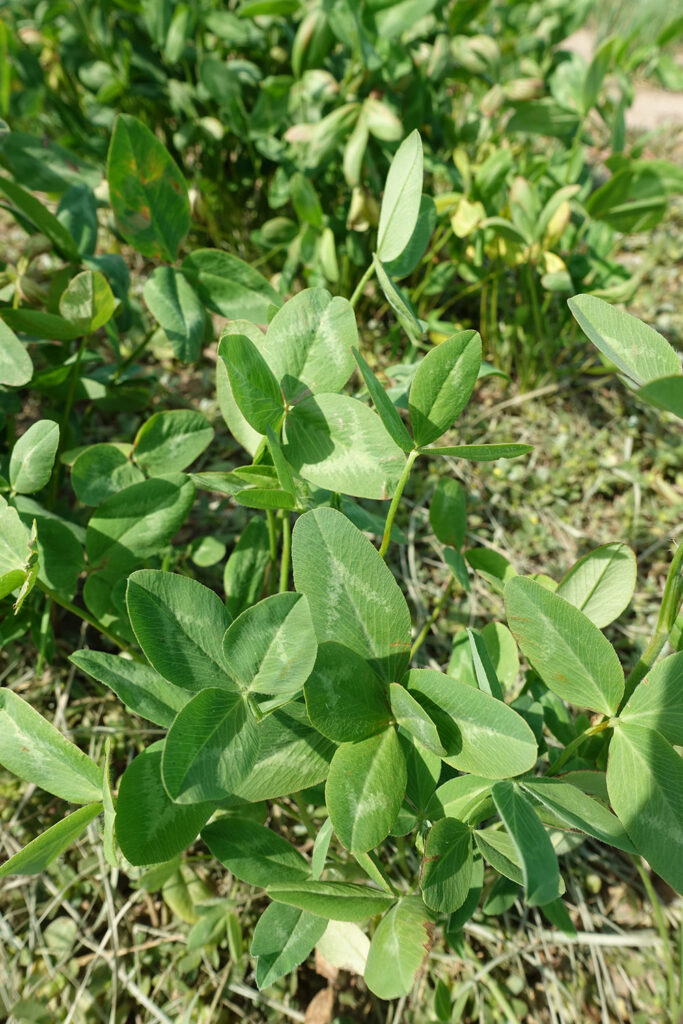
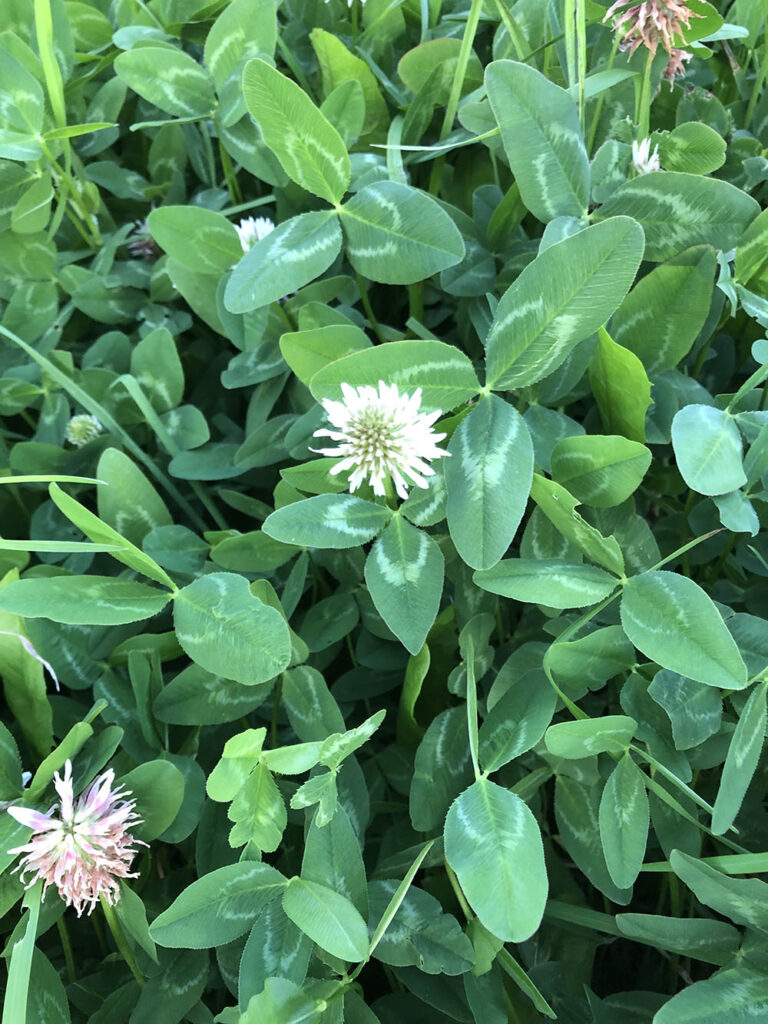
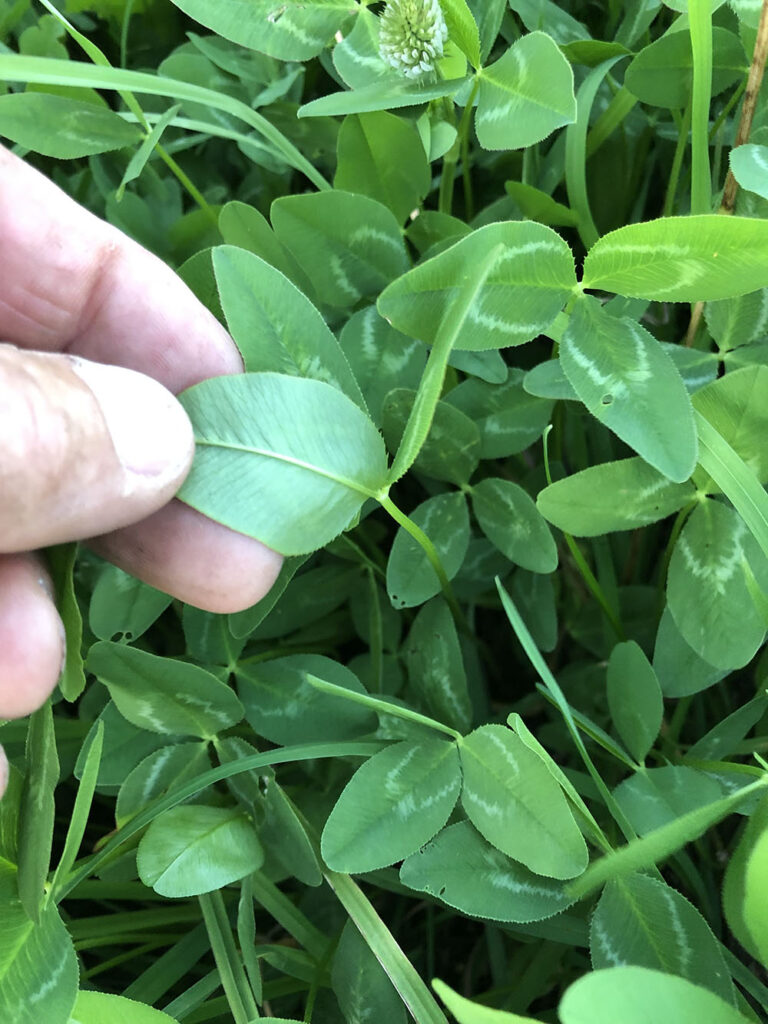
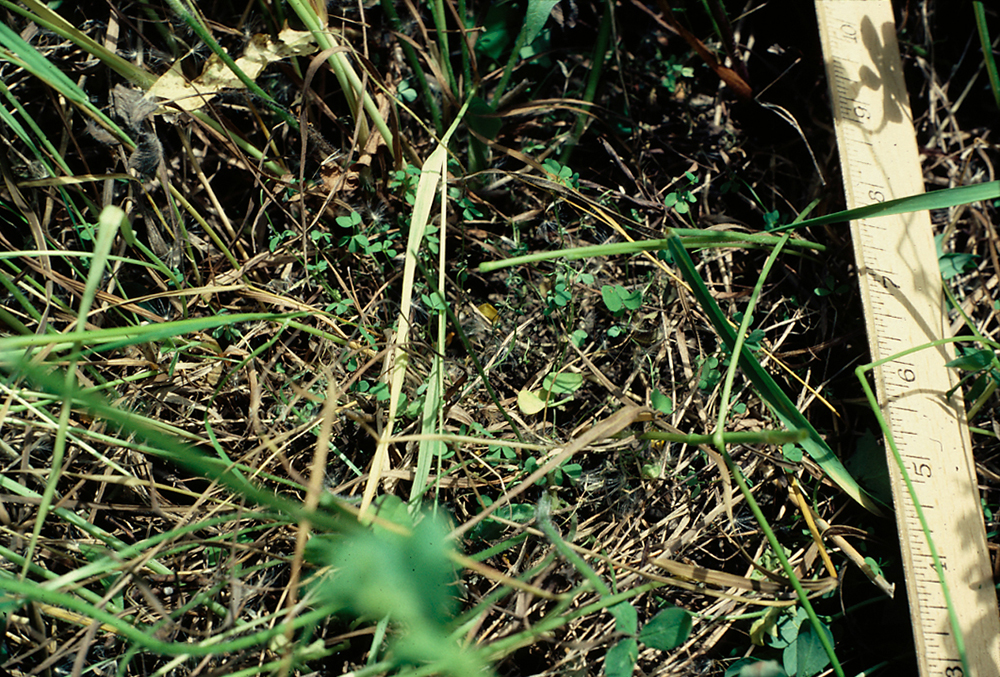
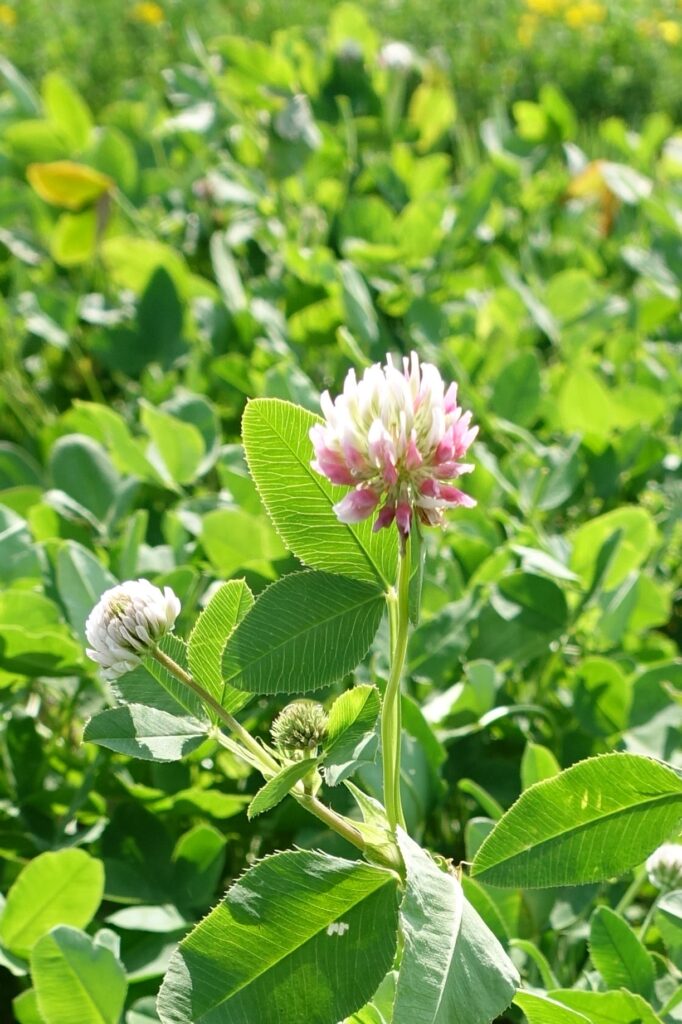
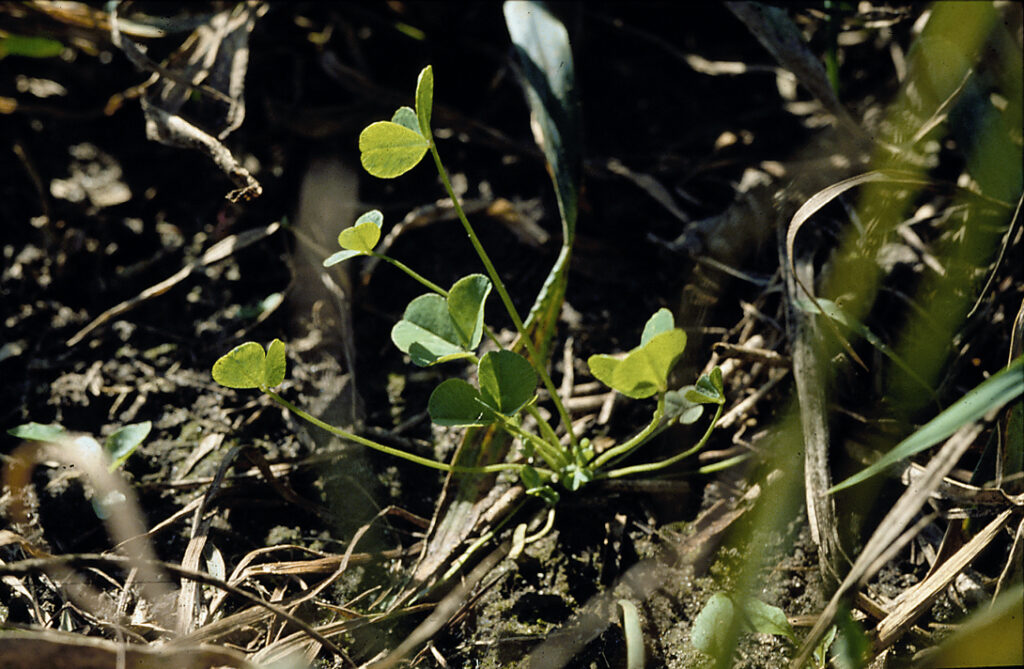
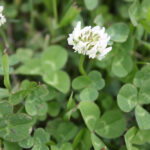
White clover has 3 leaflets attached at a single point, and are dark green, often with a white watermark. Leaflets are finely toothed, hairless, and nearly round, up to 3 cm (1 1/4 in) wide. Plants are only as high as the length of the flower and leaf stocks, which varies by type from ground level 25 cm (10 in). Seedling plants develop a taproot initially and then as plants age they develop threadlike, fibrous roots growing from detached stolons. White clover can cause bloat.

White clover requires adequate growing season moisture and moderate summer temperatures. White clover is widely distributed, especially in cool temperate climates. The plant has stolons or creeping stems near the soil surface. Leaves, flowers, and roots grow directly from these stolons. It is a relatively short plant with indeterminate growth, although taller types can grow up to 60 cm (24 in).​​​

There are three types of white clover which vary mostly in height and persistence (wild white, common white or white Dutch and Ladino). They look the same, but differ in size. Wild white clover is the smallest, ranging from 5-17.5 cm (2-7 in) tall. Intermediate white clover (also called Dutch or New Zealand White) grows to 40 cm (16 in). Ladino clover can grow up to 60 cm (24 in). The intermediate types are more suited for pastures than the ladino and tend to have more stolons per square metre than the ladino varieties.

White clover has 3 leaflets attached at a single point, and are dark green, often with a white watermark. Leaflets are finely toothed, hairless, and nearly round, up to 3 cm (1 1/4 in) wide. Plants are only as high as the length of the flower and leaf stocks, which varies by type. Seedling plants develop a taproot initially and then as plants age they develop threadlike, fibrous roots growing from detached stolons. White clover can cause bloat.


Type

Agronomic legume.


Origin

Mediterranean origins. Brought to North America by settlers.


Longevity

At least 10 years. Stolon survival and self-seeding (seed set) is critical for persistence.

Use

Intermediate types used for pasture. Small types tend to increase in continually grazed pastures.

Pasture. Intermediate types used for pasture. Small types tend to increase in continually grazed pastures.


Optimal Time of Use

Summer, fall. Late spring, once the plant has reached full height and leaf canopy, it is safe to begin use. 


Recovery After Use

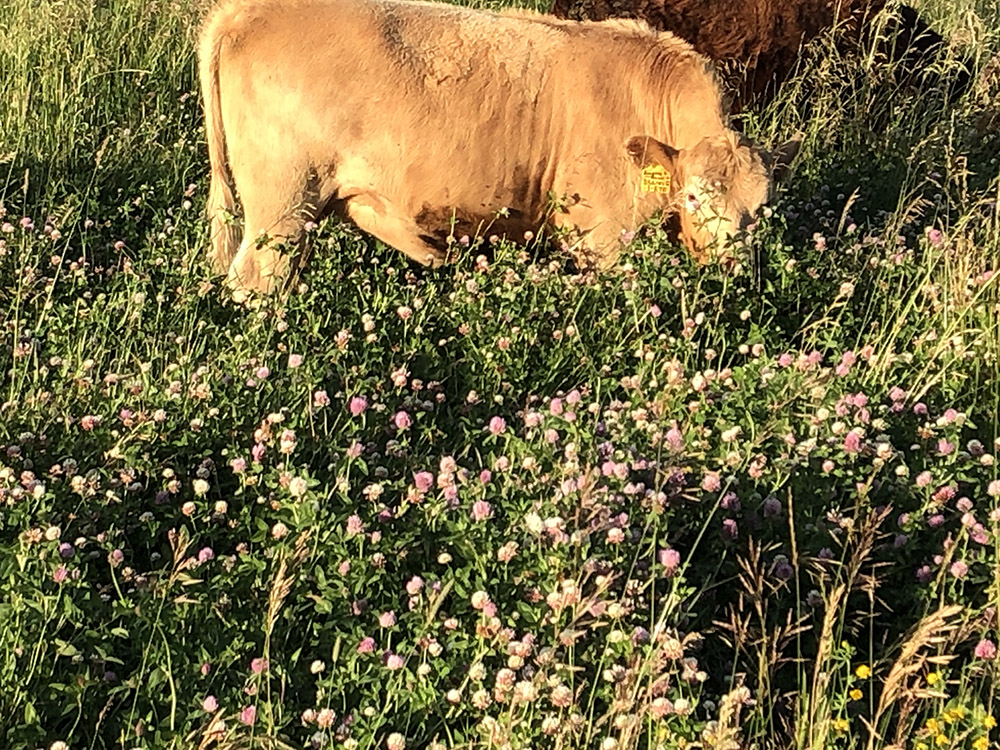
Tolerates frequent grazing and can be grazed repeatedly throughout the season to 5 cm (2 in) height. Intermediate and large types benefit from rotational grazing. Low growing points make small type white clover well adapted to use in continuous, closely grazed systems. Only graze lightly in the last six weeks of the growing season for improved winter survival.

Yield

The low growth form makes white clover lower yielding than other legumes, but quality remains high throughout the growing season and after grazing. Intermediate and tall types have greater forage yields.

Palatability/Nutritional Value

Excellent palatability, highly digestible. White clover crude protein is approximately 19.5-21% and total digestible nutrients is around 65%. Quality is maintained throughout the growing season as new leaves are grown. Can cause bloat. Sheep may select for white clover increasing their risk for bloat.

Annual Precipitation min/max (mm)

400mm / 1770mm.


Drought Tolerance

Poor tolerance. White clover is unproductive even in short duration drought. It easily dies from long or extreme drought. Small types tend to be more drought tolerant.

Poor tolerance. White clover is unproductive even in short duration drought. It easily dies from long or extreme drought. Small types tend to be more drought tolerant.


Flooding Tolerance

Tolerates 1-2 weeks of spring flooding. High moisture is desired over the growing season, but flooding or water logging is not tolerated.


Winter Hardiness

Poor to fair hardiness. Growing points are in the stolons which are at or on the soil surface so very susceptible to winter kill. Maintaining soil fertility and restricting grazing to light or no grazing in the last six weeks of the growing season improves winter survivability. Intermediate and small types have some winter hardiness while large types are the least winter hardy.

Soil Texture Preference

White clover prefers fertile clay and loam textured soil. White clover may grow on coarser sandier soils if moisture is adequate.


Erosion Control

Not well suited. White clover may be included in some erosion control mixtures as a nitrogen fixer for grasses or as a plant for higher moisture areas. 


Salinity Tolerance

Not tolerant.


Acidity Tolerance

Moderate tolerance. White clover can grow in pH 5.0, but prefers 6.0 to 6.5.

Moderate tolerance. White clover can grow in pH 5.5, but prefers 6.0 to 6.5.


Alkalinity Tolerance

Low tolerance.

Seeds per kg

1,764,000 seeds/kg (800,000 seeds/lb)


Suggested Mixtures

White clover mixes well with most cool season perennial grasses, particularly bunch grasses that can tolerate frequent grazing allowing for an open canopy; meadow bromegrass, orchard grass, tall fescue. Has also been grown with Russian wildrye and timothy. White clover can compete with sod forming grasses such as Kentucky bluegrass, and smooth bromegrass when moisture and fertility are not limiting and frequent defoliation keeps the canopy open.

White clover mixes well with most cool season perennial grasses, particularly bunch grasses that can tolerate frequent grazing allowing for an open canopy; meadow bromegrass, orchard grass, tall fescue. Has also been grown with timothy. White clover can compete with sod forming grasses such as Kentucky bluegrass, and smooth bromegrass when moisture and fertility are not limiting and frequent defoliation keeps the canopy open.


Ease of Establishment

White clover should be seeded shallow (6 mm / 0.25 in). Although seedlings are small and slow to develop, they can establish easily if fertility and moisture conditions are favourable. Competition from grasses and cover crops should be minimized. Stand will thicken as stolons develop.


Competitiveness

Small volunteer types can invade continuously grazed pastures, especially under moist conditions. Healthy stolons are critical for competitiveness. Shading of white clover decreases its competitiveness.

Small volunteer types can invade continuously grazed pastures, especially under moist conditions. Healthy stolons are critical for competitiveness. Shading of white clover decreases its competitiveness. White clover roots generally grow to the same depth as roots of commonly used grasses, creating intense competition between white clover and the grasses for soil nutrients and moisture. White clover often disappears from pastures because it cannot compete with the grasses for nutrients present at low levels.


Management Considerations

It is important to monitor livestock for bloat while grazing white clover. Inoculate white clover with Rhizobium trifolii for better nodulation and nitrogen fixing. Grows best on fertile, moist soils without shading from other plants. Stolon survival is critical for persistence so maintaining adequate fertility is important. Although white clover can tolerate a shorter rest period than most other legumes in a grazing system, grazing should be light enough not to damage stolons. Restrict or reduce grazing in the last six weeks of the growing season to restore stolon health and provide a canopy to help insulate stolons for winter. White clover can be grazed after a killing frost, however, reducing the canopy increases the risk of winter kill.

It is important to monitor livestock for bloat while grazing white clover. Inoculate white clover with Rhizobium trifolii for better nodulation and nitrogen fixing. Grows best on fertile, moist soils without shading from other plants. Stolon survival is critical for persistence so maintaining adequate fertility is important. Although white clover can tolerate a shorter rest period than most other legumes in a grazing system, grazing should be light enough not to damage stolons. Restrict or reduce grazing in the last six weeks of the growing season to restore stolon health and provide a canopy to help insulate stolons for winter. White clover can be grazed after a killing frost, however, reducing the canopy increases the risk of winter kill.

British Columbia Rangeland Seeding Manual, Saskatchewan Dryland Forage Species Adaptation Tool, Manitoba Forage Adaptation and Comparison Guide, USDA Plants Database, Alberta Forage Manual

British Columbia Rangeland Seeding Manual, Saskatchewan Dryland Forage Species Adaptation Tool, Manitoba Forage Adaptation and Comparison Guide, USDA Plants Database, Alberta Forage Manual, OMAFRA Publication 30

White clover is adapted to the Sub-Boreal Spruce, Sub-Boreal Pine-Spruce and Interior Cedar-Hemlock zones. In the southern part of the Central Interior it is suited to wetter parts of the Interior Douglas-fir zone, and to irrigated and subirrigated areas in the Bunchgrass zone and dry parts of the Interior Douglas-fir zone. It will typically persist in swales and depressions in the drier zones, and the white Dutch types can be included to have benefits of a legume in dryland pasture mixes in wetter areas of the Interior Douglas-fir zone. 

White clover is most suited to pasture use in the wetter areas in the region (i.e., the Interior Cedar-Hemlock Zone) and to irrigated or subirrigated areas in the higher elevation parts of the Bunchgrass zone, the Ponderosa Pine and Interior Douglas-fir zones. It will typically persist in swales and depressions in the drier zones, and the white Dutch types can be included to have benefits of a legume in dryland pasture mixes in more wetter areas of the Interior Douglas-fir zone. 
Seeding Rate Calculator

Seeding Rate Calculator

Calculate the seeding
rate & seed cost

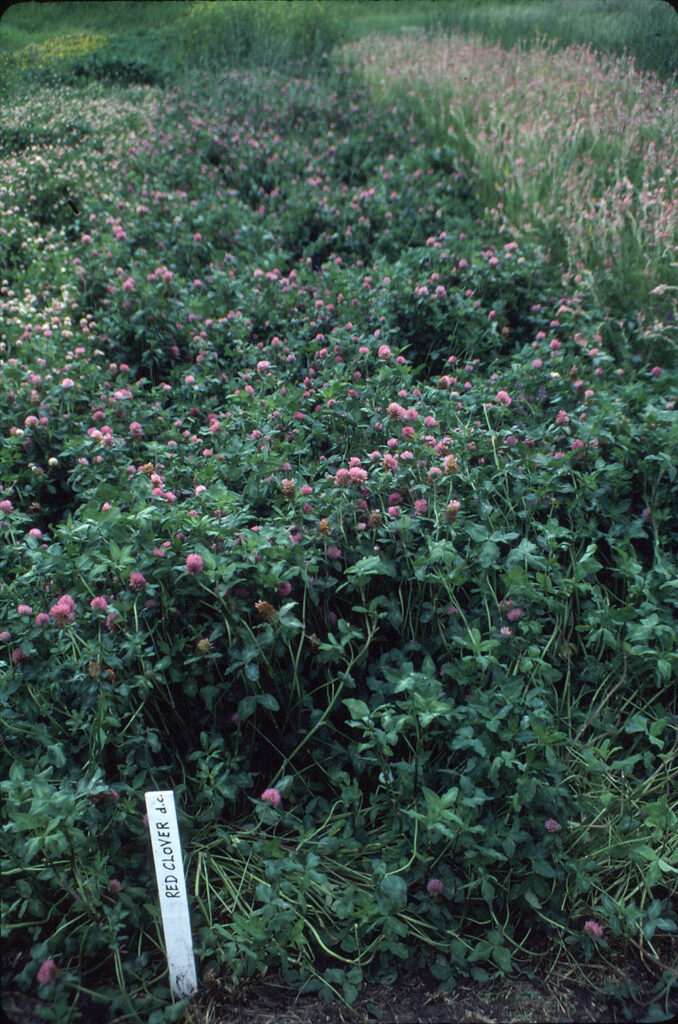
Double Cut Red Clover

General Description

Red clover is an introduced, commonly grown, shorter-lived perennial legume. Red clover needs adequate moisture in the growing season and moderate summer temperatures. It can thrive in cooler temperatures and more acidic soils than alfalfa. Single cut types, also called mammoth or late-flowering red clover, are generally hardier and most commonly grown. Double cut varieties produce multiple cuts as the name implies but lack persistence in adapted soil zones.

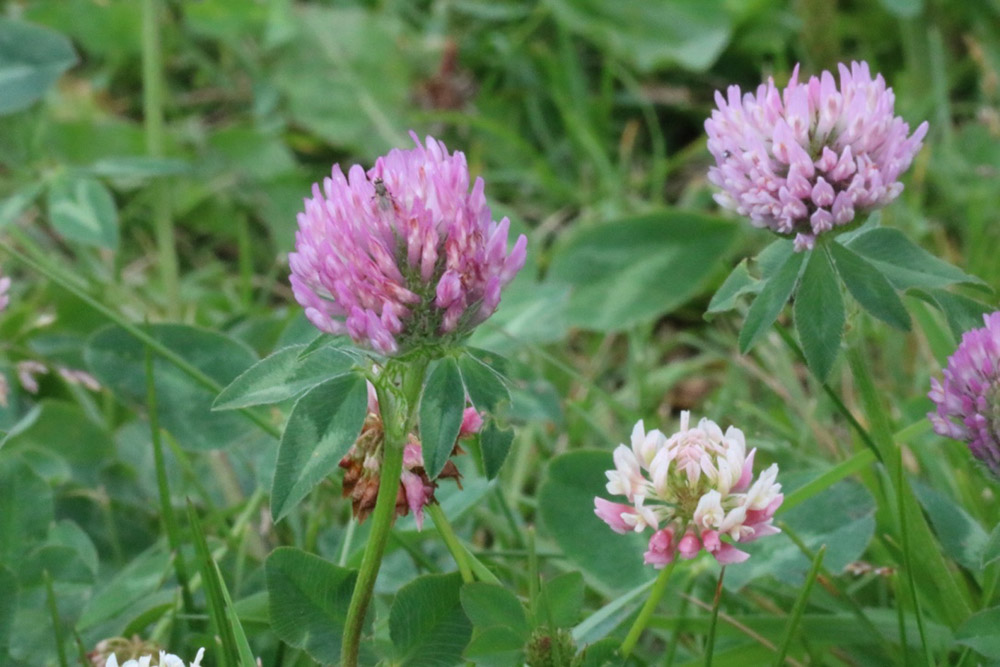
Each red clover crown produces many branched, hairy stems, which grow to 75 cm (30 in) in length. Leaves are made up of three hairy leaflets attached at one point and often have white “V-shaped” watermarks. Red clover produces globe-shaped, purple, cross-pollinated flowers. Once it flowers it stops growing (determinant growth) like alfalfa.


Type

Tame legume.


Origin

Europe and Turkey. Varieties such as Altaswede developed in Canada.


Longevity

Less than 5 years in the Black soil zone; however, at least 10 years is now common in rotationally grazed pastures in the Grey soil zone. Red clover crowns and roots that are close to the surface, easily damaged, and break down naturally which limits longevity.

Use

Pasture, hay, stockpiled, reclamation. Red clover can cause bloat, however, the risk of bloat is lower than for alfalfa. It is used for soil improvement in site rehabilitation in a variety of contexts.


Optimal Time of Use

Summer, fall. Delay grazing until a full canopy of leaves has developed. Delaying grazing until full bloom can prevented bloat and increased the stand persistence. Hay single cut red clover varieties at 25%+ bloom with regrowth used in fall.


Recovery After Use

Recovery after use may be varied depending on the site, moisture availability and management. Some sources indicate red clover recovers well after mid-season cutting and can be left for fall grazing. Still others advise against its use for grazing because of its inability to resist traffic from grazing animals. It is recommended to leave at least 10 cm (4 in) to allow for regrowth as recovery may depend on where the growing tip is in relation to cutting or defoliation from grazing.

Palatability/Nutritional Value

Red clover is highly palatable and may be grazed preferentially. When red clover is cut or utilized at 25% bloom, crude protein can be 19% and dry matter 65% to 70%. Weight gains on red clover are similar to gains on alfalfa.

Annual Precipitation min/max (mm)

400mm / 1600mm


Drought Tolerance

Low tolerance. Red clover is more drought tolerant than alsike clover but less than alfalfa.


Flooding Tolerance

Withstands 1 to 2 weeks of excess moisture, early in growing season; but intolerant of flooding during its actively growing period. Requires adequate moisture all season long.


Winter Hardiness

Good hardiness in single cut varieties. Fair tolerance in double cut varieties.

Soil Texture Preference

Most suited to heavier wet, fertile soils. Will grow on sandy textured soils as long as moisture is sufficient.


Erosion Control

Little ability to control erosion. Red clover has value for soil improvement in erosion control seeding and may be included in a mix.


Salinity Tolerance

Not tolerant.


Acidity Tolerance

High tolerance. Red clover can tolerate pH levels as low as 5.0 but yield is reduced significantly. Prefers pH of 6.0 to 7.0.


Alkalinity Tolerance

Moderate tolerance.

Seeds per kg

600,000 seeds/kg (272,000 seeds/lb)


Suggested Mixtures

Often grown in a mix with meadow bromegrass, timothy, smooth bromegrass, tall fescue or hybird bromegrass. Including grass in hay mixes assists with dry-down of windrows. In the Peace River Region red clover is often grown in the place of alfalfa in mixes because of its better acidity tolerance.


Ease of Establishment

Red clover is very easy to establish with moist conditions and moderate temperatures. Seedlings tend to be vigorous and shade tolerant. Use red clover the year after establishment. Red clover is successfully sod seeded.


Competitiveness

Red clover is competitive and can grow dominantly in a pasture situation for the first few years but can then decrease depending on grazing strategy. Persistence is dependent on how well the plant’s crown is maintained. Red clover is not invasive.


Management Considerations

Red clover is high in moisture and hay stands benefit from having a grass species in the mix to assist with drying-down. Short duration rotational gazing is beneficial for red clover longevity as grazing of newly emerging regrowth could be avoided. New growth is required to sustain the plant. Seed should be inoculated with Rhizobium trifolii for better nodulation and nitrogen fixing.

British Columbia Rangeland Seeding Manual, Saskatchewan Dryland Forage Species Adaptation Tool, USDA Plants Database, Manitoba Forage Adaptation and Comparison Guide, Alberta Forage Manual

Red clover is adapted to the Sub-Boreal Spruce, Sub-Boreal Pine-Spruce and Interior Cedar-Hemlock zones. It is less drought tolerant than white clover, and needs moderate temperatures. In the southern part of the Central Interior it is suited to wetter parts of the Interior Douglas-fir zone, and to irrigated and subirrigated areas in the Bunchgrass zone and dry parts of the Interior Douglas-fir zone.

Red clover is less drought tolerant than white clover, and needs moderate temperatures. This limits its suitability to the Interior Cedar-Hemlock, wetter parts of the Interior Douglas-fir zone, and to higher elevation irrigated and subirrigated areas in the Bunchgrass, Ponderosa Pine and dry Interior Douglas-fir zones.

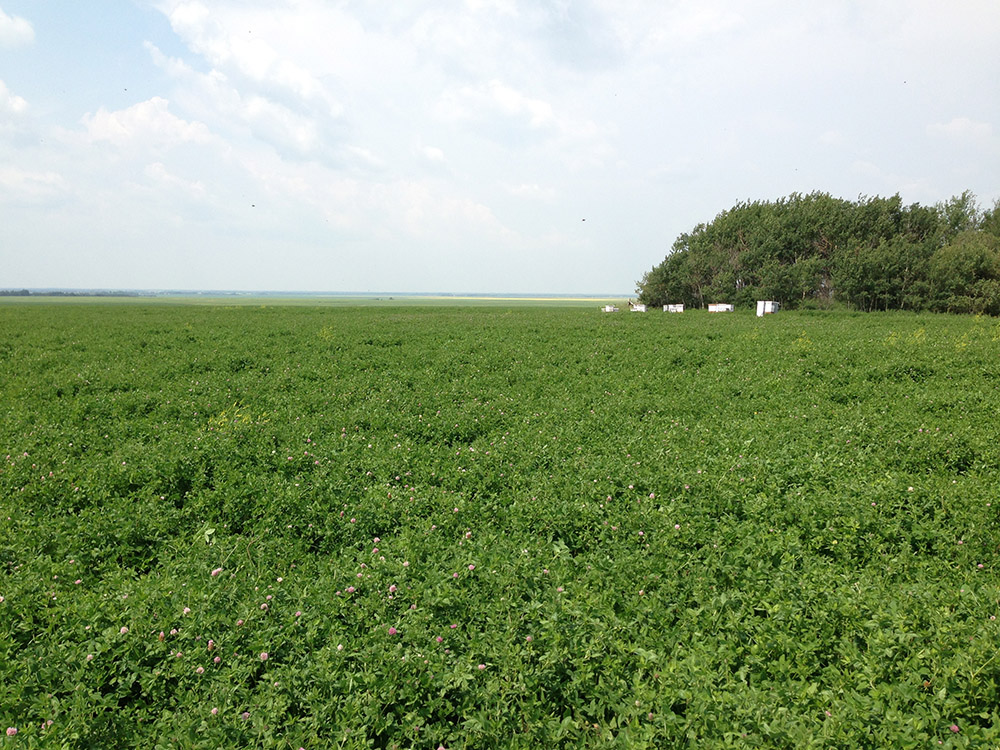
Single Cut Red Clover

General Description

Red clover is an introduced, commonly grown, shorter-lived perennial legume. Red clover needs adequate moisture in the growing season and moderate summer temperatures. It can thrive in cooler temperatures and more acidic soils than alfalfa. Single cut types, also called mammoth or late-flowering red clover, are generally hardier and most commonly grown.  Double cut varieties produce multiple cuts as the name implies but lack persistence in adapted soil zones.

Each red clover crown produces many branched, hairy stems, which grow to 75 cm (30 in) in length. Leaves are made up of three hairy leaflets attached at one point and often have white “V-shaped” watermarks. Red clover produces globe-shaped, purple, cross-pollinated flowers. Once it flowers it stops growing (determinant growth) like alfalfa.


Type

Tame legume.


Origin

Europe and Turkey. Varieties such as Altaswede developed in Canada.


Longevity

Less than 5 years in the Black soil zone; however, at least 10 years is now common in rotationally grazed pastures in the Grey soil zone. Red clover crowns and roots that are close to the surface, easily damaged, and break down naturally which limits longevity.

Use

Pasture, hay, stockpiled, reclamation. Red clover can cause bloat, however, the risk of bloat is lower than for alfalfa. It is used for soil improvement in site rehabilitation in a variety of contexts.


Optimal Time of Use

Summer, fall. Delay grazing until a full canopy of leaves has developed. Delaying grazing until full bloom can prevented bloat and increased the stand persistence. Hay single cut red clover varieties at 25%+ bloom with regrowth used in fall.


Recovery After Use

Recovery after use may be varied depending on the site, moisture availability and management. Some sources indicate red clover recovers well after mid-season cutting and can be left for fall grazing. Other sources say using red clover twice a season can reduce longevity. Still others advise against its use for grazing because of its inability to resist traffic from grazing animals. It is recommended to leave at least 10 cm (4 in) to allow for regrowth as recovery may depend on where the growing tip is in relation to cutting or defoliation from grazing.

Palatability/Nutritional Value

Red clover is highly palatable and may be grazed preferentially. When red clover is cut or utilized at 25% bloom, crude protein can be 19% and dry matter 65% to 70%. Weight gains on red clover are similar to gains on alfalfa.

Annual Precipitation min/max (mm)

400mm / 1600mm.


Drought Tolerance

Low tolerance. Red clover is more drought tolerant than alsike clover but less than alfalfa.


Flooding Tolerance

Withstands 1 to 2 weeks of excess moisture, early in growing season; but intolerant of flooding during its actively growing period. Requires adequate moisture all season long.


Winter Hardiness

Good hardiness in single cut varieties. Fair tolerance in double cut varieties.

Soil Texture Preference

Most suited to heavier wet, fertile soils. Will grow on sandy textured soils as long as moisture is sufficient.


Erosion Control

Little ability to control erosion. Red clover has value for soil improvement in erosion control seeding and may be included in a mix.


Salinity Tolerance

Not tolerant.


Acidity Tolerance

High tolerance. Red clover can tolerate pH levels as low as 5.0 but yield is reduced significantly. Prefers pH of 6.0 to 7.0.


Alkalinity Tolerance

Moderate tolerance.

Seeds per kg

600,000 seeds/kg (272,000 seeds/lb).


Suggested Mixtures

Often grown in a mix with meadow bromegrass, timothy, smooth bromegrass, tall fescue or hybird bromegrass. Including grass in hay mixes assists with dry-down of windrows. In the Peace River Region red clover is often grown in the place of alfalfa in mixes because of its better acidity tolerance.


Ease of Establishment

Red clover is very easy to establish with moist conditions and moderate temperatures. Seedlings tend to be vigorous and shade tolerant. Use red clover the year after establishment. Red clover is successfully sod seeded.


Competitiveness

Red clover is competitive and can grow dominantly in a pasture situation for the first few years but can then decrease depending on grazing strategy. Persistence is dependent on how well the plant’s crown is maintained. Red clover is not invasive.


Management Considerations

Red clover is high in moisture and hay stands benefit from having a grass species in the mix to assist with drying-down. Short duration rotational gazing is beneficial for red clover longevity as grazing of newly emerging regrowth could be avoided. New growth is required to sustain the plant. Seed should be inoculated with Rhizobium trifolii for better nodulation and nitrogen fixing.

British Columbia Rangeland Seeding Manual, Saskatchewan Dryland Forage Species Adaptation Tool, USDA Plants Database, Manitoba Forage Adaptation and Comparison Guide, Alberta Forage Manual

Red clover is adapted to the Sub-Boreal Spruce, Sub-Boreal Pine-Spruce and Interior Cedar-Hemlock zones. It is less drought tolerant than white clover, and needs moderate temperatures. In the southern part of the Central Interior it is suited to wetter parts of the Interior Douglas-fir zone, and to irrigated and subirrigated areas in the Bunchgrass zone and dry parts of the Interior Douglas-fir zone.

Red clover is less drought tolerant than white clover, and needs moderate temperatures. This limits its suitability to the Interior Cedar-Hemlock, wetter parts of the Interior Douglas-fir zone, and to higher elevation irrigated and subirrigated areas in the Bunchgrass, Ponderosa Pine and dry Interior Douglas-fir zones.

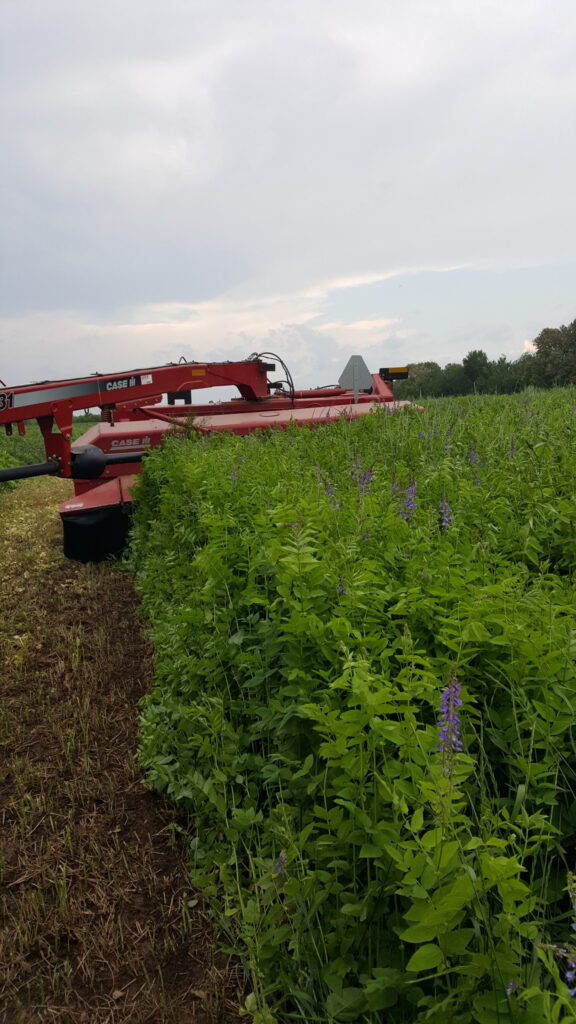
Fodder Galega

General Description

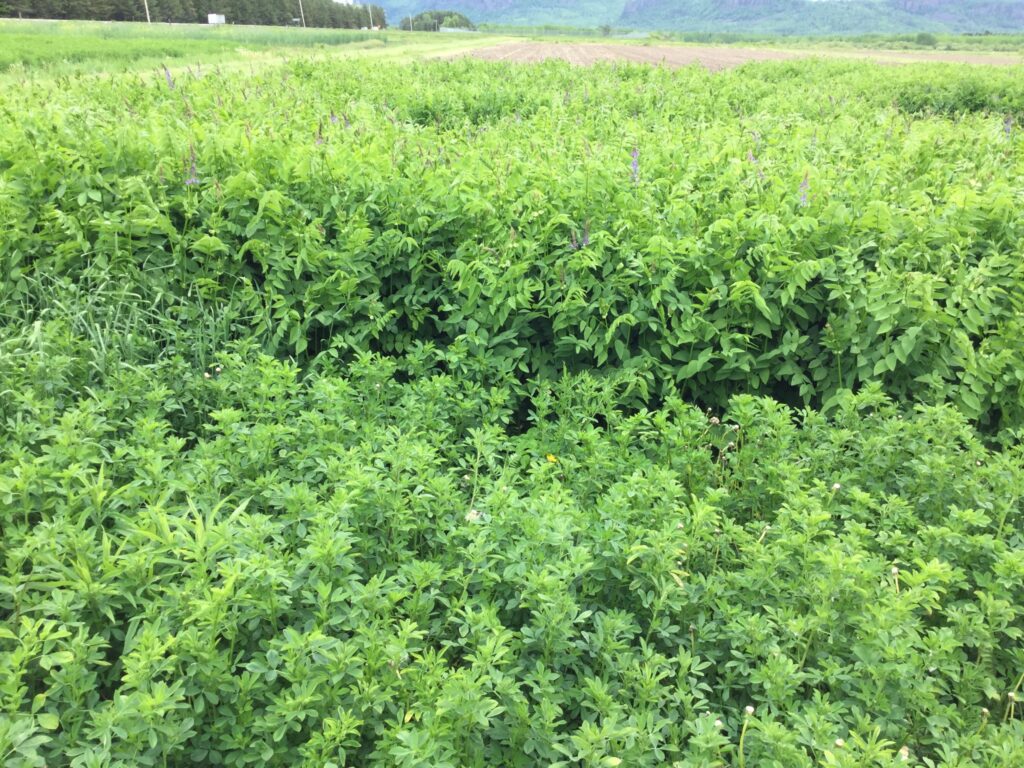
Fodder galega (pronounced guh-LAY-guh) is a perennial legume. It is winter hardy and tolerant of acidic soils. It can persist for over ten years.

Fodder galega has a large root system. It has a taproot and can spread by underground runners (rhizomes) or reproduce by seed. Galega can grow up to 150 cm (60 in) tall. Primary stems bend at the nodes. Leaves are broader than alfalfa, compound and set on stems. Flowers are purple-blue and grow in an elongated bunch. Five to eight seeds develop per pod, and seeds are kidney shaped.

Do not confuse fodder galega with its close relative goat’s rue (Galega officinalis). Goat’s rue is poisonous to ruminants.


Type

Tame legume.


Origin

Native to the Caucasus region of Europe and Asia (Armenia, Georgia, Azerbaijan, and southern Russia).


Longevity

3-10 years. Galega is slow to establish, so is not recommended for fast rotations where it will be grown for less than three years.

Use

Hay, silage.


Optimal Time of Use

Spring, summer, fall. Fodder galega matures about two weeks earlier than alfalfa or red clover.


Recovery After Use

Fodder galega is suitable for up to two cuts per year. European researchers taking three cuts sometimes report reduced yield.

Expected averages

6.9 tonnes DM/ha (average of Truro, Charlottetown & St. John’s, Fairey et al 2000).

Expected averages

9.7 tonnes DM/ha (Ste Foy, Fairey et al 2000).

Expected averages

Not recommended due to summerkill (Elora, personal communication).

Expected averages

8 tonnes DM/ha.

Expected averages

No yield data available. (Emo, personal communication).

Yield

Note that all yield data is from inoculated plots. Without Rhizobium galegae inoculant, galega yields are approximately half those of inoculated stands.

The long-term fodder galega plots (established 2011) at Lakehead University Agriculture Research Station show that production declines over time, with strong yields for the first 5 production years. Yield dropped by about half in the sixth year and stabilized again for production years 6-10.


Palatability/Nutritional Value

Very palatable to ruminants. Feed value similar to alfalfa or red clover.

Annual Precipitation min/max (mm)

Trials across Canada suggest that galega may not be productive in the semi-arid climate of the central prairies. 500mm / 1550mm


Drought Tolerance

Good drought tolerance.


Flooding Tolerance

Somewhat tolerant of flooding, but does not tolerate waterlogged soils.


Winter Hardiness

Very winter hardy. European research suggests that fodder galega varieties will tolerate air temperatures as low as -20C without snow cover, and -40C when the crowns are insulated by snow.

Soil Texture Preference

Adapted to moist soils of any texture.


Erosion Control

Fodder galega is sometimes used in eastern Europe to protect fallow fields that will be out of production for a few years. However, it is slow to establish, so may not be suited to soils at high risk of erosion.


Salinity Tolerance

Unknown.


Acidity Tolerance

Tolerant of acidic soils above pH 4.5. Grow best in pH above 6.0.


Alkalinity Tolerance

Up to pH 7.5.

Seeds per kg

111,000 to 181,800 seeds/kg (50,455 to 82,635 seeds/lb)


Suggested Mixtures

Canadian trials have been on pure stands only. Fodder galega does not compete well in the establishment year. Researchers in Estonia have had success seeding galega with timothy or smooth bromegrass.


Ease of Establishment

Galega seedlings grow slowly initially, so do not use a companion crop. Weed management ahead of seeding is essential for successful establishment. Early seeding improves yields. Seed as soon as soil conditions are fit to carry equipment in the spring. Seed at a rate of 25-35 kg/ha (22.5-31.5 lb/acre) and 1-2 cm (1/2 to 3/4 in) deep.


Competitiveness

Poor competitor in the establishment year. Once established, galega’s ability to spread by rhizomes helps maintain a thick stand.


Management Considerations

Fodder galega requires its own specific Rhizobium galegae inoculant to fix nitrogen, which is not available in Canada at the time of the eastern Canadian Forage U-Pick release. Some European researchers also recommend scarifying the seeds to improve germination.

Fairey, N.A., L.P. Lefkovitch, B.E. Coulman, D.T. Fairey, T. Kunelius, D.B. McKenzie, R. Michaud, and W.G.Thomas (2000). Cross-Canada comparison of the productivity of fodder galega (Galega orientalis Lam.) with traditional herbage legumes. Canadian Journal of Plant Science. 80:793-800.

Lattemae, P., H. Meripold, U. Tamm, and S. Tamm. (2013). The effect of different fodder galega-grass mixtures and nitrogen fertilization on forage yield and chemical composition. Grassland Science in Europe. 18:168-170.

Sahota, T.S. Annual reports from 2016 to 2021 for the Thunder Bay Agricultural Research Station/Lakehead University Agricultural Research Station.

Varis, E. 1986. Goat’s rue (Galega orientalisLam.), a potential pasture legume for temperate conditions. Journal of Agricultural Science in Finland. 58:83-101.

Zarczynski, P.J., S. Sienkiewicz, J. Wierzbowska, and S.J. Krzebietke (2021). Fodder galega – a versatile plant. Agronomy. 11:1797-1809.

NA

Seeding Rate Calculator

Seeding Rate Calculator

Calculate the seeding
rate & seed cost

White Clover

General Description

White clover requires adequate growing season moisture and moderate summer temperatures. White clover is widely distributed, especially in cool temperate climates. The plant has stolons or creeping stems near the soil surface. Leaves, flowers, and roots grow directly from these stolons. It is a relatively short plant with indeterminate growth, although taller types can grow up to 25 cm (10 in).

There are three types of white clover which vary mostly in height and persistence. The small type is commonly found in lawn mixes, or naturalized in disturbed or heavily grazed moist areas. It is highly persistent. The large type, often called Ladino, is larger (four-times) than the small type. With its low persistence it is rarely used, but can be seeded for short term hayland especially under irrigation. The intermediate type, also called common or Dutch, yields well,  is a prolific seed producer, and is often used in for pasture in high moisture regions. 

White clover has 3 leaflets attached at a single point, and are dark green, often with a white watermark. Leaflets are finely toothed, hairless, and nearly round, up to 3 cm (1 1/4 in) wide. Plants are only as high as the length of the flower and leaf stocks, which varies by type from ground level 25 cm (10 in). Seedling plants develop a taproot initially and then as plants age they develop threadlike, fibrous roots growing from detached stolons. White clover can cause bloat.


Type

Agronomic legume.


Origin

Mediterranean origins. Brought to North America by settlers.


Longevity

At least 10 years. Stolon survival and self-seeding (seed set) is critical for persistence.

Use

Intermediate types used for pasture. Small types tend to increase in continually grazed pastures.


Optimal Time of Use

Summer, fall. Late spring, once the plant has reached full height and leaf canopy it is safe to begin use. 


Recovery After Use

Requires a minimum 30-45 days of recovery after use. Tolerates frequent grazing and can be grazed repeatedly throughout the season to 5 cm (2 inch) height. Intermediate and large types benefit from rotational grazing. Low growing points make small type white clover well adapted to use in continuous, closely grazed systems. Only graze lightly in the last six weeks of the growing season for improved winter survival.

Palatability/Nutritional Value

Excellent palatability, highly digestible. White clover crude protein is approximately 19.5-21% and total digestible nutrients is around 65%. Quality is maintained throughout the growing season as new leaves are grown. Can cause bloat. Sheep may select for white clover increasing their risk for bloat.

Annual Precipitation min/max (mm)

400mm / 1770mm


Drought Tolerance

Poor tolerance. White clover is unproductive even in short duration drought. It easily dies from long or extreme drought. Small types tend to be more drought tolerant.


Flooding Tolerance

Tolerates 1-2 weeks of spring flooding. High moisture is desired over the growing season, but flooding or water logging is not tolerated.


Winter Hardiness

Poor to fair hardiness. Growing points are in the stolons which are at or on the soil surface so very susceptible to winter kill. Maintaining soil fertility and restricting grazing to light or no grazing in the last six weeks of the growing season improves winter survivability. Intermediate and small types have some winter hardiness while large types are the least winter hardy.

Soil Texture Preference

White clover prefers fertile clay and loam textured soil. White clover may grow on coarser sandier soils if moisture is adequate.


Erosion Control

Not well suited. White clover may be included in some erosion control mixtures as a nitrogen fixer for grasses or as a plant for higher moisture areas. 


Salinity Tolerance

Not tolerant.


Acidity Tolerance

Moderate tolerance. White clover can grow in pH 5.0, but prefers 6.0 to 6.5.


Alkalinity Tolerance

Low tolerance.

Seeds per kg

1,764,000seeds/kg (800,000 seeds/lb)


Suggested Mixtures

White clover mixes well with most cool season perennial grasses, particularly bunch grasses that can tolerate frequent grazing allowing for an open canopy; meadow bromegrass, orchard grass, tall fescue. Has also been grown with Russian wildrye and timothy. White clover can compete with sod forming grasses such as Kentucky bluegrass, and smooth bromegrass when moisture and fertility are not limiting and frequent defoliation keeps the canopy open.


Ease of Establishment

White clover should be seeded shallow (6 mm / 0.25 in). Although seedlings are small and slow to develop, they can establish easily if fertility and moisture conditions are favourable. Competition from grasses and cover crops should be minimized. Stand will thicken as stolons develop.


Competitiveness

Small volunteer types can invade continuously grazed pastures, especially under moist conditions. Healthy stolons are critical for competitiveness. Shading of white clover decreases its competitiveness.


Management Considerations

It is important to monitor livestock for bloat while grazing white clover. Inoculate white clover with Rhizobium trifolii for better nodulation and nitrogen fixing. Grows best on fertile, moist soils without shading from other plants. Stolon survival is critical for persistence so maintaining adequate fertility is important. Although white clover can tolerate a shorter rest period than most other legumes in a grazing system, grazing should be light enough not to damage stolons. Restrict or reduce grazing in the last six weeks of the growing season to restore stolon health and provide a canopy to help insulate stolons for winter. White clover can be grazed after a killing frost, however, reducing the canopy increases the risk of winter kill.

British Columbia Rangeland Seeding Manual, Saskatchewan Dryland Forage Species Adaptation Tool, Manitoba Forage Adaptation and Comparison Guide, USDA Plants Database, Alberta Forage Manual

White clover is adapted to the Sub-Boreal Spruce, Sub-Boreal Pine-Spruce and Interior Cedar-Hemlock zones. In the southern part of the Central Interior it is suited to wetter parts of the Interior Douglas-fir zone, and to irrigated and subirrigated areas in the Bunchgrass zone and dry parts of the Interior Douglas-fir zone. It will typically persist in swales and depressions in the drier zones, and the white Dutch types can be included to have benefits of a legume in dryland pasture mixes in wetter areas of the Interior Douglas-fir zone. 

White clover is most suited to pasture use in the wetter areas in the region (i.e., the Interior Cedar-Hemlock Zone) and to irrigated or subirrigated areas in the higher elevation parts of the Bunchgrass zone, the Ponderosa Pine and Interior Douglas-fir zones. It will typically persist in swales and depressions in the drier zones, and the white Dutch types can be included to have benefits of a legume in dryland pasture mixes in more wetter areas of the Interior Douglas-fir zone. 
Seeding Rate Calculator

Seeding Rate Calculator

Calculate the seeding
rate & seed cost

Sweet Clover

General Description

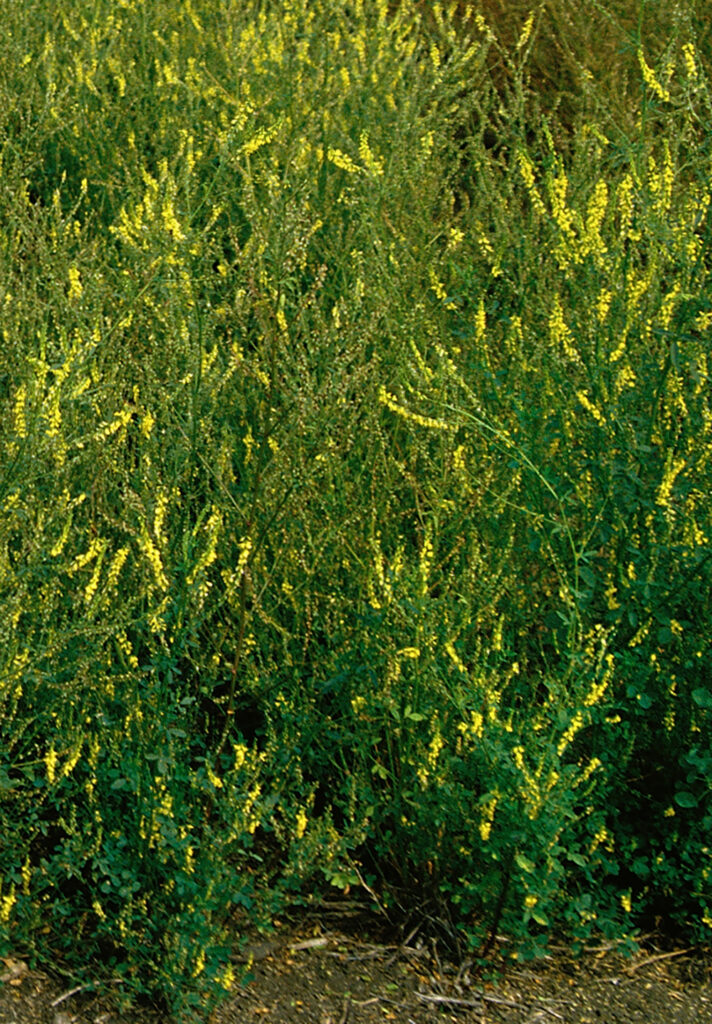
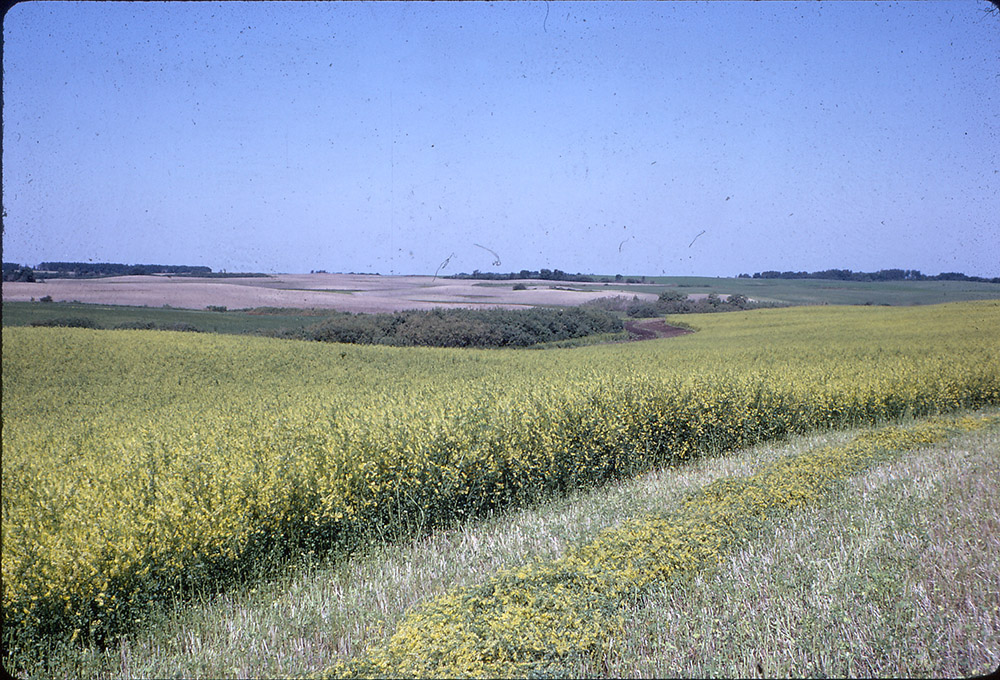
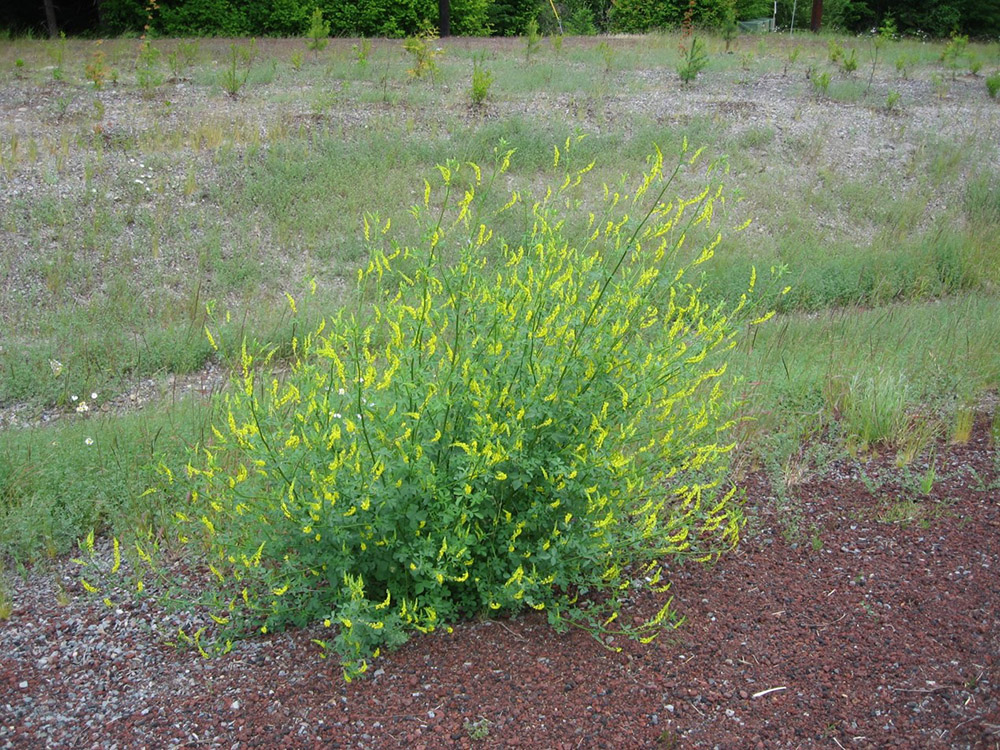
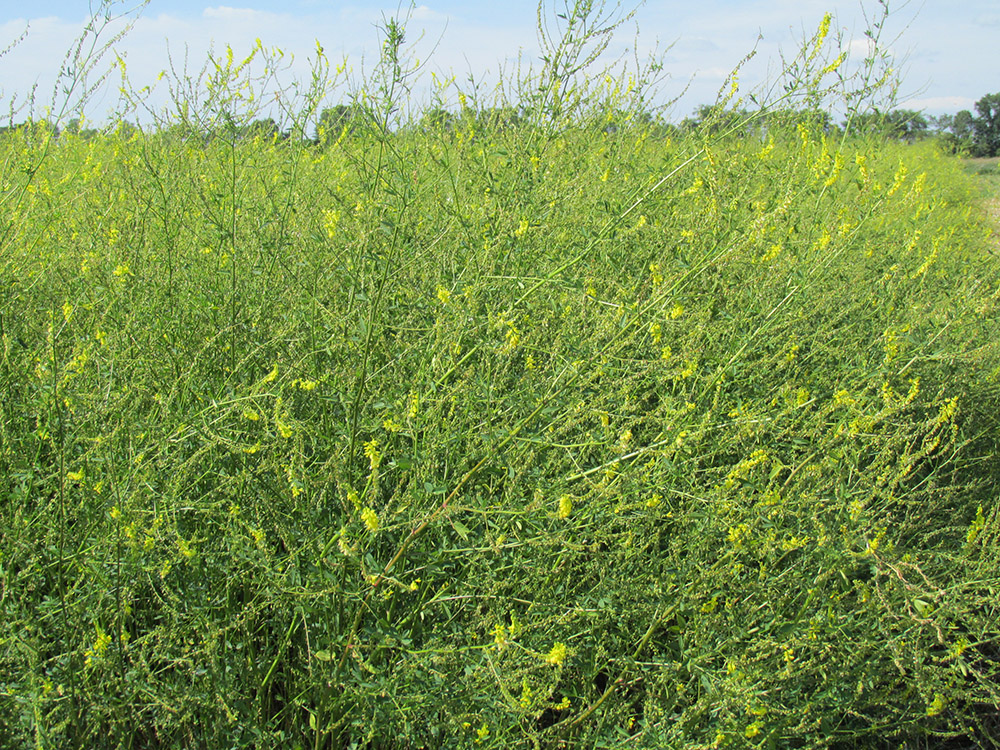
Sweet clover is a widely adapted biennial (grows two years) found across North America from roadsides, to fertile cropland to invading native prairie. Two different species are often grouped together (including in U-Pick) as they have many similar characteristics. White flowered sweet clover (Melilotus alba) has coarse stems and flowers 10-14 days after yellow flowered. Yellow flowered sweet clover (Melilotus officinalis) tends to be shorter, finer stemmed and is considered to be more drought tolerant. Some sources indicate it is potentially more winter hardy. 

Sweet clover grows on average 1 m (3 ft) tall in its first year and 1.5 m (5 ft) tall in its sceond year. Many branched stems make up each plant. Leaves are made up of three oblong toothed leaflets which attach to the branched stems with short stalks. Sweet clover has yellow or white spike-like flower clusters. Sweet clover can cause bloat in livestock. Use a low coumarin variety of sweet clover when haying to avoid sweet clover disease (Dicoumarol from a moldy plant interferes with blood clotting in livestock). Volunteer sweet clover plants are common.


Type

Tame legume.


Origin

Turkey, Siberia, Spain. Canadian varieties have been developed.


Longevity

Biennial. Sweet clover can reseed itself for some stand persistence.

Use

Pasture, hay. Most commonly used for plow-down green manure crops to improve soil organic matter.


Optimal Time of Use

Summer. In the year of establishment, a late fall grazing may be possible after roots have established. Graze sweet clover in the late vegetative stage to maximize palatability and feed quality. Cut sweet clover at the bud to very early bloom stage for the best quality hay. If cut late, sweet clover hay is very stemmy, loses leaves and is unpalatable.


Recovery After Use

Requires 60-80 days of recovery. In the establishment year leave at least 12 in (30 cm) of stubble after use to enhance stand survival. If two cuts of hay are desired in the second year of production, cut at 12 in (30 cm) during the first cut. Stem buds between ground level and 12 in are needed for the sweet clover plant to regrow. Frequent, light rotational grazing is successfully used with sweet clover.

In the establishment year leave at least 12 in (30 cm) of stubble after use to enhance stand survival. If two cuts of hay are desired in the second year of production, cut at 12 in (30 cm) during the first cut. Stem buds between ground level and 12 in are needed for the sweet clover plant to regrow. Frequent, light rotational grazing is successfully used with sweet clover.

Palatability/Nutritional Value

Sweet clover is palatable in the vegetative through the bud stage but palatability decreases as it matures. Yellow sweet clover has an average digestibility of 58% and crude protein of 16% in the early bloom stage. Sweet clover can cause bloat in livestock. Use a low coumarin variety of sweet clover when haying to avoid sweet clover disease (Dicoumarol from a moldy plant interferes with blood clotting in livestock).

Annual Precipitation min/max (mm)

230mm / 1524mm


Drought Tolerance

High tolerance.


Flooding Tolerance

Sweet clover can withstand 1-2 weeks of spring flooding.


Winter Hardiness

Good to excellent winter hardiness. Sweet clover is only a biennial despite hardiness.

Soil Texture Preference

Sweet clover is suited to all soil textures (sandy, loamy, clay), but produces best on fertile clay to clay loam soils.


Erosion Control

Sweet clover has up to moderate ability to reduce erosion, depending on the soil zone. Sweet clover can be used as a plow down crop to add organic matter and nitrogen to the soil.


Salinity Tolerance

Moderate tolerance.


Acidity Tolerance

No acidity tolerance.

No acidity tolerance. pH of 6.6 or higher.


Alkalinity Tolerance

Moderate tolerance.

Seeds per kg

570,000 seeds/kg (259,000 seeds/lb)


Suggested Mixtures

Can be used as a short lived component of a forage mixture. Often seeded to provide cover to other seedlings during establishment or for some production in the establishment year and year after. Avoid high seeding rates in a mix, as sweet clover is very competitive and is only a biennial.


Ease of Establishment

Sweet clover seedlings establish easily. It grows best with little competition. Seeding sweet clover very early in the spring allows for it to establish well enough to overwinter the first year. Sweet clover has a high hard seed count and should be scarified before seeding.


Competitiveness

Sweet clover is competitive with weeds once established. Sweet clover has become invasive and naturalized across North America. Once established and setting seed, it can be difficult to control unless seed set is controlled.


Management Considerations

When haying, choosing a low coumarin variety is important to eliminate the risk of sweet clover disease (bleeding) in livestock. Inoculate and scarify sweet clover seed prior to seeding. Allowing only light fall use in the year of establishment will allow for maximized production the second year. Conduct a soil test at the beginning of the second year and fertilize accordingly to maximize sweet clover production.

Saskatchewan Dryland Forage Species Adaptation Tool, USDA Plants Database, Alberta Forage Manual, Manitoba Forage Adaptation and Comparison Guide

Saskatchewan Dryland Forage Species Adaptation Tool, USDA Plants Database, Alberta Forage Manual, Manitoba Forage Adaptation and Comparison Guide, Publication 30-OMAFRA

Sweet clover grows on roadsides throughout the region demonstrating its wide adabtibility and persistance in unculitvated areas. Second year plants can provide late fall grazing.

Sweet clover grows on roadsides throughout the region demonstrating its wide adaptibility and persistance in unculitvated areas. Second year plants can provide late fall grazing.

Kura Clover

General Description

Kura clover is a less commonly known perennial legume adapted to the cool moist soils found in the Black, Dark Grey and Grey soils. For the first 2-3 years after seeding, kura clover focuses on developing a massive root system which limits the above ground production and competitiveness. During this time, it is at great risk of being outcompeted by companion species. Once roots are well established, above ground productivity and competitiveness aggressively increase. Kura clover is noted for very early spring growth, high production, longevity, winter hardiness, and drought tolerance under grazing systems. Its resilience is due to deep crowns, a taproot extending over 1 meter into the soil, and strongly spreading rhizomes. 

Kura clover forms a canopy of stems, petioles and leaves as it grows that sit about 30 cm (12 in) tall. Stems may reach 50 cm (20 in) tall. Leaves are three hairless leaflets attached to the hairless stem. Kura clover grows a high quantity of petioles and leaf matter in relation to stems, with leaflets up to 8cm (3 in) long and 5 cm (2 in) wide. The leaflets are very oblong with rounded narrow tips and have a strongly visible V watermark on them. Flowers are a characteristic clover shape and start off white changing to pink as the season progresses. Very few flowers and seeds are produced by kura clover, severely limiting commercial use and availability.

Kura clover is a less commonly known perennial legume adapted to cool moist soils. For the first 2-3 years after seeding, kura clover focuses on developing a massive root system which limits the above ground production and competitiveness. During this time, it is at great risk of being outcompeted by companion species. Once roots are well established, above ground productivity and competitiveness aggressively increase. Kura clover is noted for very early spring growth, high production, longevity, winter hardiness, and drought tolerance under grazing systems. Its resilience is due to deep crowns, a taproot extending over 1 meter into the soil, and strongly spreading rhizomes.

Kura clover forms a canopy of stems, petioles and leaves as it grows that sit about 30 cm (12 in) tall. Stems may reach 50 cm (20 in) tall. Leaves are three hairless leaflets attached to the hairless stem. Kura clover grows a high quantity of petioles and leaf matter in relation to stems, with leaflets up to 8cm (3 in) long and 5 cm (2 in) wide. The leaflets are very oblong with rounded narrow tips and have a strongly visible V watermark on them. Flowers are a characteristic clover shape and start off white changing to pink as the season progresses. Very few flowers and seeds are produced by kura clover, severely limiting commercial use and availability.


Type

Tame legume.


Origin

South-eastern Europe (Caucasus Mountain region).


Longevity

At least 10 years. While it is a lesser used species in Canada, known stands have persisted thus far.

Use

Pasture, stockpiled. Ideal for close rotational grazing systems, intensive grazers like sheep but should be managed for adequate rest and recovery for highest productivity.

Pasture, stockpiled. Ideal for close rotational grazing systems including intensive grazers like sheep but should be managed for adequate rest and recovery for highest productivity.


Optimal Time of Use

Spring, summer, fall, winter. Kura clover is a versatile species. Time grazing to begin once the full canopy develops. Once established, kura clover is very tolerant of close, frequent grazing and high animal traffic (advantage of rhizomes). Maximum yields can be obtained with rotational grazing. Winter use is possible due to deep crowns, rhizomes, and average leaf retention.  


Recovery After Use

Requires 30-45 days for recovery. This varies based on moisture, fertility, plant vigor and grazing incident severity. Kura clover persists when grazed rotationally with frequent defoliations. It can be grazed down to 10 cm (4 in) and grazed again when canopy cover has regrown. Allow for rest prior to hard frost for root reserves to build up permitting earlier spring growth. With good moisture and soil fertility Kura clover tolerates close and frequent grazing.

This varies based on moisture, fertility, plant vigor and grazing incident severity. Kura clover persists when grazed rotationally with frequent defoliations. It can be grazed down to 10 cm (4 in) and grazed again when canopy cover has regrown. Allow for rest prior to hard frost for root reserves to build up permitting earlier spring growth. With good moisture and soil fertility Kura clover tolerates close and frequent grazing.

Yield

Yields are lower than alfalfa or red clover. Quality of forage is good, and longer lasting than red clover. In Ontario trials, white clover out-yielded kura clover in the establishment year, but kura clover yielded higher than white clover in production years. Because of its rhizomes, kura clover stands will thicken over time and will often fill in gaps where other species in the mixture winterkill.

Palatability/Nutritional Value

Kura clover is very palatable. Due to a very low fibre content is at least of similar bloat risk as alfalfa or may be greater. It is noted to increase the palatability of a mixed stand. In stands seeded in a Saskatchewan research project they indicated that the crude protein concentrations of pure stands of kura clover were highly variable, ranging from 10.9 to 21.2 %, even though all were all samples were similar in maturity. NDF concentrations were also variable, ranging from 20.9% to 37.9% at cut 1 and 22.5% to 33.6% at cut 2. ADF ranged from 15.8% to 20.5% at cut 1 and 17.3 to 23.5 at cut 2; these are very low values relative to other legumes” (indicating high digestibility of kura clover).

Annual Precipitation min/max (mm)

508mm / 1270mm


Drought Tolerance

Good tolerance. Kura clover is slow to show effect but will become dormant under drought conditions, drawing on its extensive root system to initiate growth once adequate moisture is available.


Flooding Tolerance

Kura clover withstands 1-2 weeks of spring flooding, but excess soil moisture is not tolerated. It persists better than white and red clover on poorly drained soils but not as well as alsike clover, and is superior to alfalfa in areas with high water tables.


Winter Hardiness

Good to excellent winter hardiness. Low growing points, deep tap root and rhizomes contribute to winter hardiness.

Soil Texture Preference

Adapted to moist sandy-loam through clay soils. Prefers non-calcareous, clay and clay-loam soils.


Erosion Control

Moderate ability to control erosion. Spreads by rhizomes once established. 


Salinity Tolerance

Not saline tolerant.


Acidity Tolerance

Low tolerance. Does best at pH between 6.0-7.0.


Alkalinity Tolerance

Unknown.

Seeds per kg

552,000 seeds/kg (250,000 seeds/lb) though is known to vary greatly- ranging from 346,000 to 821,000 seeds/kg.


Suggested Mixtures

Mixes well with grasses that have limited root competition like Kentucky bluegrass (short roots), or timothy. Stands with more competitive grasses like meadow bromegrass, tall fescue, and orchardgrass have also been successful when managed to reduce root competition in the establishment year. Seeding rates for these grasses should be reduced by half, and delayed 4-8 weeks after the clover is seeded. Once kura clover is established it is very competitive and can be managed for long term persistence.


Ease of Establishment

Kura clover establishes an extensive root system in the first two years after seeding before switching to above ground growth. After growing a few small leaves, the plant develops below ground for the next number of months depending on the availability of nutrients and moisture and the extent of below ground competition. Shading and competition during the establishment period can cause the plant to die. Kura clover requires a specific innoculant (Rhizobia spp.) different from other legumes. Once established, kura clover spreads by rhizomes as seed production drops with establishment years. A cover crop is not recommended, but if one is going to be used, corn and faba beans have been found to have the least affect in the establishment year.

Kura clover establishes an extensive root system in the first two years after seeding before switching to above ground growth. After growing a few small leaves, the plant develops below ground for the next number of months depending on the availability of nutrients and moisture and the extent of below ground competition. Shading and competition during the establishment period can cause the plant to die. Weed management is very important during the establishment year. It will not establish well under a companion crop. Kura clover requires a specific innoculant (Rhizobia spp.) different from other legumes. Once established, kura clover spreads by rhizomes as seed production drops with establishment years.


Competitiveness

Once established, kura clover is very competitive and will be an increaser in pastures with the right management and site conditions. Rhizomes allow for plants to fill in bare ground. Frequent defoliations with 4-6 weeks of recovery can be used to help manipulate percentage of kura clover in grass mixtures. Kura clover will be very competitive against Kentucky bluegrass or creeping red fescue in mixtures and will have to be managed to prevent overtaking them.


Management Considerations

Kura clover is a promising high producing legume species for the black and grey soil zones. Research plots have been seeded in the brown soil zone with success. Sourcing Kura clover seed has proven difficult in the past due to its characteristic of low seed production. Kura clover is noted for its rapid, leafy petiole top growth with a high protein: low fiber content so has a similar or greater bloat risk as alfalfa. Kura clover requires a specific innoculant (Rhizobia spp.) different from other legumes.

USDA Plants Database, Alberta Forage Manual, Oregon State University Species Selection Tool, Sask Forage Council – ADF Report Kura Clover

Seeding Rate Calculator

Seeding Rate Calculator

Calculate the seeding
rate & seed cost

Birdsfoot Trefoil

General Description

Birdsfoot trefoil is a perennial non-bloat legume. It is highly adapted to grow in a range of challenging conditions including infertile soils, soils with high acidity or poor drainage, and poorly prepared seed beds. It can persist in a long-lived stand when allowed to set seed.

It has a wide crown and taproot, intermediate in depth between alfalfa and red clover. Roots sometimes develop from older stems that have soil contact. 

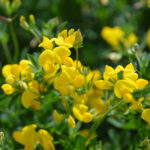
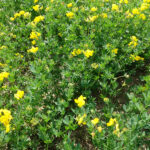
The plant produces many fine stems or branches from the crown, which can grow up to 75 cm (30 in) long. Plants can be erect or prostrate. Birdsfoot trefoil has compound leaves with paired leaflets up the stalk and a single leaflet at the tip. Flowers initially form on lower branches and continue up the stem. Flowers are a brilliant yellow and found in clusters of 2 to 8. The name is derived from the way the pods form at right angles to the stem, looking like a bird’s foot. 


Type

Tame legume.


Origin

Native to Europe, North Africa, and parts of Asia. Canadian varieties were developed and selected for winter hardiness.


Longevity

Less than 5 years. However, long-lived stands are found frequently where seed set is encouraged and stands are managed for improved winter survival through snow cover, litter cover, and managed grazing intensity.

Use

Pasture, hay. Best suited for pasture, especially in higher rainfall areas. Although used for hay, leaf loss after cutting and difficulty curing are noted for birdsfoot trefoil.


Optimal Time of Use

Spring, summer, fall. A full canopy of leaves and ground cover must be produced before spring grazing. The plant needs late season rest to build root carbohydrate reserves. Hay quality and yield are maximized at early bloom. May be prone to winterkill if grazed on during the winter (eg. bale grazing). 


Recovery After Use

Requires an average 45-60 days recovery following grazing (30 days under good conditions). If continually grazed, crowns may be damaged. Birdsfoot trefoil grows from existing green plant material so it is important to leave at least 10 cm (4 in) of leafy residue for regrowth. Should be rested in late summer and fall and allow some seed to set at least every 2 to 3 years to allow for seed production and ensure stand replacement.

If continually grazed, crowns may be damaged. Birdsfoot trefoil grows from existing green plant material so it is important to leave at least 10 cm (4 in) of leafy residue for regrowth. Should be rested in late summer and fall and allow some seed to set at least every 2 to 3 years to allow for seed production and ensure stand replacement. Trefoil has a fall rest period that is about 10 days earlier than alfalfa’s at any given location.

Yield

Yields a lower quantity of forage than alfalfa, but of a higher quality longer into the growing season. Birdsfoot trefoil retains its quality longer into later maturity stages because of better leaf retention and indeterminate growth (i.e., response to current season’s growing conditions).


Palatability/Nutritional Value

Very palatable and non-bloating for ruminants. Feed value is similar to alfalfa. Crude protein at full bloom is approximately 9%. Standing birdsfoot trefoil retains quality (leaf retention and continued growth) better than standing alfalfa.

Very palatable and non-bloating for ruminants. Feed value is similar to alfalfa. Crude protein at full bloom is approximately 9%. Standing birdsfoot trefoil retains quality (leaf retention and continued growth) better than standing alfalfa. Research from Agriculture and Agri-Food Canada has shown that cattle have higher average daily gains on pastures that contain trefoil as the legume compared to alfalfa-based mixes. This may be due to the higher sugar: crude protein ratio in trefoil, which may improve the digestive efficiency of rumen bacteria. It is also possible that higher gains were achieved due to the condensed tannins found in trefoil, which increase the amount of rumen undegradable protein in the forage.

Annual Precipitation min/max (mm)

400mm / 600mm


Drought Tolerance

Fair drought tolerance. Birdsfoot trefoil is adapted best to higher moisture soil zones, but can withstand some drought with its deep taproot.


Flooding Tolerance

Can tolerate 2-5 weeks of flooding, and tolerate wet soils throughout the year.


Winter Hardiness

Variable (poor to good). Winter survival is improved by deep snow cover and adequate rest before frost to protect the plant’s crown.

Soil Texture Preference

Adapted to moist sandy loam to clay soils. Adapted to waterlogged soils or conditions of poor fertility.


Erosion Control

Poor ability to control erosion. However, birdsfoot trefoil is well suited to grow on poor soils.


Salinity Tolerance

Moderate tolerance.


Acidity Tolerance

Moderate tolerance.


Alkalinity Tolerance

Moderate tolerance. Similar to alsike clover.

Seeds per kg

815,000 seeds/kg (370,000 seeds/lb)


Suggested Mixtures

Grasses such as timothy, tall fescue, northern wheatgrass or western wheatgrass have all been successfully seeded with birdsfoot trefoil. Lower growing grasses or legumes may also pair well with birdsfoot trefoil. Pure stands may be desired for short rotations (as persistence may be questionable).

Grasses such as timothy, tall fescue, meadow fescue, orchardgrass, Kentucky bluegrass, and meadow brome have all been successfully seeded with birdsfoot trefoil. Lower growing grasses or legumes may also pair well with birdsfoot trefoil. Pure stands may be desired for short rotations (as persistence may be questionable).


Ease of Establishment

Birdsfoot trefoil seedlings grow slow initially but establish well under good growing conditions with use in the year following seeding. Establishment is enhanced with shallow seeding (3-6 mm/ 1/4 in), control of weeds, and seeding without a cover crop. Seedlings can have weak roots that are sensitive to shade.


Competitiveness

May be more competitive under ‘adverse’ conditions such as acidity or low fertility. Considered weedy or invasive in some regions including along roadsides, field margins, and in urban locations.


Management Considerations

Inoculate seed to enhance nitrogen production. It requires its own specific Rhizobium loti inoculant to fix nitrogen. To improve establishment and longevity, do not graze or cut before full bloom in the first year of establishment. Leave 7 or 8 cm (3 in) or more stubble after grazing as birdsfoot trefoil regrows from existing growth. Do not graze too early in spring or in late summer, 6 weeks before first frost, and allow to set seed every 2 to 3 years to facilitate stand persistence. Birdsfoot trefoil is a great species choice to improve soil conditions without causing bloat in grazing livestock.

Inoculate seed to enhance nitrogen production. It requires its own specific Rhizobium loti inoculant to fix nitrogen. To improve establishment and longevity, do not graze or cut before full bloom in the first year of establishment. Leave 7 or 8 cm (3 in) or more stubble after grazing as birdsfoot trefoil regrows from existing growth. Do not graze too early in spring or in late summer, 7-8 weeks before first frost, and allow to set seed every 2 to 3 years to facilitate stand persistence. Birdsfoot trefoil is a great species choice to improve soil conditions without causing bloat in grazing livestock.

British Columbia Rangeland Seeding Manual, Saskatchewan Dryland Forage Species Adaptation Tool, USDA Plants Database, Alberta Forage Manual, Manitoba Forage Adaptation and Comparison Guide 

British Columbia Rangeland Seeding Manual, Saskatchewan Dryland Forage Species Adaptation Tool, USDA Plants Database, Alberta Forage Manual, Manitoba Forage Adaptation and Comparison Guide, Publication 30 (OMAFRA) BÉLANGER, G., G.F. TREMBLAY, Y.A. PAPADOPOULOS, J. DUYNISVELD, J. LAJEUNESSE, C. LAFRENIÈRE et S.A.E. FILLMORE. 2017. « Yield and Nutritive Value of Binary Legume-Grass Mixtures Under Grazing or Frequent Cutting », dans Canadian Journal of Plant Science, vol. 98, no 2, 2017, p. 395-407.

Birdsfoot trefoil is adapted to the Sub-Boreal Spruce, Sub-Boreal Pine-Spruce and Interior Cedar-Hemlock zones. In the southern part of the Central Interior it is adapted to wetter parts of the Interior Douglas-fir zone, and to irrigated and subirrigated areas in the Bunchgrass zone and dry parts of the Interior Douglas-fir zone. New varieties have better establishment characteristics and are better adapted for pasture use.

Birdsfoot trefoil has limited dryland adaptability and is suited to wetter areas in the region (i.e., the Interior Cedar-Hemlock Zone and wetter parts of the Interior Douglas-fir zone) or to irrigated or subirrigated areas in the Bunchgrass, Ponderosa Pine and Interior Douglas-fir zones. New varieties have better establishment characteristics and are better adapted for pasture use.

Birdsfoot trefoil is not noted for its winter-hardiness however, there are examples of long-lived stands in the Peace-Liard region. Snow cover is important for winter survival. Birdsfoot trefoil may be worthy of consideration on sites that have insufficient drainage for alfalfa. New varieties have better establishment characteristics and are better adapted for pasture use.

Alsike Clover

General Description

Alsike clover is a fast-growing, generally short-lived perennial clover adapted to the moist acidic soils of the Black, Dark Grey and Grey soils. Most commonly, hardier diploid varieties are grown in Western Canada, but there are also tetraploid types (double the number of chromosomes) with taller plants, larger leaves, and flowers.

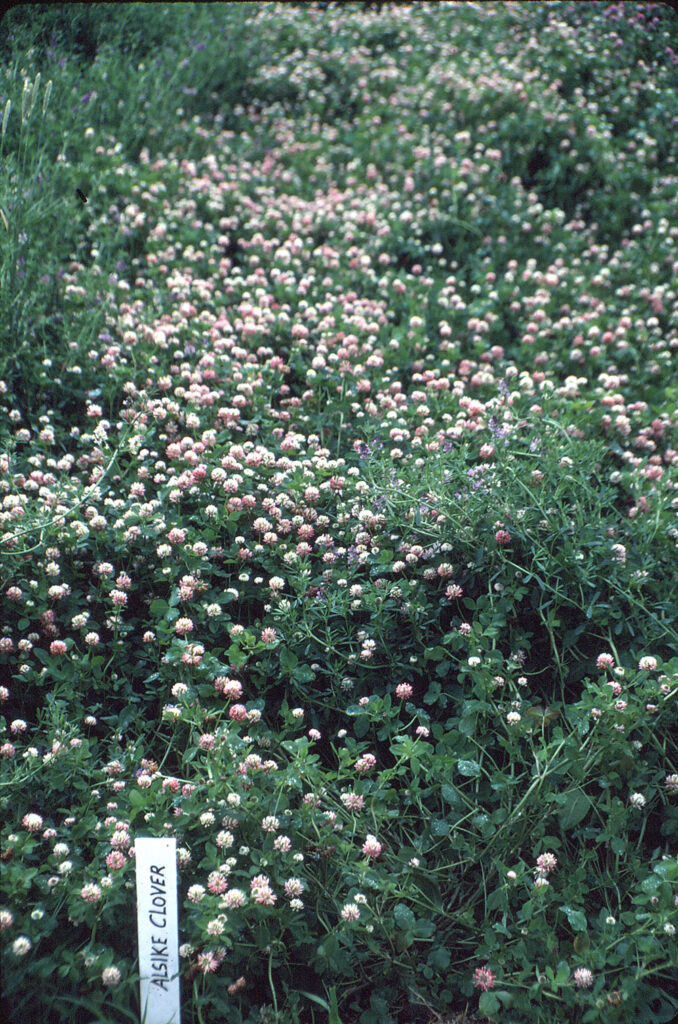
Alsike clover has erect to semi-erect, slender, weak stems that grow to 60 cm (24 in). These stems are indeterminate (continually growing) and may become quite long. Both the stems and leaf are hairless. The leaflets are finely toothed with 3 attached at a single point. Alsike clover can often be distinguished from other clovers by the lack of the “V-shaped” watermark (very prominent on leaves of red clover). It has globe-shaped, compact, cross-pollinated flower heads, which form at leaf axils that are pink to white. Alsike clover has well-developed crowns and shallow, non-creeping taproots.

Alsike clover is a fast-growing, generally short-lived perennial clover. Alsike clover has erect to semi-erect, slender, weak stems that grow to 60 cm (24 in). These stems are indeterminate (continually growing) and may become quite long. Both the stems and leaf are hairless. The leaflets are finely toothed with 3 attached at a single point. Alsike clover can often be distinguished from other clovers by the lack of the “V-shaped” watermark (very prominent on leaves of red clover). It has globe-shaped, compact, cross-pollinated flower heads, which form at leaf axils that are pink to white. Alsike clover has well-developed crowns and shallow, non-creeping taproots.


Type

Tame legume.


Origin

Northern Europe. Varieties grown and developed in Canada from 1932 onward.


Longevity

Less than 5 years is standard. However, with crown survival or seed set, alsike clover can persist and live at least 10 years in cool, moist areas of northern or high-altitudes regions. Older stands are common.

Use

Pasture, hay, reclamation. Alsike clover has a higher risk of causing bloat in the lush, vegetative stage. Alsike clover is used for site rehabilitation and soil improvement in forestry contexts and in areas with moist, acidic soils.


Optimal Time of Use

Summer, fall. Alsike clover is hayed at early to full bloom, with regrowth often grazed later. Time grazing to begin once the full canopy develops. While alsike clover can tolerate frequent, close grazing, it has poor tolerance to animal traffic. Short-duration, rotational grazing is optimal for alsike clover.


Recovery After Use

Although alsike clover has indeterminate growth (continually growing), it requires time to build root reserves after grazing and for the last 4-6 weeks in the growing season.

Requires 45-60 days for recovery. Although alsike clover has indeterminate growth (continually growing), it requires time to build root reserves after grazing and for the last 4-6 weeks in the growing season.

Yield

Yields are lower than alfalfa or red clover. Quality of forage is good, and longer lasting than red clover. Alsike produces most of its growth in June. Performance is not consistent from year to year, and adding alsike to a mixture usually lowers yields.


Palatability/Nutritional Value

Alsike clover is very palatable, but can cause bloat, especially in vegetative stages. The risk to cause bloat in grazing livestock is lower than alfalfa and similar to red clover. Alsike clover has a crude protein of approximately 22% and digestibility of 65%. Alsike clover can cause photosensitization and clover poisoning in cattle, sheep, and especially horses, a common problem in the Peace Region.

Alsike clover is very palatable, but can cause bloat, especially in vegetative stages. The risk to cause bloat in grazing livestock is lower than alfalfa and similar to red clover. Alsike clover has a crude protein of approximately 22% and digestibility of 65%. Alsike clover can cause photosensitization and clover poisoning in cattle, sheep, and especially horses.

Annual Precipitation min/max (mm)

400mm / 1500mm


Drought Tolerance

Low tolerance. Requires steady moisture.


Flooding Tolerance

Alsike clover grows best when flooded 2-5 weeks in the spring and can grow in excess moisture conditions or on soils with poor drainage.


Winter Hardiness

Good winter hardiness. If crowns are damaged alsike clover can winterkill.

Soil Texture Preference

Alsike clover does especially well on moist clay to loam soils. It can do well on both peaty (organic) and inorganic soils. 


Erosion Control

Little ability to control erosion. Alsike clover may be included in a mix to enhance poorer soil.


Salinity Tolerance

Not saline tolerant.


Acidity Tolerance

Moderate tolerance. Tolerates low acidity with noted pH tolerances of 5.6 to 5.0. Forage specialists indicate alsike clover is similar but slightly less tolerance to acidity than red clover.


Alkalinity Tolerance

Low to moderate tolerance.

Seeds per kg

1,500,000 seeds/kg (680,000 seeds/lb)


Suggested Mixtures

Normally grown in a mix with less competitive grasses such as timothy and meadow bromegrass. Mix with grass for hay to enhance standability and speed windrow dry-down.


Ease of Establishment

Alsike clover is easy to establish but must be seeded shallow (6 mm or 1/4 in). Seedlings can establish in areas where minimal land preparation has occurred. Volunteer establishment can occur and is useful to allow stands to persist long-term. In the first years of production (year after establishment) the proportion of alsike clover can be difficult to manage as it tends to dominate the stand.


Competitiveness

Vigorous and can overtake an area during the first years of production. Crowns naturally breakdown quickly in a stand, so seed set is needed to keep a stand competitive. In the Peace River Region alsike clover spreads easily by seed due to a large, existing soil seedbank.

Vigorous and can overtake an area during the first years of production. Crowns naturally breakdown quickly in a stand, so seed set is needed to keep a stand competitive.


Management Considerations

Allow alsike clover to set seed to establish new plants. Grazing livestock should be monitored for photosensitization and clover poisoning (horses) and bloat (ruminants). Inoculate with Rhizobium trifolii for best nodulation and nitrogen fixing. Alsike thrives in cool, moist areas and may be a good fit for flooded and saturated areas.

Allow alsike clover to set seed to establish new plants. Grazing livestock should be monitored for photosensitization and clover poisoning (horses) and bloat (ruminants). Inoculate with Rhizobium trifolii for best nodulation and nitrogen fixing. Alsike thrives in cool, moist areas and may be a good fit for flooded and saturated areas.

British Columbia Rangeland Seeding Manual, Saskatchewan Dryland Forage Species Adaptation Tool, USDA Plants Database, Alberta Forage Manual, Manitoba Forage Adaptation and Comparison Guide

British Columbia Rangeland Seeding Manual, Saskatchewan Dryland Forage Species Adaptation Tool, USDA Plants Database, Alberta Forage Manual, Manitoba Forage Adaptation and Comparison Guide, OMAFRA Publication 30

Alsike clover is less drought tolerant than white clover, and is less tolerant of hot temperatures. This limits its suitability to the Interior Cedar-Hemlock, wetter parts of the Interior Douglas-fir zone, and to higher elevation irrigated and subirrigated areas in the Bunchgrass, Ponderosa Pine and dry Interior Douglas-fir zones.

Alsike clover is adapted to the Sub-Boreal Spruce, Sub-Boreal Pine-Spruce, and Interior Cedar-Hemlock zones. It is less drought tolerant than white clover, and is less tolerant of hot temperatures. In the southern part of the Central Interior it is suited to wetter parts of the Interior Douglas-fir zone, and to irrigated and subirrigated areas in the Bunchgrass zone and dry parts of the Interior Douglas-fir zone.
Seeding Rate Calculator

Seeding Rate Calculator

Calculate the seeding
rate & seed cost

Alfalfa

General Description

Alfalfa is the most widely used perennial, cool season legume on the prairies. It is highly palatable for livestock but can cause bloat if not managed carefully. As the forage species with the most varieties developed, the selected  traits and characteristics vary considerably. Thoroughly understand all the characteristics of the alfalfa variety you are purchasing to ensure it meets all of your needs for your site and situation.

Alfalfa is highly palatable for livestock but can cause bloat if not managed carefully. As the forage species with the most varieties developed, the selected traits and characteristics vary considerably. Thoroughly understand all the characteristics of the alfalfa variety you are purchasing to ensure it meets all of your needs for your site and situation.

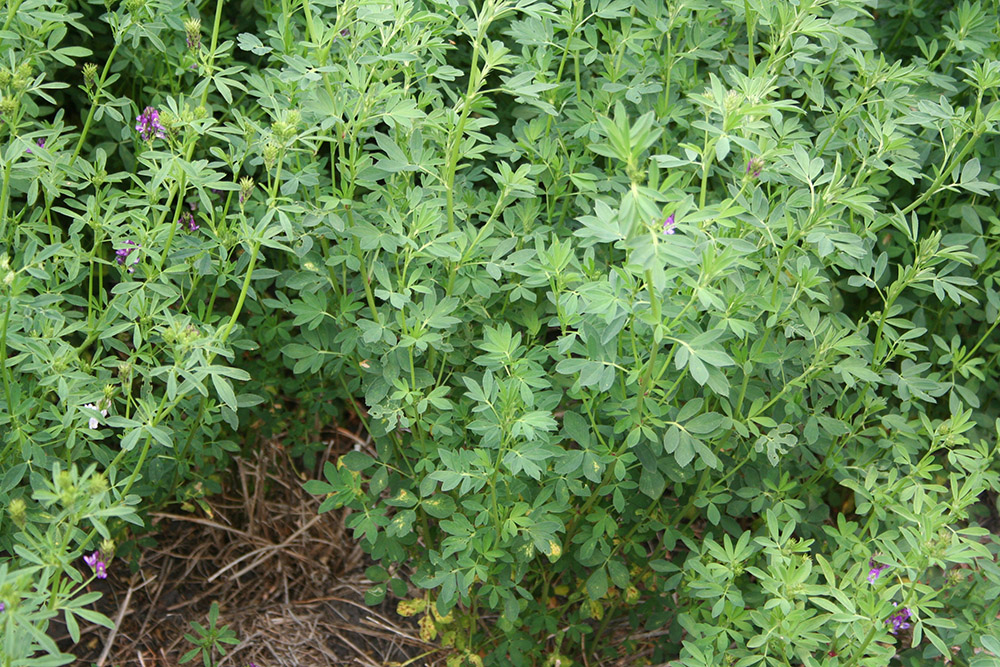
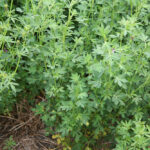
Alfalfa can have very deep tap roots and a woody crown. There are different types of root systems with different types of alfalfa. The Flemish type has a narrow crown, taproot, and few lateral roots; the Siberian type has a deep set crown and widely branching roots; variegated types can have roots and crowns like either Flemish or Siberian types, or may be an intermediate of the two. Creeping-rooted types have some ability to spread from rhizomes that grow horizontally from primary roots. Shoots may survive as independent plants. Alfalfa crowns are deeper set than most other legumes (except for sweet clover), which increases winter hardiness and survival.

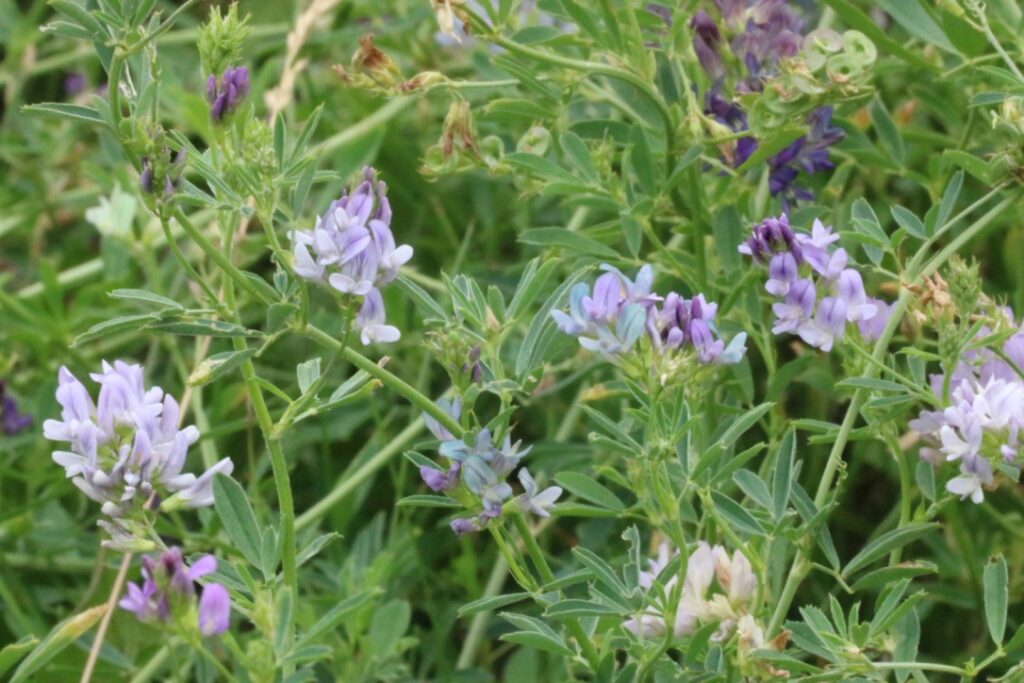
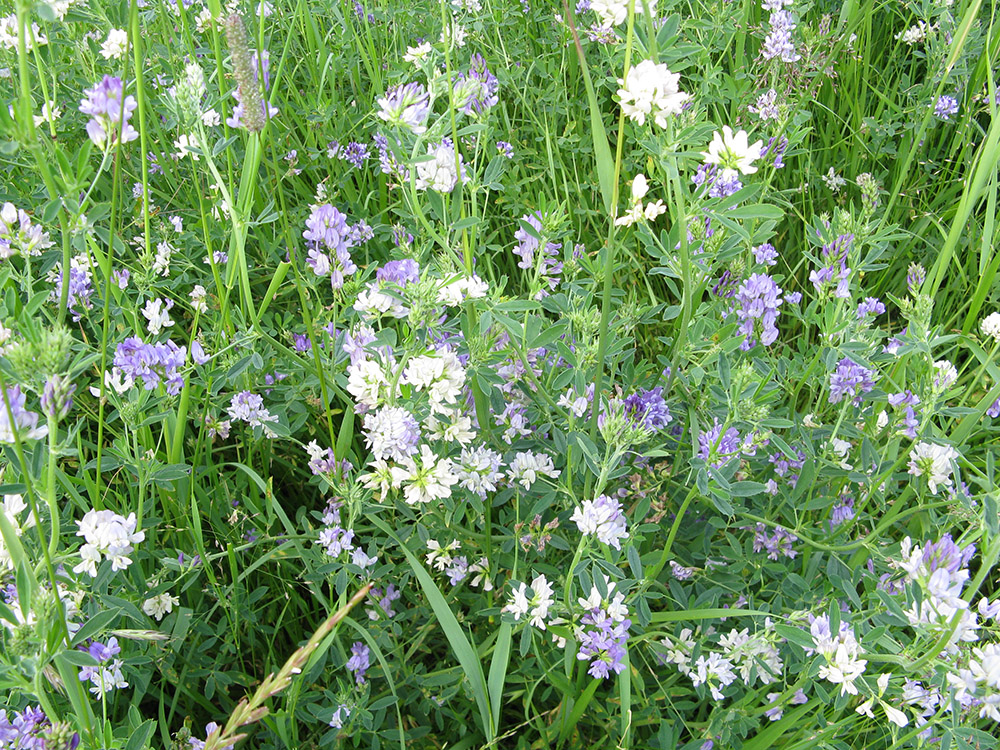
Each alfalfa shoot develops many branches. Each leaf has 3 leaflets with finely toothed margins from midway to the point of the leaflet. Multi-foliate types may have more than 3 leaflets on each leaf. Flowers form from buds at the base of branches, which continue to grow. Flower colour varies with the type of alfalfa.


Type

Tame legume.

Origin

Europe, Middle East, and Siberia. Varieties developed in Canada.

Longevity

3 years to at least 20 years. Alfalfa longevity is affected by variety, management, fertility, timing of grazing by livestock and wildlife, winter hardiness, disease resistance, soil moisture, and pH. Creeping rooted alfalfa survives longer in some regions, whereas tap rooted types tend to survive better in northern regions.

Establishment to at least 5 years. Alfalfa longevity is affected by variety, management, fertility, timing of grazing by livestock and wildlife, winter hardiness, disease resistance, soil moisture, and pH. Creeping rooted alfalfa survives longer in some regions, whereas tap rooted types tend to survive better in drought conditions.

Use

Pasture, hay, stockpiled. An alfalfa stand can serve one or more uses.


Optimal Time of Use

Spring, summer, fall, winter. Cut alfalfa at 10% bloom to optimize both quality and quantity of harvested forage, and to maintain stand productivity. Frequent early cutting will reduce root reserves, potential for growth, and stand longevity. Alfalfa can be stockpiled for later grazing, but quality declines rapidly due to leaf loss. To improve quality, use a mixed stand and swath in a windrow.

Grazing alfalfa beginning at bud stage allows for good regrowth potential. Alfalfa responses well to a rotational grazing. Do not graze to less than 10 cm (4 in) tall as crown buds are critical for regrowth. Tolerance to frequent grazing is highly dependent on the variety and health of plant crowns.


Recovery After Use

Alfalfa requires 60-80 days of recovery in the brown soil zone while less time for recovery in moister soil zones (30-45 days recovery period). Allow growth to bud stage before first grazing or regrazing. Avoid use for 6 weeks before killing frost to reduce winter injury- plants must build up root reserves.

Allow growth to bud stage before first grazing or regrazing. The fall rest period (sometimes called “critical fall harvest period”) for alfalfa is 450 growing degree days, base 5°C—or approximately 6-weeks—before the average date of the first killing frost (-4°C for several hours), when alfalfa stops growing. Not cutting during this period allows alfalfa plants to grow and build upsufficient root reserves to survive the winter and grow more aggressively in the spring. When cut early in the period, the alfalfa will use the existing root reserves for regrowth, “emptying the tank.” Later in the period, the alfalfa uses photosynthesis to produce carbohydrates and stores them as root reserves, “refilling the tank.” Cutting in the middle of the fall rest period (3rd or 4th week), when root reserves will be depleted and there may not be time to replenish them, is usually higher risk than cutting at either the beginning or the endof the period.

Palatability/Nutritional Value

Highly palatable to livestock. Crude protein can be as high as 21% and digestibility as high as 71%. May cause bloat. The greatest bloat risk is when the plants are in the vegetative to early bloom stage of growth.

Highly palatable to livestock. Crude protein can be as high as 21% and digestibility as high as 71%. May cause bloat. The greatest bloat risk is when the plants are in the vegetative to early bloom stage of growth.

Annual Precipitation min/max (mm)

300mm / 1650mm


Drought Tolerance

Good to excellent tolerance. A deep root system allows alfalfa plants to access subsoil moisture more effectively than many other types of forage. Alfalfa varieties noted for hardiness can avoid the effects of drought for up to a year, and will survive longer-term drought by going dormant.


Flooding Tolerance

Withstands 1 to 2 weeks of spring flooding and waterlogged soils before spring growth. Alfalfa requires good drainage while growing.


Winter Hardiness

Fair to excellent. Alfalfa’s hardiness is highly variable depending on variety and management.

Soil Texture Preference

Alfalfa is suited to all well drained sandy, loam, and clay textured soils.


Erosion Control

Moderate ability to control erosion. Creeping rooted varieties are best suited to erosion control.


Salinity Tolerance

Moderate tolerance. Select varieties bred for higher salinity tolerance that have been proven in western Canada.


Acidity Tolerance

Low tolerance. Tolerates soil pH as low as 6.0. Choose varieties noted for better acidity tolerance if necessary.


Alkalinity Tolerance

Moderate to high tolerance.

Seeds per kg

500,000 seeds/kg (227,000 seeds/lb) though Coated seeds will decrease number of actual seeds per kg.


Suggested Mixtures

Alfalfa can be grown on its own in a pure stand or in a mix. Since alfalfa is diverse and adaptable, first decide on a grass species that will achieve your goals and then match an alfalfa variety to it. Forage grasses for a mix might include, but are not limited to, crested wheatgrass, meadow bromegrass, timothy, intermediate wheatgrass, smooth bromegrass, tall fescue and orchardgrass. Note that alfalfa’s persistence in a stand tends to diminish over time, so include an adequate percentage in the seeding mix initially. Including 40-50% grass in a pasture mix with alfalfa reduces the bloat risk.

Alfalfa can be grown on its own in a pure stand or in a mix. Since alfalfa is diverse and adaptable, first decide on a grass species that will achieve your goals and then match an alfalfa variety to it. Forage grasses for a mix might include, but are not limited to bromegrass, timothy, smooth bromegrass, tall fescue, meadow fescue and orchardgrass. Note that alfalfa’s persistence in a stand tends to diminish over time, so include an adequate percentage in the seeding mix initially. Including 40-50% grass in a pasture mix with alfalfa reduces the bloat risk.


Ease of Establishment

Alfalfa establishes easily. Seedlings are vigorous and compete well. Autotoxicity can be a problem between older established alfalfa plants and young seedlings, resulting in stunted young plants.


Competitiveness

Alfalfa is competitive. Creeping rooted alfalfa types are more competitive, and spread by developing new shoots from creeping rootstocks. Alfalfa with hardy crowns can remain healthy and competitive. Stands can thin due to winter injury or other stresses resulting in an increase in grasses or weeds.


Management Considerations

Thoroughly understand all the characteristics of the alfalfa variety you are purchasing to ensure it meets all of your need for your site and situation. Inoculate with Rhizobium meliloti before seeding. Alfalfa generally responds well to fertilizing with phosphorus and sulfur, and often responds well to micronutrient amendments. Avoid close grazing or cutting during the critical fall period 6 weeks before frost. Alfalfa may cause bloat when lush and/or rapidly growing.

Thoroughly understand all the characteristics of the alfalfa variety you are purchasing to ensure it meets all of your need for your site and situation. Inoculate with Rhizobium meliloti before seeding. Alfalfa generally responds well to fertilizing with phosphorus and sulfur, and often responds well to micronutrient amendments. Avoid close grazing or cutting during the critical fall period 6 weeks before frost. Alfalfa may cause bloat when lush and/or rapidly growing.

British Columbia Rangeland Seeding Manual, Saskatchewan Dryland Forage Species Adaptation Tool, USDA Plants Database, Manitoba Forage Adaptation and Comparison Guide, Alberta Forage Manual

British Columbia Rangeland Seeding Manual, Saskatchewan Dryland Forage Species Adaptation Tool, USDA Plants Database, Manitoba Forage Adaptation and Comparison Guide, Alberta Forage Manual, Publication 30 OMAFRA

Alfalfa is adapted to all zones in the Central Interior region. It is important to select varieties that are resistant to verticillium wilt in this region.

Alfalfa is adapted to all zones in the Southern Interior region. It is important to select varieties that are resistant to verticillium wilt in this region.

Select alfalfa varieties noted for winter-hardiness and that have been tested in the Peace-Liard region. Longevity is better with well drained soils & where the pH is 5.9 or higher.