White Clover

General Description

White clover requires adequate growing season moisture and moderate summer temperatures. White clover is widely distributed, especially in cool temperate climates. The plant has stolons or creeping stems near the soil surface. Leaves, flowers, and roots grow directly from these stolons. It is a relatively short plant with indeterminate growth, although taller types can grow up to 25 cm (10 in).


There are three types of white clover which vary mostly in height and persistence. The small type is commonly found in lawn mixes, or naturalized in disturbed or heavily grazed moist areas. It is highly persistent. The large type, often called Ladino, is larger (four-times) than the small type. With its low persistence it is rarely used, but can be seeded for short term hayland especially under irrigation. The intermediate type, also called common or Dutch, yields well, is a prolific seed producer, and is often used for pasture in high moisture regions. 

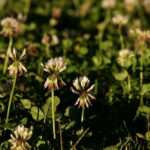
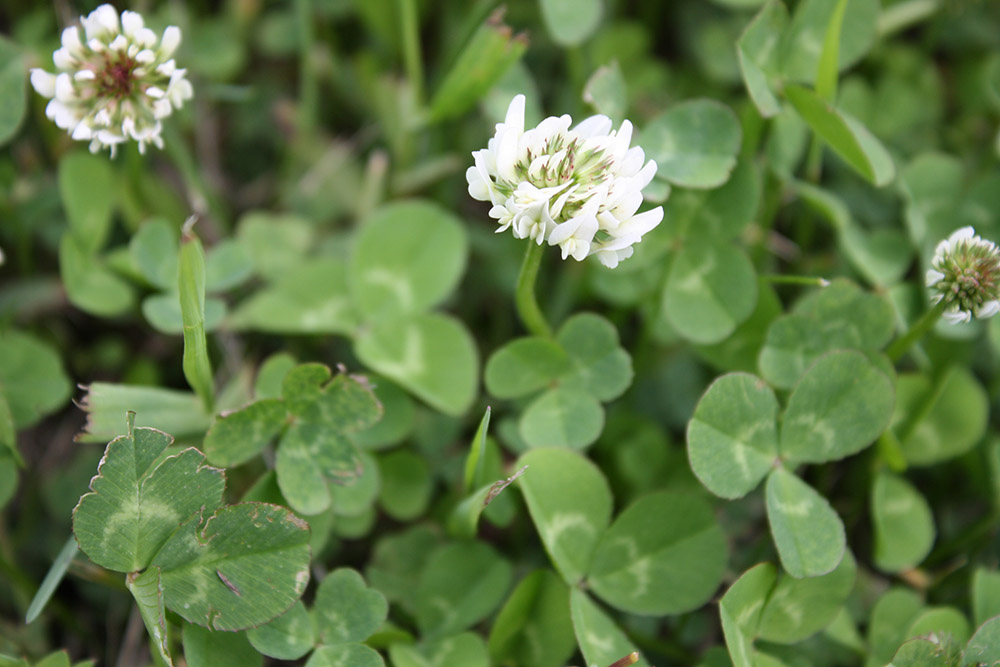
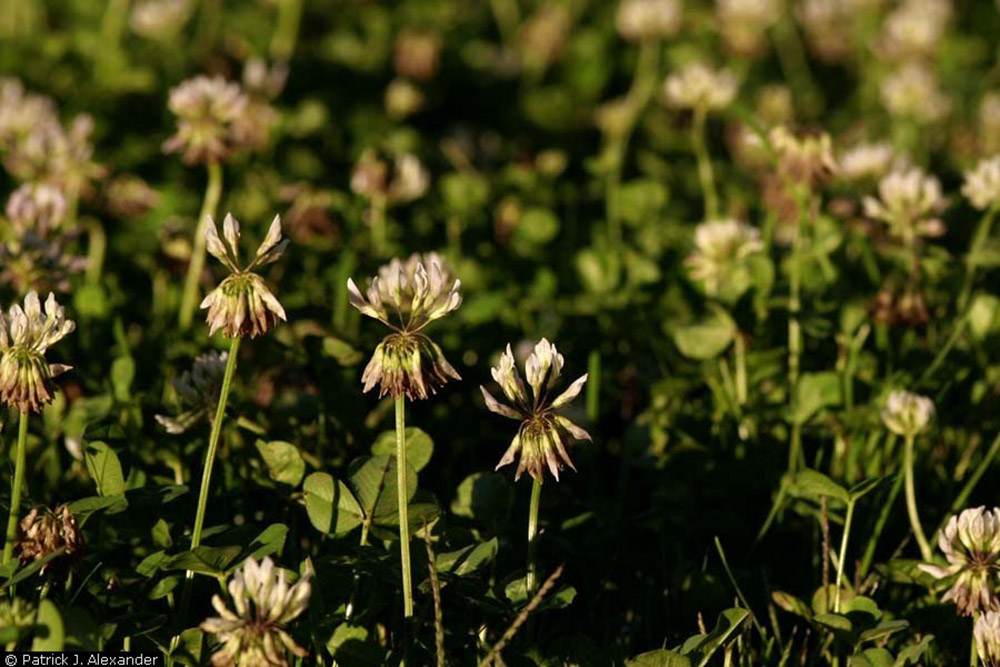
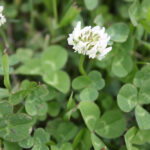
White clover has 3 leaflets attached at a single point, and are dark green, often with a white watermark. Leaflets are finely toothed, hairless, and nearly round, up to 3 cm (1 1/4 in) wide. Plants are only as high as the length of the flower and leaf stocks, which varies by type from ground level 25 cm (10 in). Seedling plants develop a taproot initially and then as plants age they develop threadlike, fibrous roots growing from detached stolons. White clover can cause bloat.

White clover requires adequate growing season moisture and moderate summer temperatures. White clover is widely distributed, especially in cool temperate climates. The plant has stolons or creeping stems near the soil surface. Leaves, flowers, and roots grow directly from these stolons. It is a relatively short plant with indeterminate growth, although taller types can grow up to 60 cm (24 in).​​​

There are three types of white clover which vary mostly in height and persistence (wild white, common white or white Dutch and Ladino). They look the same, but differ in size. Wild white clover is the smallest, ranging from 5-17.5 cm (2-7 in) tall. Intermediate white clover (also called Dutch or New Zealand White) grows to 40 cm (16 in). Ladino clover can grow up to 60 cm (24 in). The intermediate types are more suited for pastures than the ladino and tend to have more stolons per square metre than the ladino varieties.

White clover has 3 leaflets attached at a single point, and are dark green, often with a white watermark. Leaflets are finely toothed, hairless, and nearly round, up to 3 cm (1 1/4 in) wide. Plants are only as high as the length of the flower and leaf stocks, which varies by type. Seedling plants develop a taproot initially and then as plants age they develop threadlike, fibrous roots growing from detached stolons. White clover can cause bloat.


Type

Agronomic legume.


Origin

Mediterranean origins. Brought to North America by settlers.


Longevity

At least 10 years. Stolon survival and self-seeding (seed set) is critical for persistence.

Use

Intermediate types used for pasture. Small types tend to increase in continually grazed pastures.

Pasture. Intermediate types used for pasture. Small types tend to increase in continually grazed pastures.


Optimal Time of Use

Summer, fall. Late spring, once the plant has reached full height and leaf canopy, it is safe to begin use. 


Recovery After Use

Tolerates frequent grazing and can be grazed repeatedly throughout the season to 5 cm (2 in) height. Intermediate and large types benefit from rotational grazing. Low growing points make small type white clover well adapted to use in continuous, closely grazed systems. Only graze lightly in the last six weeks of the growing season for improved winter survival.

Yield

The low growth form makes white clover lower yielding than other legumes, but quality remains high throughout the growing season and after grazing. Intermediate and tall types have greater forage yields.

Palatability/Nutritional Value

Excellent palatability, highly digestible. White clover crude protein is approximately 19.5-21% and total digestible nutrients is around 65%. Quality is maintained throughout the growing season as new leaves are grown. Can cause bloat. Sheep may select for white clover increasing their risk for bloat.

Annual Precipitation min/max (mm)

400mm / 1770mm.


Drought Tolerance

Poor tolerance. White clover is unproductive even in short duration drought. It easily dies from long or extreme drought. Small types tend to be more drought tolerant.

Poor tolerance. White clover is unproductive even in short duration drought. It easily dies from long or extreme drought. Small types tend to be more drought tolerant.


Flooding Tolerance

Tolerates 1-2 weeks of spring flooding. High moisture is desired over the growing season, but flooding or water logging is not tolerated.


Winter Hardiness

Poor to fair hardiness. Growing points are in the stolons which are at or on the soil surface so very susceptible to winter kill. Maintaining soil fertility and restricting grazing to light or no grazing in the last six weeks of the growing season improves winter survivability. Intermediate and small types have some winter hardiness while large types are the least winter hardy.

Soil Texture Preference

White clover prefers fertile clay and loam textured soil. White clover may grow on coarser sandier soils if moisture is adequate.


Erosion Control

Not well suited. White clover may be included in some erosion control mixtures as a nitrogen fixer for grasses or as a plant for higher moisture areas. 


Salinity Tolerance

Not tolerant.


Acidity Tolerance

Moderate tolerance. White clover can grow in pH 5.0, but prefers 6.0 to 6.5.

Moderate tolerance. White clover can grow in pH 5.5, but prefers 6.0 to 6.5.


Alkalinity Tolerance

Low tolerance.

Seeds per kg

1,764,000 seeds/kg (800,000 seeds/lb)


Suggested Mixtures

White clover mixes well with most cool season perennial grasses, particularly bunch grasses that can tolerate frequent grazing allowing for an open canopy; meadow bromegrass, orchard grass, tall fescue. Has also been grown with Russian wildrye and timothy. White clover can compete with sod forming grasses such as Kentucky bluegrass, and smooth bromegrass when moisture and fertility are not limiting and frequent defoliation keeps the canopy open.

White clover mixes well with most cool season perennial grasses, particularly bunch grasses that can tolerate frequent grazing allowing for an open canopy; meadow bromegrass, orchard grass, tall fescue. Has also been grown with timothy. White clover can compete with sod forming grasses such as Kentucky bluegrass, and smooth bromegrass when moisture and fertility are not limiting and frequent defoliation keeps the canopy open.


Ease of Establishment

White clover should be seeded shallow (6 mm / 0.25 in). Although seedlings are small and slow to develop, they can establish easily if fertility and moisture conditions are favourable. Competition from grasses and cover crops should be minimized. Stand will thicken as stolons develop.


Competitiveness

Small volunteer types can invade continuously grazed pastures, especially under moist conditions. Healthy stolons are critical for competitiveness. Shading of white clover decreases its competitiveness.

Small volunteer types can invade continuously grazed pastures, especially under moist conditions. Healthy stolons are critical for competitiveness. Shading of white clover decreases its competitiveness. White clover roots generally grow to the same depth as roots of commonly used grasses, creating intense competition between white clover and the grasses for soil nutrients and moisture. White clover often disappears from pastures because it cannot compete with the grasses for nutrients present at low levels.


Management Considerations

It is important to monitor livestock for bloat while grazing white clover. Inoculate white clover with Rhizobium trifolii for better nodulation and nitrogen fixing. Grows best on fertile, moist soils without shading from other plants. Stolon survival is critical for persistence so maintaining adequate fertility is important. Although white clover can tolerate a shorter rest period than most other legumes in a grazing system, grazing should be light enough not to damage stolons. Restrict or reduce grazing in the last six weeks of the growing season to restore stolon health and provide a canopy to help insulate stolons for winter. White clover can be grazed after a killing frost, however, reducing the canopy increases the risk of winter kill.

It is important to monitor livestock for bloat while grazing white clover. Inoculate white clover with Rhizobium trifolii for better nodulation and nitrogen fixing. Grows best on fertile, moist soils without shading from other plants. Stolon survival is critical for persistence so maintaining adequate fertility is important. Although white clover can tolerate a shorter rest period than most other legumes in a grazing system, grazing should be light enough not to damage stolons. Restrict or reduce grazing in the last six weeks of the growing season to restore stolon health and provide a canopy to help insulate stolons for winter. White clover can be grazed after a killing frost, however, reducing the canopy increases the risk of winter kill.

British Columbia Rangeland Seeding Manual, Saskatchewan Dryland Forage Species Adaptation Tool, Manitoba Forage Adaptation and Comparison Guide, USDA Plants Database, Alberta Forage Manual

British Columbia Rangeland Seeding Manual, Saskatchewan Dryland Forage Species Adaptation Tool, Manitoba Forage Adaptation and Comparison Guide, USDA Plants Database, Alberta Forage Manual, OMAFRA Publication 30

White clover is adapted to the Sub-Boreal Spruce, Sub-Boreal Pine-Spruce and Interior Cedar-Hemlock zones. In the southern part of the Central Interior it is suited to wetter parts of the Interior Douglas-fir zone, and to irrigated and subirrigated areas in the Bunchgrass zone and dry parts of the Interior Douglas-fir zone. It will typically persist in swales and depressions in the drier zones, and the white Dutch types can be included to have benefits of a legume in dryland pasture mixes in wetter areas of the Interior Douglas-fir zone. 

White clover is most suited to pasture use in the wetter areas in the region (i.e., the Interior Cedar-Hemlock Zone) and to irrigated or subirrigated areas in the higher elevation parts of the Bunchgrass zone, the Ponderosa Pine and Interior Douglas-fir zones. It will typically persist in swales and depressions in the drier zones, and the white Dutch types can be included to have benefits of a legume in dryland pasture mixes in more wetter areas of the Interior Douglas-fir zone. 
Seeding Rate Calculator

Seeding Rate Calculator

Calculate the seeding
rate & seed cost

Fodder Galega

General Description

Fodder galega (pronounced guh-LAY-guh) is a perennial legume. It is winter hardy and tolerant of acidic soils. It can persist for over ten years.

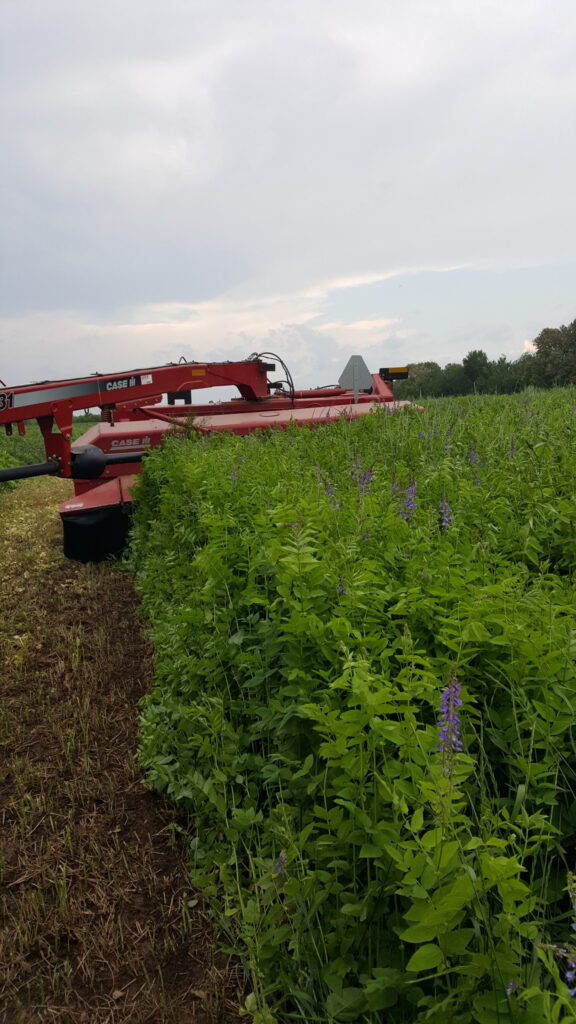
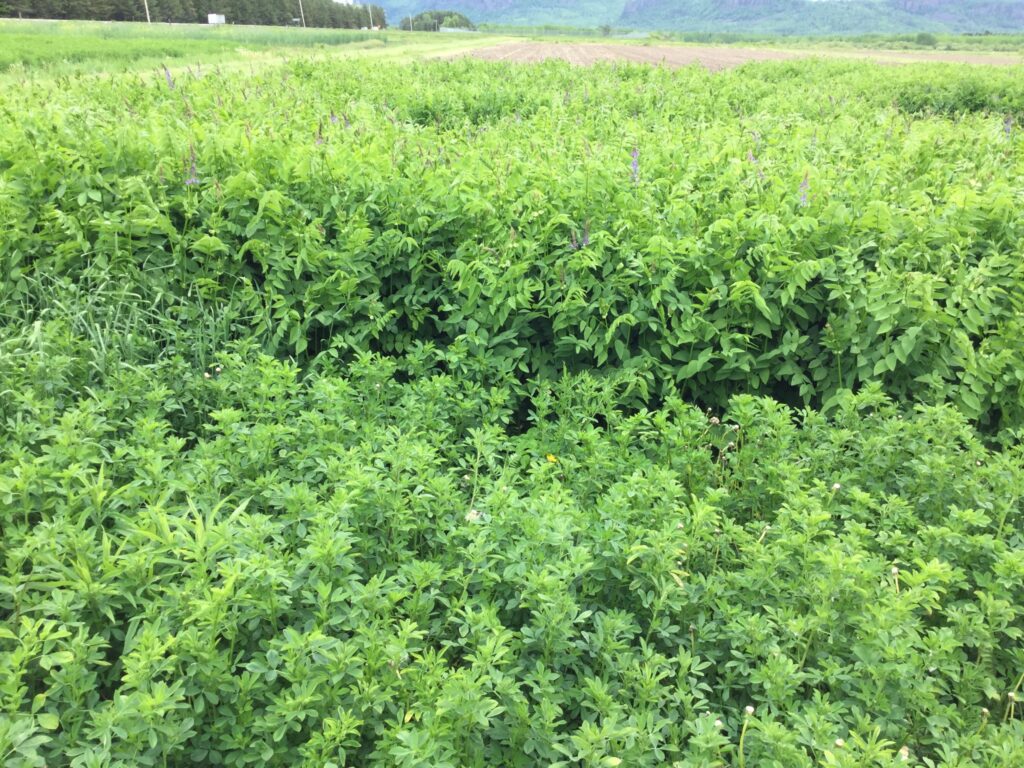
Fodder galega has a large root system. It has a taproot and can spread by underground runners (rhizomes) or reproduce by seed. Galega can grow up to 150 cm (60 in) tall. Primary stems bend at the nodes. Leaves are broader than alfalfa, compound and set on stems. Flowers are purple-blue and grow in an elongated bunch. Five to eight seeds develop per pod, and seeds are kidney shaped.

Do not confuse fodder galega with its close relative goat’s rue (Galega officinalis). Goat’s rue is poisonous to ruminants.


Type

Tame legume.


Origin

Native to the Caucasus region of Europe and Asia (Armenia, Georgia, Azerbaijan, and southern Russia).


Longevity

3-10 years. Galega is slow to establish, so is not recommended for fast rotations where it will be grown for less than three years.

Use

Hay, silage.


Optimal Time of Use

Spring, summer, fall. Fodder galega matures about two weeks earlier than alfalfa or red clover.


Recovery After Use

Fodder galega is suitable for up to two cuts per year. European researchers taking three cuts sometimes report reduced yield.

Expected averages

6.9 tonnes DM/ha (average of Truro, Charlottetown & St. John’s, Fairey et al 2000).

Expected averages

9.7 tonnes DM/ha (Ste Foy, Fairey et al 2000).

Expected averages

Not recommended due to summerkill (Elora, personal communication).

Expected averages

8 tonnes DM/ha.

Expected averages

No yield data available. (Emo, personal communication).

Yield

Note that all yield data is from inoculated plots. Without Rhizobium galegae inoculant, galega yields are approximately half those of inoculated stands.

The long-term fodder galega plots (established 2011) at Lakehead University Agriculture Research Station show that production declines over time, with strong yields for the first 5 production years. Yield dropped by about half in the sixth year and stabilized again for production years 6-10.


Palatability/Nutritional Value

Very palatable to ruminants. Feed value similar to alfalfa or red clover.

Annual Precipitation min/max (mm)

Trials across Canada suggest that galega may not be productive in the semi-arid climate of the central prairies. 500mm / 1550mm


Drought Tolerance

Good drought tolerance.


Flooding Tolerance

Somewhat tolerant of flooding, but does not tolerate waterlogged soils.


Winter Hardiness

Very winter hardy. European research suggests that fodder galega varieties will tolerate air temperatures as low as -20C without snow cover, and -40C when the crowns are insulated by snow.

Soil Texture Preference

Adapted to moist soils of any texture.


Erosion Control

Fodder galega is sometimes used in eastern Europe to protect fallow fields that will be out of production for a few years. However, it is slow to establish, so may not be suited to soils at high risk of erosion.


Salinity Tolerance

Unknown.


Acidity Tolerance

Tolerant of acidic soils above pH 4.5. Grow best in pH above 6.0.


Alkalinity Tolerance

Up to pH 7.5.

Seeds per kg

111,000 to 181,800 seeds/kg (50,455 to 82,635 seeds/lb)


Suggested Mixtures

Canadian trials have been on pure stands only. Fodder galega does not compete well in the establishment year. Researchers in Estonia have had success seeding galega with timothy or smooth bromegrass.


Ease of Establishment

Galega seedlings grow slowly initially, so do not use a companion crop. Weed management ahead of seeding is essential for successful establishment. Early seeding improves yields. Seed as soon as soil conditions are fit to carry equipment in the spring. Seed at a rate of 25-35 kg/ha (22.5-31.5 lb/acre) and 1-2 cm (1/2 to 3/4 in) deep.


Competitiveness

Poor competitor in the establishment year. Once established, galega’s ability to spread by rhizomes helps maintain a thick stand.


Management Considerations

Fodder galega requires its own specific Rhizobium galegae inoculant to fix nitrogen, which is not available in Canada at the time of the eastern Canadian Forage U-Pick release. Some European researchers also recommend scarifying the seeds to improve germination.

Fairey, N.A., L.P. Lefkovitch, B.E. Coulman, D.T. Fairey, T. Kunelius, D.B. McKenzie, R. Michaud, and W.G.Thomas (2000). Cross-Canada comparison of the productivity of fodder galega (Galega orientalis Lam.) with traditional herbage legumes. Canadian Journal of Plant Science. 80:793-800.

Lattemae, P., H. Meripold, U. Tamm, and S. Tamm. (2013). The effect of different fodder galega-grass mixtures and nitrogen fertilization on forage yield and chemical composition. Grassland Science in Europe. 18:168-170.

Sahota, T.S. Annual reports from 2016 to 2021 for the Thunder Bay Agricultural Research Station/Lakehead University Agricultural Research Station.

Varis, E. 1986. Goat’s rue (Galega orientalisLam.), a potential pasture legume for temperate conditions. Journal of Agricultural Science in Finland. 58:83-101.

Zarczynski, P.J., S. Sienkiewicz, J. Wierzbowska, and S.J. Krzebietke (2021). Fodder galega – a versatile plant. Agronomy. 11:1797-1809.

NA

Seeding Rate Calculator

Seeding Rate Calculator

Calculate the seeding
rate & seed cost

Ribwort Plantain

General Description

Perennial plant with an upright habit of the Plantaginaceae family.

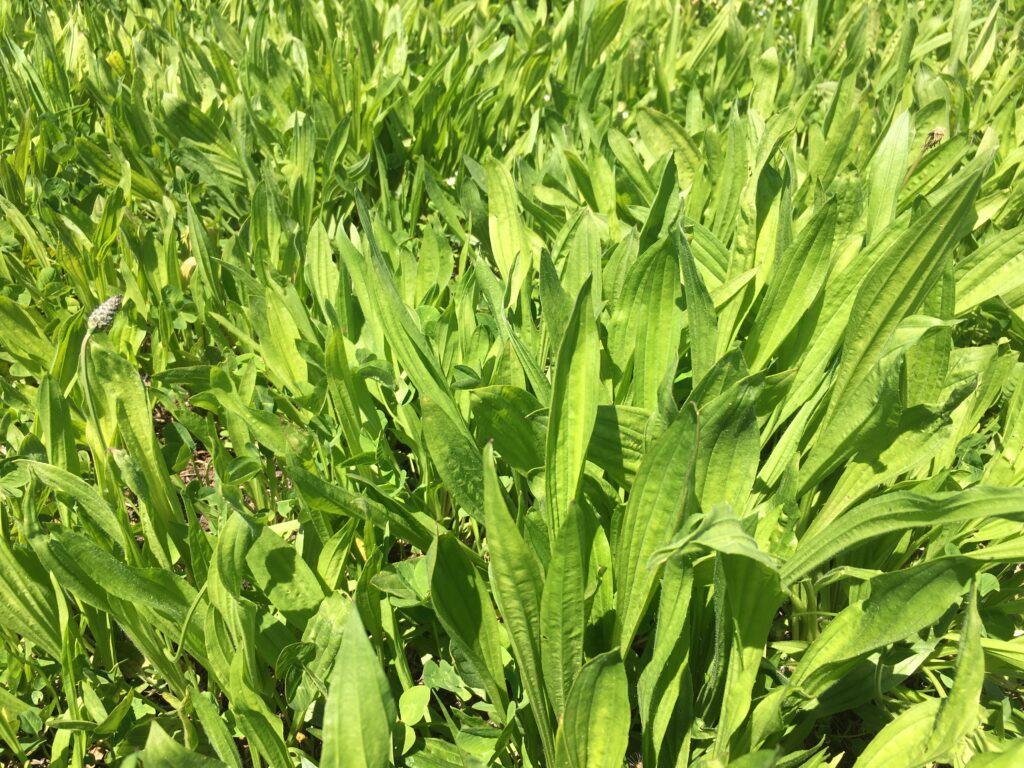
The leaves are located at the base of the plants and form a rosette. The blade is lanceolate and has 3 to 7 longitudinal veins. It is furnished with a few long hairs and is green in colour, but rather purplish at the base. The stem measuring 15 to 50 cm is pubescent, hollow, unbranched and grooved. The inflorescence is a cylindrical spike 2-8 cm long, formed by flowers of white color with long stamens, at the end of a long stalk. Ribwort plantain has both a taproot and a very dense fasciculate root system.


Type

Forbs (non-graminoid herbaceous plants).


Origin

Eurasia.


Longevity

3 years.

Use

Pasture.


Optimal Time of Use

Ribwort plantain has a good recovery.


Recovery After Use

Tolerates overgrazing.

Yield

Generally gives less yield than grasses.


Palatability/Nutritional Value

Ribwort plantain contains condensed tannins which reduce the risk of bloat and gastrointestinal parasitism. Rich in sugars, minerals and proteins, lanceolate plantain is very palatable.

Annual Precipitation min/max (mm)

N/A


Drought Tolerance

Good resistance to heat and drought, but performs better in cool climates.


Flooding Tolerance

Sensitive to poor drainage.


Winter Hardiness

Moderate. More resistant to winter conditions when sown in a multi-species mixture.

Soil Texture Preference

Tolerates heavy soils.


Erosion Control

Moderate.


Salinity Tolerance

Moderate.


Acidity Tolerance

Moderate. Tolerates slightly acidic or calcareous soils (pH 5.5 to 8.0).


Alkalinity Tolerance

Moderate.

Seeds per kg

440,000 seeds/kg (968,000 seeds/lb)


Suggested Mixtures

It is recommended to always sow plantain in association with at least one legume, such as white clover or red clover, and ideally in a multispecies mix also including grasses and/or other forbs. Although it does not give the highest yields, plantain is present in multi-species mixes and helps to control weeds


Ease of Establishment

Easy. It establishes quickly.


Competitiveness

Uncompetitive.


Management Considerations

Tolerates overgrazing.

Guide des plantes fourragères, CRAAQ, 2022 (in press).

NA

Seeding Rate Calculator

Seeding Rate Calculator

Calculate the seeding
rate & seed cost

Chicory

General Description

Chicory is a warm-climate perennial plant of the Asteraceae family. It is a non-legume species.

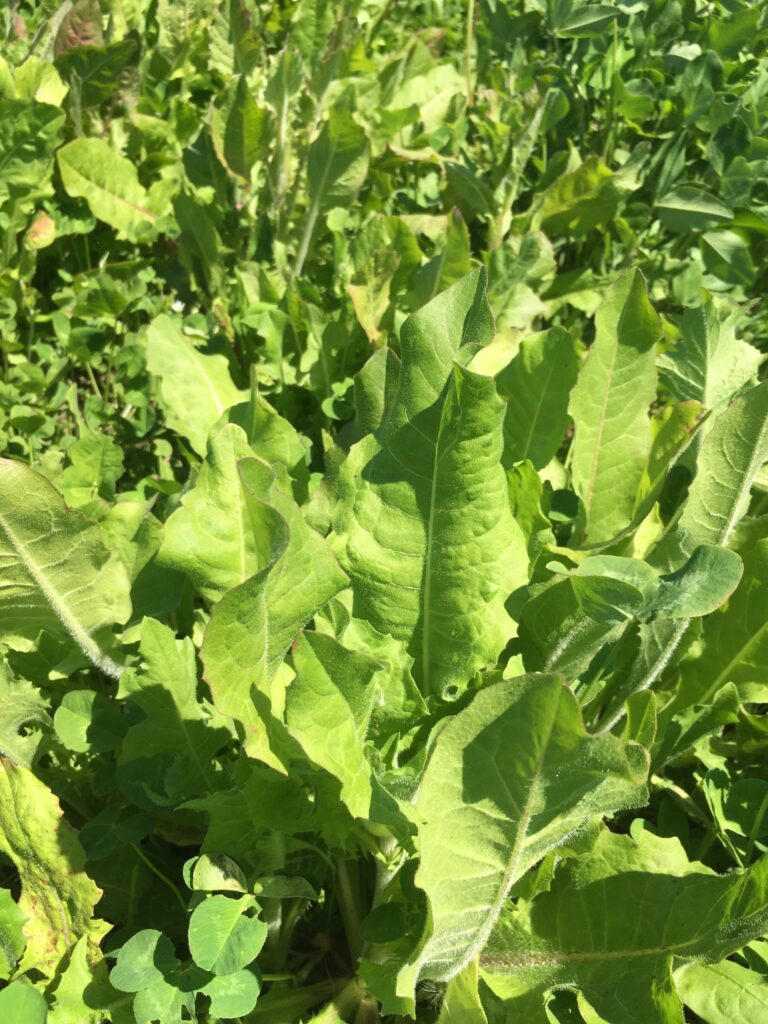
Chicory produces a rosette of basal leaves the first year, then an erect stem the second year which can then flower. The leaves are mostly located at the base of the plants. The blade is pubescent, very wide, lanceolate, toothed or lobed and green in colour. The single stem measuring 40 to 100 cm is hollow, green to reddish brown and pubescent at the base. The inflorescence is a capitulum formed of ligulate flowers of blue color, rarely white or pink, of 3 cm at the end of the stem or in the axils. Chicory has a deep, branching taproot.


Type

Forbs (non-graminoid herbaceous plants).


Origin

Central Europe.


Longevity

3 years.

Use

Pasture. Once well established, it resists trampling well. It is difficult to dry because it has a high moisture content. Used in rotations, chicory improves soil structure and aeration.

Pasture. This species is especially interesting in pasture. Once well established, it resists trampling well. It is difficult to dry because it is rich in water. Used in rotations, chicory improves soil structure and aeration. 


Optimal Time of Use

Spring, summer, autumn.


Recovery After Use

Must be cut or grazed frequently to avoid the development of less palatable stems. Not resistant to overgrazing. 

Yield

Chicory has good productivity, although lower than that of alfalfa or red clover.


Palatability/Nutritional Value

Chicory contains sesquiterpene lactones which reduce the risk of bloat and gastrointestinal parasitism. It is rich in water, therefore very tasty. Its nutritional value is excellent due to its low fibre content and high content of sugars, proteins and minerals.

All parts of the plant secrete a bitter milky substance which can negatively affect consumption when in too high a concentration. The content of this substance varies according to growing conditions and cultivar. Few cultivars are currently available on the market.

Annual Precipitation min/max (mm)

N/A


Drought Tolerance

High tolerance to dryness thanks to its deep taproot.


Flooding Tolerance

Sensitive to poor drainage.


Winter Hardiness

Good.

Soil Texture Preference

It grows well on well-drained soils of medium to high fertility and performs less well in heavy soil.


Erosion Control

Poor in pure stand, but good if chicory is sown in mixture with grasses and legumes.


Salinity Tolerance

Good.


Acidity Tolerance

Moderate. Tolerates slightly acidic or calcareous soils (pH 5.5 to 8.0).


Alkalinity Tolerance

Moderate.

Seeds per kg

935,000 seeds/kg (2,057,000 seeds/lb)


Suggested Mixtures

It is not advisable to use chicory in pure culture. Sown in association with legumes and/or grasses, or even with plantain, chicory contributes very well to the yield of the mixture for two years of production following establishment.


Ease of Establishment

Easy.


Competitiveness

Uncompetitive.


Management Considerations

It must be managed intensively to avoid the development of less palatable stems, but it is not resistant to overgrazing.

Guide des plantes fourragères, CRAAQ, 2022 (in press).

NA

Seeding Rate Calculator

Seeding Rate Calculator

Calculate the seeding
rate & seed cost

Timothy

General Description

Timothy is a widely adapted, cool season perennial bunchgrass. It is best adapted to cooler, higher rainfall regions or wetter areas. It is considered hardy and reliable, but does not tolerate drought well. Timothy persists in a stand long-term through self seeding and seedling establishment. 

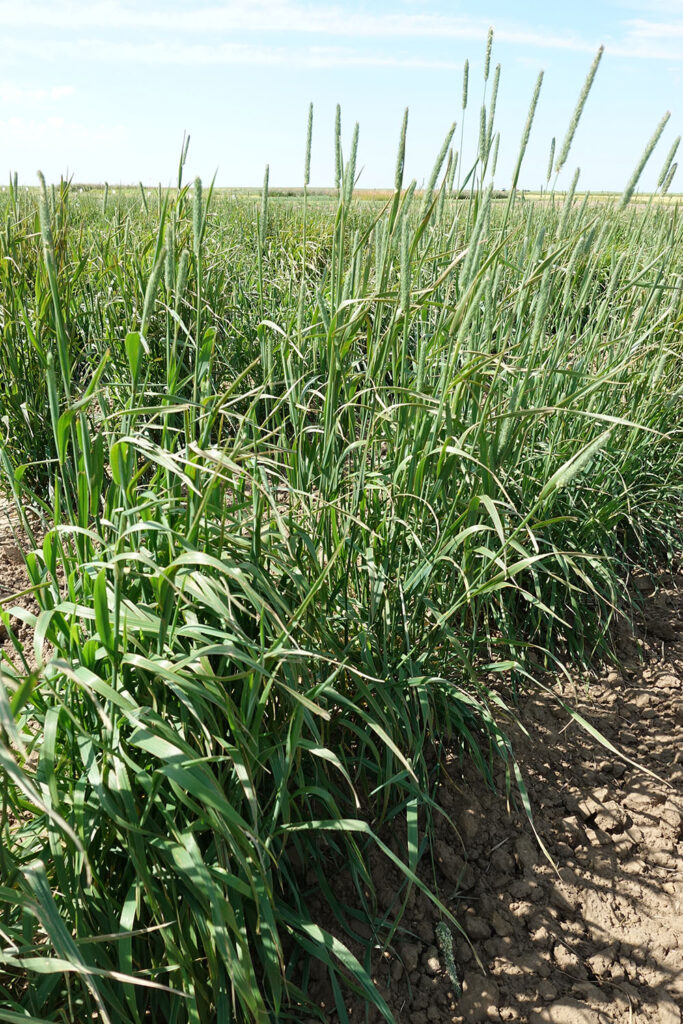
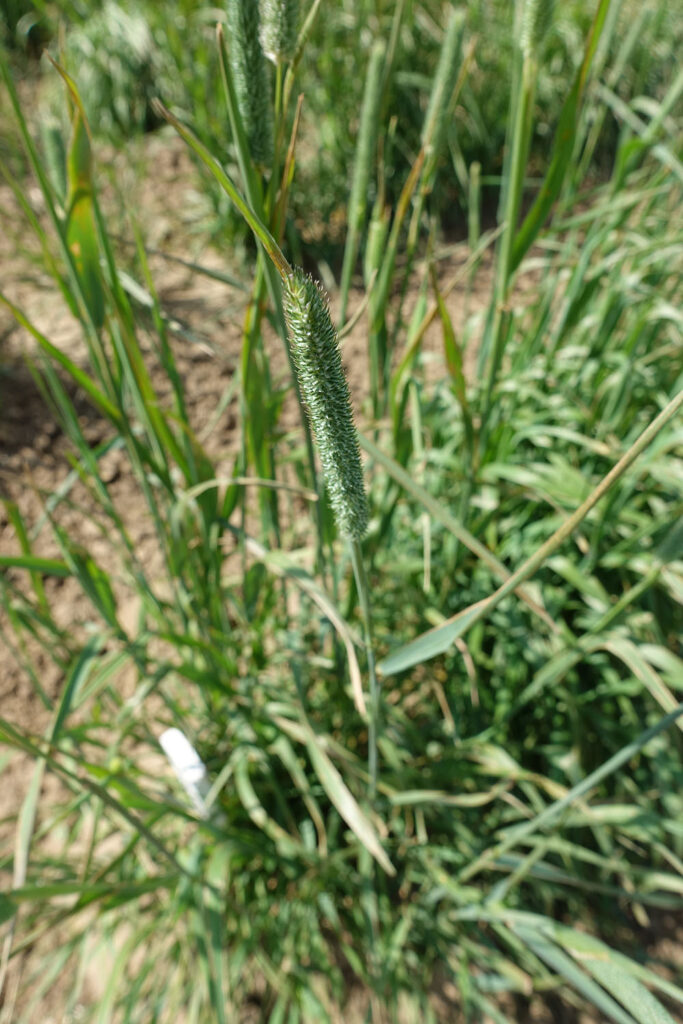
Timothy roots are wide spreading, shallow and fibrous with heaviest concentration of roots within top 7.5 cm (3 in) of soil. Swollen bulbs or corms develop just below the surface and store nutrients for winter survival and regrowth after cutting or grazing. Timothy has strong tall stems up to 120 cm (47 in) tall. Leaves are hairless and rolled during the bud stage. They are relatively wide, up to 12 mm, and flat. The seed head is a spike of densely packed, bristle-like spikelets, each producing a tiny, dark brown seed. 


Type

Tame grass.


Origin

Europe. Most varieties used in Canada come from American breeders.


Longevity

At least 5 years to 10 years depending on the location and management. Within the Peace River Region, timothy is considered a very long-lived grass with stands 20 years old.

10+ years depending on the location and management.

Use

Pasture, hay. In the Peace River Region timothy is also used for stockpiled grazing due to its high adaptability in the region. There is a select timothy hay export and pet food market that continues to grow.

Pasture, hay, silage, stockpiled grazing. There is a select timothy hay export and pet food market that continues to grow.


Optimal Time of Use

Summer; some fall use soil zone dependant. Hay the first cut between the headed and blooming. Second cut of a lower yield may be taken or regrowth may be grazed. Timothy is often grazed early in summer for most livestock but graze after stem elongation. Growth slows later in the summer but can be lightly re-grazed. Once the plant is dormant, timothy stands can be grazed in late fall and winter, but it does not hold its feed quality.


Recovery After Use

Requires a minimum 60-80 days of recovery after use. Timothy responds best to a full season of rest in the black soil zone (used once). Leave at least 10 cm (4 in) of grassy residue to aid in regrowth. Timothy regrows slowly if cut or grazed in late summer. Because timothy is not sod producing, it is intolerant of grazing hoof damage. Fall grazing should be light as nutrient reserves are accumulated in the corms (root bulbs) for winter.

Leave at least 10 cm (4 in) of grassy residue to aid in regrowth. Timothy regrows slowly if cut or grazed in late summer. Because timothy is not sod producing, it is intolerant of grazing hoof damage. Fall grazing should be light as nutrient reserves are accumulated in the corms (root bulbs) for winter.

Palatability/Nutritional Value

If used early in the season before flowering, timothy has good quality, 11% crude protein, and 61% digestibility. Timothy pasture is very palatable in the vegetative stage. At later growth stages, quality and nutritional value decline rapidly. Overall, a highly palatable and preferred species for cattle and horses.

Annual Precipitation min/max (mm)

400mm / 1650mm


Drought Tolerance

Generally poor drought tolerance. Although some varieties have some drought hardiness, most timothy cannot tolerate short periods of moisture stress.


Flooding Tolerance

Withstands 2-5 weeks of spring flooding. There are differing views in the literature on its tolerance to flooding later in the growing season. Timothy does grow well on moister soils.


Winter Hardiness

Good to excellent tolerance. Winter hardiness is enhanced with adequate snow cover.

Soil Texture Preference

Timothy is well adapted for all soil textures when moisture is plentiful (Grey or Black soils).


Erosion Control

Moderate erosion control. Timothy is noted for use in wetland upland areas when seeded with other species.


Salinity Tolerance

Not tolerant.


Acidity Tolerance

High tolerance. Timothy tolerates soil pH as low as 4.5.


Alkalinity Tolerance

Low tolerance.

Seeds per kg

2,564,000 seeds/kg (1,163,000 seeds/lb)


Suggested Mixtures

Timothy is often grown as a pure stand for premium hay. It can be seeded in a mix with legumes such as alfalfa, alsike clover, red clover or birdsfoot trefoil. In the Peace River Region, timothy is usually include it in most mixes at 5-10% as it establishes very well in the low wet spots of the field.

Timothy is often grown as a pure stand for premium hay. It can be seeded in a mix with legumes such as alfalfa, alsike clover, red clover or birdsfoot trefoil.


Ease of Establishment

The small seeds of timothy must be seeded shallow for establishment. Timothy is relatively easy to establish early in the spring. Heat and drought will cause seedlings to die.


Competitiveness

Poor to moderate competitiveness while establishing so weeds must be managed. Timothy has moderate competitiveness once established. Timothy can co-exist with native species where it is well adapted, but it generally is not considered invasive.


Management Considerations

Drought tolerance is the major limitation with timothy. Timothy responds positively to fertilization. Allow timothy to drop seed occassionally to increase stand longevity. Timothy is best rotationally grazed but can be difficult to manage to not graze too early or during stem elongation and to consider that regrowth potential is low.

British Columbia Rangeland Seeding Manual, Saskatchewan Dryland Forage Species Adaptation Tool, USDA Plants Database, Manitoba Forage Adaptation and Comparison Guide, Alberta Forage Manual, Publication 30-OMAFRA

Timothy is adapted to the Sub-Boreal Spruce, Sub-Boreal Pine-Spruce and Interior Cedar-Hemlock zones. In the southern part of the Central Interior region, it is adapted to wetter parts of the Interior Douglas-fir zone and to irrigated and subirrigated areas in the Bunchgrass zone and drier parts of the Interior Douglas-fir zone.
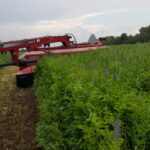
Timothy is adapted to the wetter parts of the Interior Douglas-fir zone and the Interior Cedar-Hemlock zone, and to irrigated and subirrigated areas in the Bunchgrass, Ponderosa Pine zones and drier parts of the Interior Douglas-fir zone.
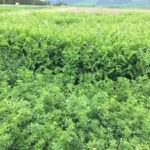
Some timothy stands managed for seed production in the Peace-Liard region have been established for 18 years or more.

Smooth Bromegrass

General Description

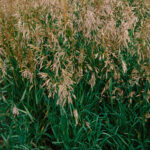
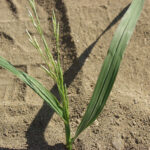
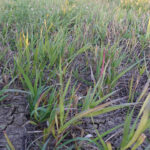
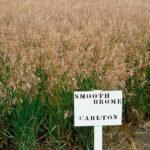
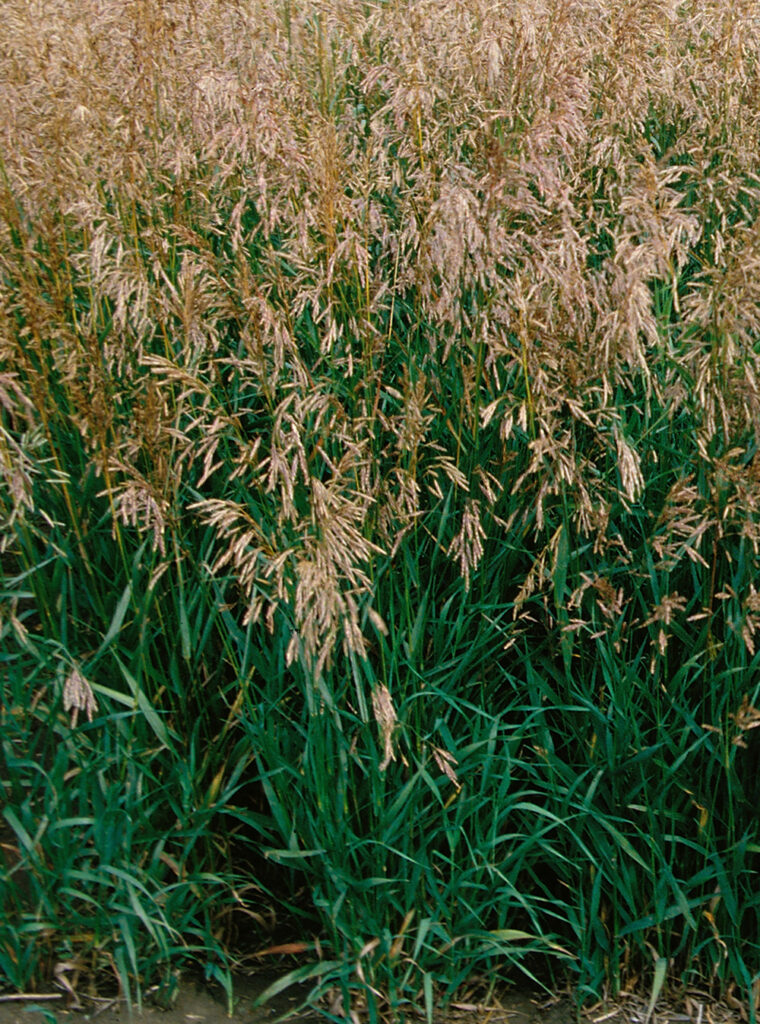
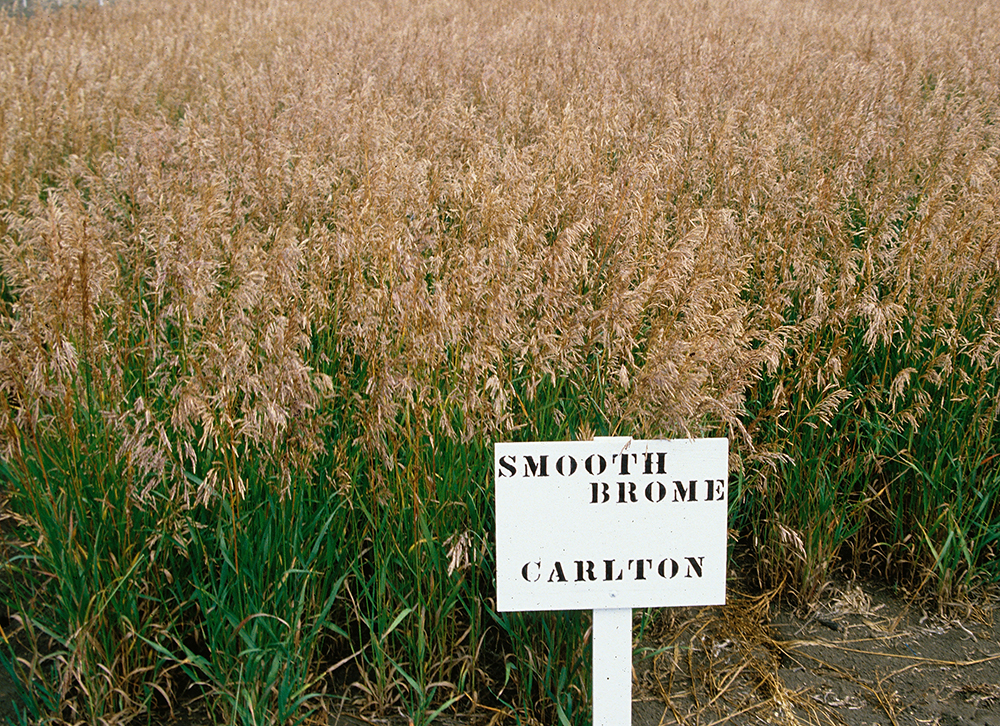
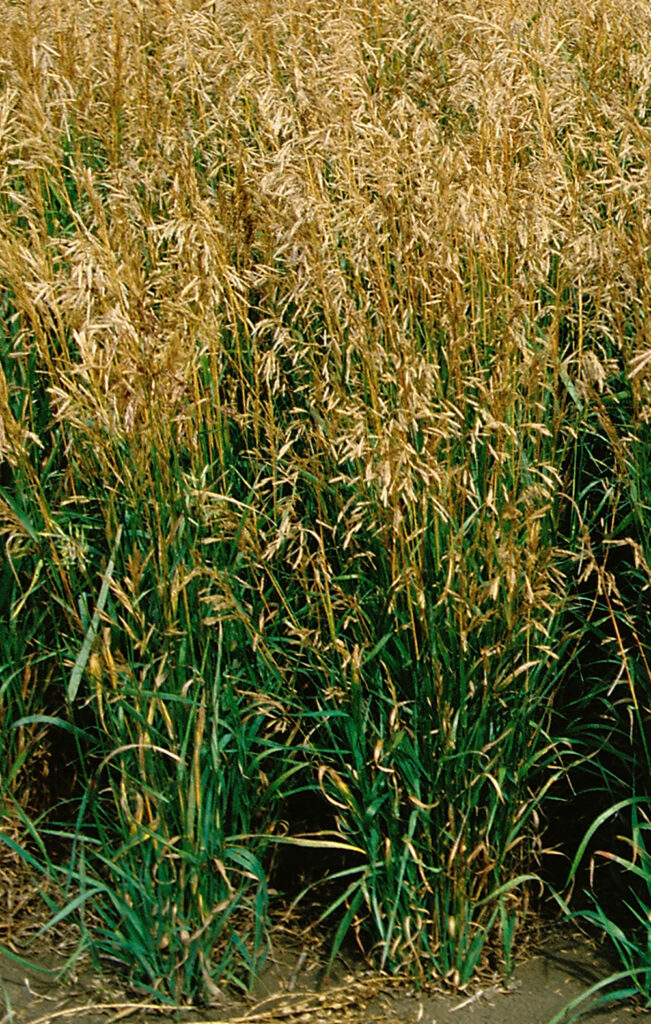
Smooth bromegrass is a high-yielding, cold hardy, long-lasting, creeping perennial grass. Roots are deep, fibrous, and very fine. Once established it develops creeping rhizomes that can become root bound. Smooth bromegrass is used for forage, roadside site rehabilitation and erosion control.

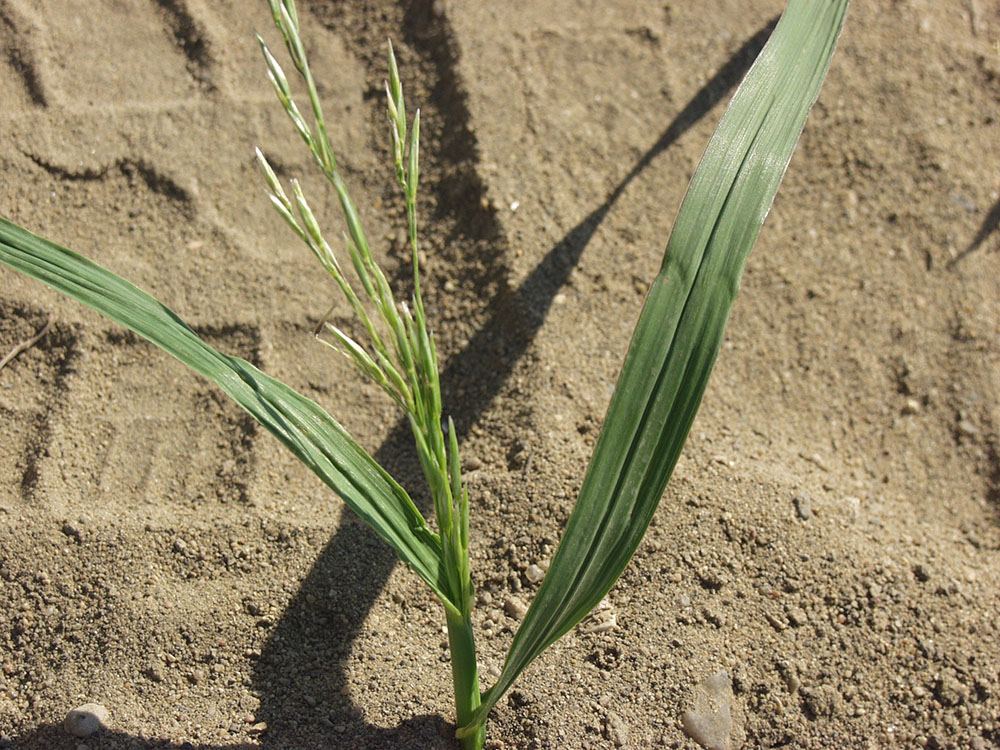
Stems can reach as high as 1.2 m (48 in) in height. Leaf blades are rolled, hairless, large and wide, up to 1.5 cm (1/2 in). There is often a “W” constriction or “watermark” in the upper leaf. Smooth bromegrass forms long seed heads 20 cm (8 in) long with 7 to 10 spikelets and flowers. It is cross-pollinated and develops seed easily. 


Type

Tame grass.


Origin

Europe & northern Asia. Varieties developed in Canada.


Longevity

At least 10 years. Smooth bromegrass is highly naturalized in Canada and found in ditches, field margins, forests, and riparian areas.

Use

Hay, pasture. Smooth bromegrass is also used as stockpiled forage in the Grey and Dark Grey soil zones and Peace River region where higher moisture and cooler temperatures exist. Smooth bromegrass is the most commonly grown as grass for hay. It is used for roadside site rehabilitation and erosion control, and for forage in forest land grazing contexts but increasingly being avoided in many areas because of its invasive nature.

Hay, silage, pasture. Smooth bromegrass may also used as stockpiled forage where higher moisture and cooler temperatures exist. Smooth bromegrass is the most commonly grown as grass for hay. It is used for roadside site rehabilitation and erosion control, and for forage in forest land grazing contexts but increasingly being avoided in many areas because of its invasive nature.


Optimal Time of Use

Variable depending on the soil zone or region. Smooth bromegrass provides good early season grazing. All but the brown soil zone can see good fall use of smooth bromegrass. In the cooler, higher moisture regions (Greys, Peace River) winter use is common. Haying smooth bromegrass between heading and flowering provides good yield and quality. A second cut may be taken or grazed ensuring 15 cm (6 in) of growth at frost. 

Variable depending on the soil zone or region. Smooth bromegrass provides good early season grazing. Most regions can see good fall use of smooth bromegrass. In the cooler, higher moisture regions winter use is possible. Haying smooth bromegrass between heading and flowering provides good yield and quality.


Recovery After Use

Recovery of 60-80 days is required in most areas (more in dryer regions, less in cooler, moisture regions). Smooth bromegrass can be continually or rotationally grazed. Regrowth is greater if the first grazing occurs before stem elongation.

Smooth bromegrass can be continually or rotationally grazed. Regrowth is greater if the first grazing occurs before stem elongation. Ensure 15 cm (6 in) of growth at frost.

Palatability/Nutritional Value

Very palatable to livestock when young. Palatability does decline once headed. Hay nutritional values are generally 11 to 14% protein and 64% digestibility.

Annual Precipitation min/max (mm)

1350mm / 1500mm

N/A


Drought Tolerance

Good tolerance. While smooth bromegrass survives drought well in drier soil zones, growth is most often depressed during extreme droughts.

Good tolerance. Droughts in the Black and Grey(s) soil zones are well tolerated. While smooth bromegrass survives drought well in drier soil zones, growth is most often depressed during extreme droughts.


Flooding Tolerance

Withstands 2-5 weeks of spring flooding. Often found invading riparian zones.


Winter Hardiness

Excellent hardiness. Sod allows it to survive nearly any winter situation.

Soil Texture Preference

Smooth bromegrass is adapted for all soils. It yields the highest on fertile loamy soils. 


Erosion Control

Excellent for erosion control. Smooth bromegrass forms sod. 


Salinity Tolerance

Moderate tolerance. When seeded in saline areas, smooth bromegrass will grow on patches and margins with lower salt levels. As its growth helps lower the salinity levels, it then can spread and fill in gaps.


Acidity Tolerance

Moderate tolerance. Smooth bromegrass tolerates pH levels as low as 5.5, but is most productive on soils with pH 6.0 to 7.5.


Alkalinity Tolerance

Moderate tolerance.

Seeds per kg

315,000 seeds/kg (143,000 seeds/lb)


Suggested Mixtures

One of the most widely seeded grasses. Often seeded with alfalfa and timothy (area dependant). Stand is best managed to maintain a desired percentage of alfalfa in the stand. If seeded with other grasses smooth bromegrass will tend to outcompete the other grass in a short period. Is now being replaced with meadow or hybrid bromegrass due to their palatability and less competitive nature.


Ease of Establishment

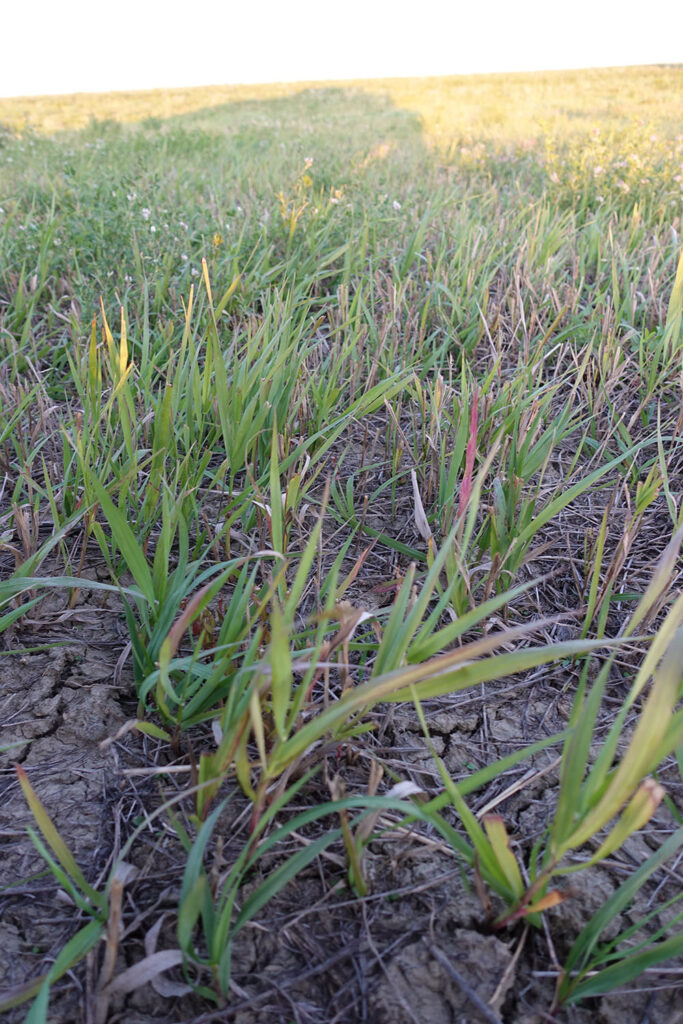
Seed-to-soil contact is important when establishing smooth bromegrass, but it is widely adapted to a broad range of seedbed conditions. Smooth bromegrass seed germinates easily into strong seedlings but stand takes time to establish and thicken in the first year. Seed is ‘fluffy’ in nature.


Competitiveness

High competitiveness and invasiveness.

Smooth bromegrass is included on the E-Flora BC 2011 Invasive, Noxious and Problem Plants of British Columbia. It can become invasive on upland range and wetland areas.


Management Considerations

Smooth bromegrass stands respond well to fertilization and need to be fertilized to favour and maintain legumes in mixed stands. Consider seeding a higher percentage of a legume initially as smooth bromegrass will spread and increase in the stand over time. It is not a good candidate for stockpiling for use in early spring as it does not maintain its feed quality over the winter.

British Columbia Rangeland Seeding Manual, Saskatchewan Dryland Forage Species Adaptation Tool, USDA Plants Database, Alberta Forage Manual, Manitoba Forage Adaptation and Comparison Guide, OMFRA Publication 30

Smooth bromegrass is adapted to the Sub-Boreal Spruce, Interior Cedar-Hemlock and Sub-Boreal Pine-Spruce zones. In the southern part of the region, it is adapted to the Interior Douglas-fir zone and to irrigated and subirrigated areas in the Bunchgrass zone. It is very persistent where it is adapted and may invade native plant communities in these areas.
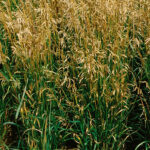
Smooth bromegrass is adapted to dryland applications in the Interior Douglas-fir zone, the Interior Cedar-Hemlock zone, and to irrigated and subirrigated areas in the Bunchgrass and Ponderosa Pine zones. It is very persistent where it is adapted and may invade native plant communities in these areas.

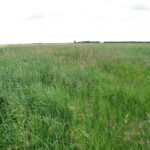
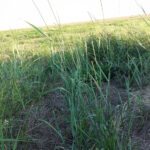
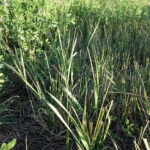
Intermediate Wheatgrass

General Description

Intermediate wheatgrass and pubescent wheatgrass are tall, spreading, perennial grasses with high yield potential. Pubescent wheatgrass, with its hairy seed heads, is currently considered to be a type of intermediate wheatgrass instead of a separate forage species. Pubescent wheatgrass and intermediate wheatgrass are still often marketed as distinct species. 

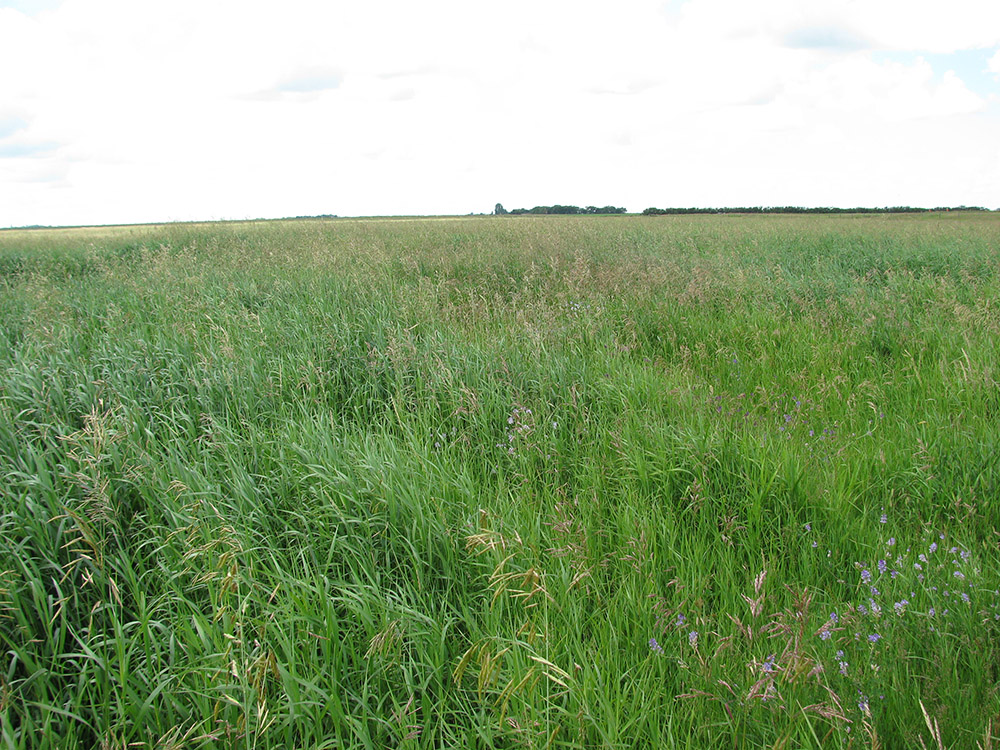
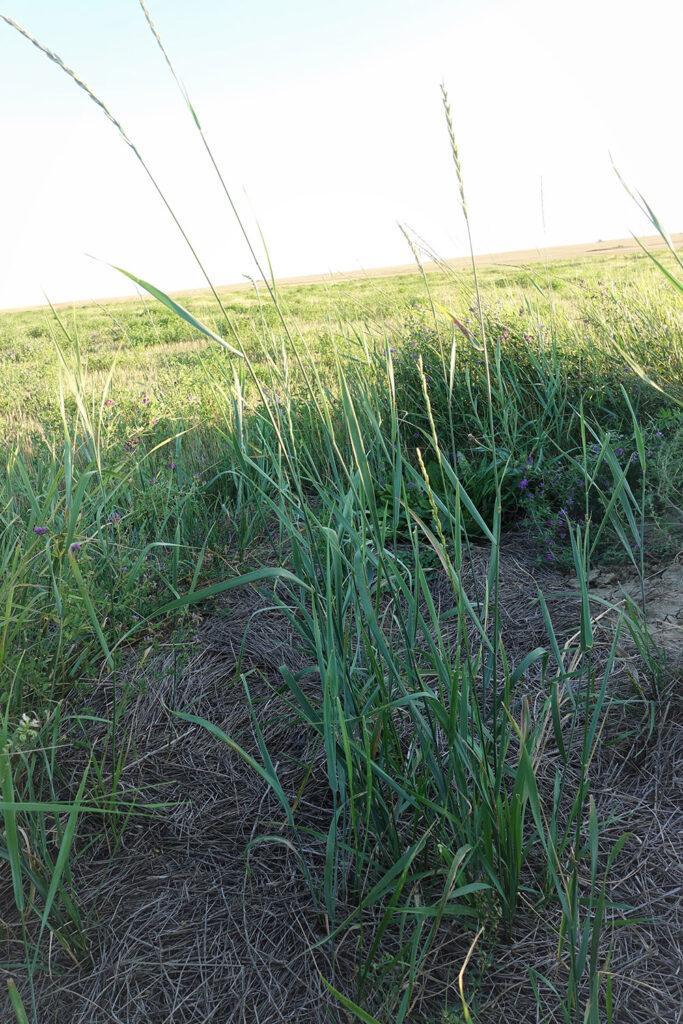
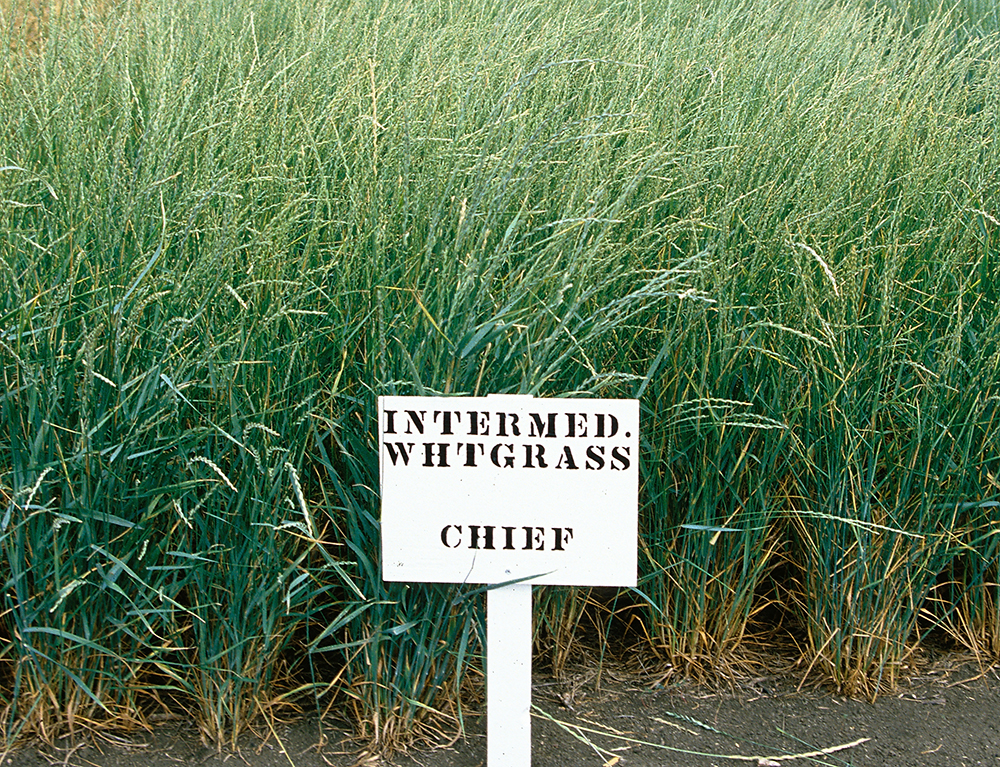
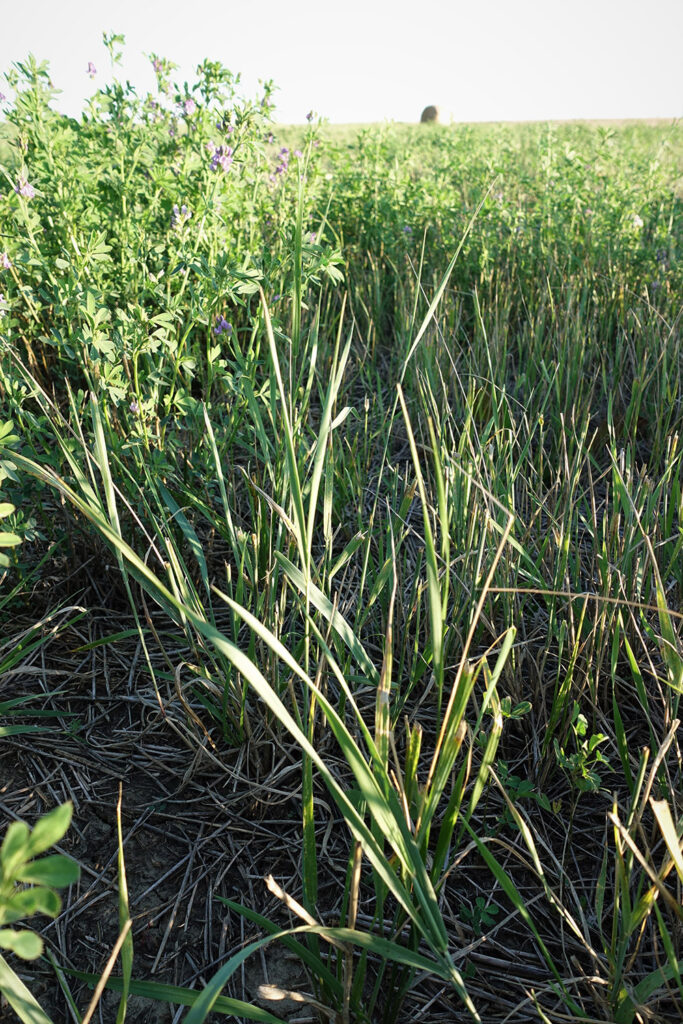
Intermediate wheatgrass forms deep, extensive fibrous roots with  rhizomes of varying vigour so is often mistaken as a bunchgrass. Stems are 50 to 150 cm (20 to 60 in) tall. Leaves are blue-green to green and 2 to 10 mm wide with thickened and hardened margins. The seed heads are about 5 to 25 cm (2 to 10 in) long in a narrow-shaped spike. “Intermediate wheatgrass” produces smooth seed heads, while “pubescent wheatgrass” has fine hairs on the seed head. Suitable for drier sites with a variety of soils textures.


Type

Tame grass.


Origin

Central Europe, the Balkans, and Asia minor. Varieties developed in Canada.


Longevity

At least 10 years. Persistence is highly related to individual site conditions (longevity noted from 4-52 years).

Use

Hay, pasture, stockpiled. Generally short lived in grazing systems and longer lived in haying systems. Stockpile previously grazed or hayed intermediate wheatgrass. It has also been used in many applications of rangeland rehabilitation seeding as well as for erosion control.


Optimal Time of Use

Spring, summer, fall, winter. Plants should be allowed to reach a height of 20 cm (8 in) before grazing. Best grazed before stem elongation for palatability. Hay intermediate wheatgrass from early heading to flowering- generally later in the year than smooth bromegrass. If to be used as a stockpiled forage, intermediate wheatgrass should be used early in the season then stockpiled to maintain quality. 


Recovery After Use

Requires a minimum 60-80 days of recovery after use. Regrowth can be vigorous in the spring with adequate residues (10 cm/4 in), moisture and fertility, however regrowth slows later in the season making it difficult to maintain in continuous or high frequency rotational grazing system. Grazing or cutting intermediate wheatgrass more than once per year will reduce stand vigour and persistence in the stand.

Palatability/Nutritional Value

Intermediate wheatgrass is highly palatable to livestock and wildlife. Typically, intermediate wheatgrass has crude protein of 12–15% at haying and protein may be as high as 11% later in the season. Intermediate wheatgrass matures later than other grasses, providing a high quality hay when it is grown in a mixture with a legume.

Annual Precipitation min/max (mm)

330mm / 1120mm


Drought Tolerance

Good tolerance. Some pubescent varieties have been noted to have higher drought tolerance.


Flooding Tolerance

Intermediate wheatgrass does not tolerate flooding, but can withstand submergence for about 1 week in the spring.


Winter Hardiness

Good hardiness.

Soil Texture Preference

Intermediate wheatgrass is best suited to well drained sandy-loam to clay soils. 


Erosion Control

High ability to control erosion. Intermediate wheatgrass produces a dense deep root system, especially on moister sites. Root production may be reduced on drier sites.


Salinity Tolerance

Moderate tolerance.


Acidity Tolerance

Slight tolerance. Intermediate wheatgrass tolerates soil pH to 5.6.


Alkalinity Tolerance

Moderate to high tolerance.

Seeds per kg

176,500 seeds/kg (80,000 seeds/lb)


Suggested Mixtures

Intermediate wheatgrass mixes well with a legume for hay production.


Ease of Establishment

Intermediate wheatgrass establishes easily. Rhizomes will spread to fill in space between plants.


Competitiveness

Competitiveness has been variable depending on site conditions, and is thought to be less competitive than western wheatgrass. Its lack of competitiveness makes it a good candidate for mixing with legumes like alfalfa. Intermediate wheatgrass is not considered invasive, although in some situations it has been known to increase in sites where it is planted.


Management Considerations

Intermediate wheatgrass is not suited to continuous grazing. Successful pastures are usually managed for light grazing in a rotation with long rest periods. Hayed intermediate wheatgrass can be stockpile grazed successfully.

British Columbia Rangeland Seeding Manual, Saskatchewan Dryland Forage Species Adaptation Tool, USDA Plants Database, Alberta Forage Manual, Manitoba Forage Adaptation and Comparison Guide

Intermediate wheatgrass is adapted to all zones in the Central Interior, but is less adapted to the driest (semi-arid) parts of the bunchgrass zone in the southern part of the region. 

Intermediate wheatgrass is adapted to all zones in the Southern Interior, but is less adapted to the driest (semi-arid) parts of the bunchgrass zone. 
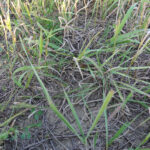
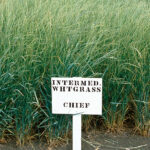
Intermediate wheatgrass is adapted to the Peace-Liard region, especially those varieties developed at Saskatoon, Saskatchewan (e.g., Chief and Clarke).

Hybrid Bromegrass

General Description

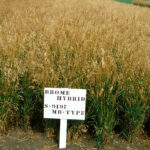
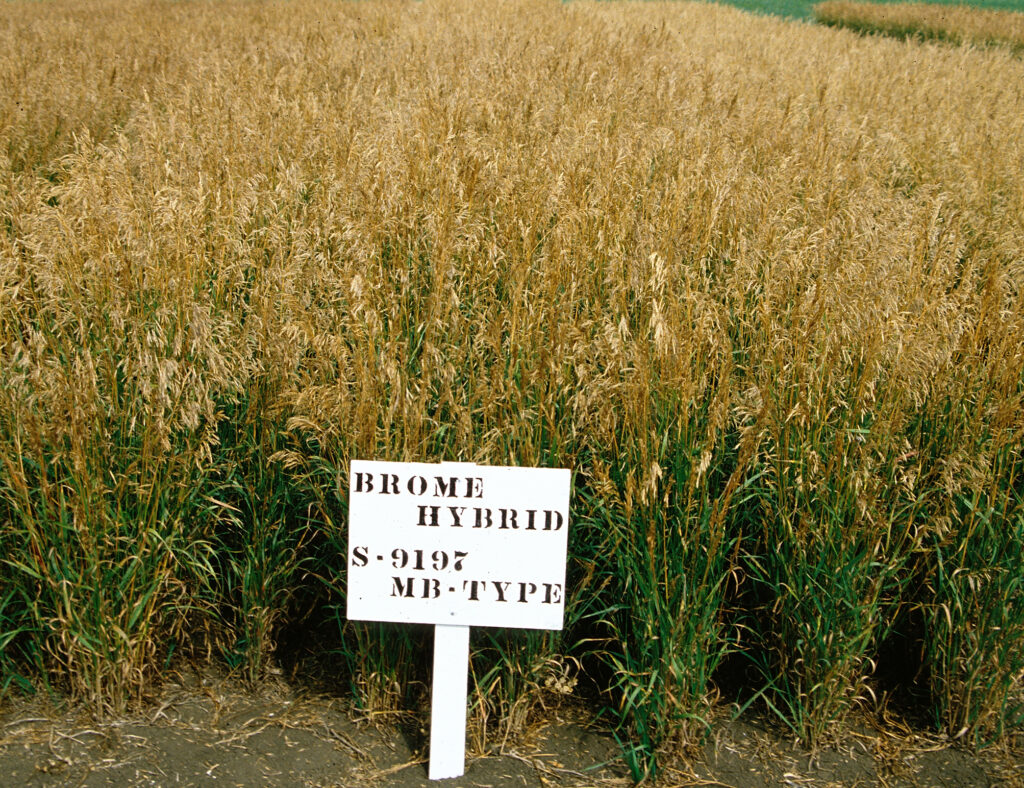
Hybrid bromegrass varieties were developed in Saskatoon and released in 2000 as a slightly creeping, winter hardy, long-lived perennial forage grass. It was developed from a cross between smooth bromegrass (Bromus inermis Leyss.) and meadow bromegrass (Bromus riparius Rehm.) as a dual purpose forage for both hay and pasture systems. 

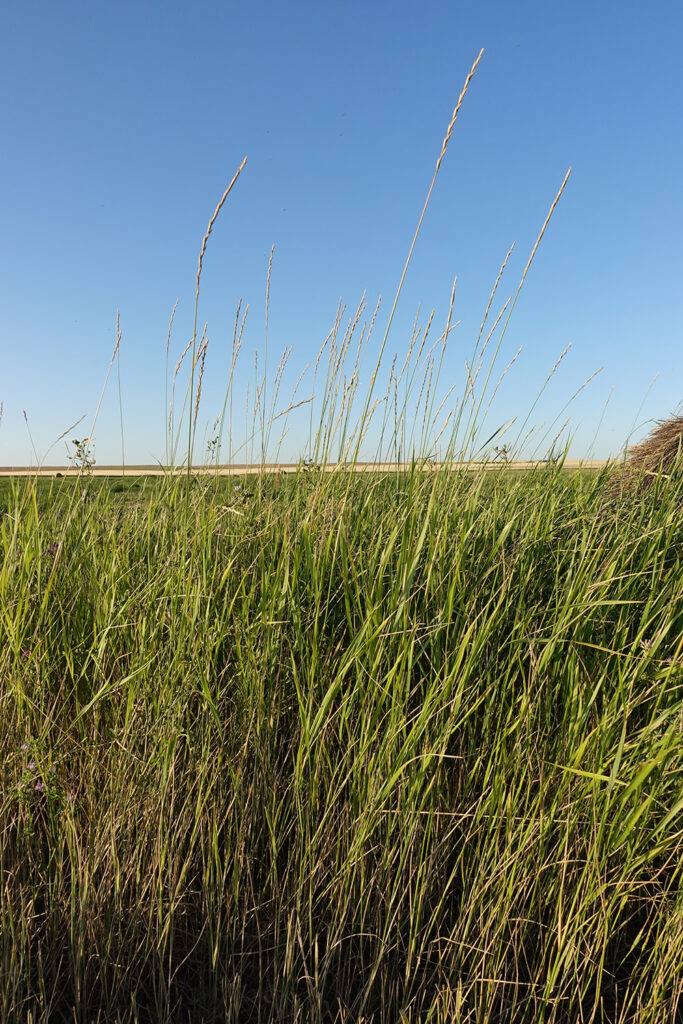
Hybrid bromegrass has some characteristics like smooth bromegrass, and others like meadow bromegrass. Hybrid bromegrass has short, slowly spreading rhizomes on its roots, and is therefore less sod forming than smooth bromegrass. Hybrid bromegrass grows stems that are slightly taller than both its parents, growing upright to 100 cm (39 in). Leaves are wide, have a “W” constriction or “watermark”, and have thicker shorter hairs than meadow bromegrass. It grows basal leaves but also more leaves up the stem like smooth bromegrass. 


Type

Tame grass.


Origin

Developed in Saskatoon. Hybrid cross between smooth bromegrass and meadow bromegrass.


Longevity

At least 20 years.

At least 10 years.

Use

Pasture, hay, stockpiled. Hybrid bromegrass is a dual purpose forage for both hay and pasture systems, producing a high quality, high volume first cut hay crop (like smooth bromegrass) followed by good regrowth for grazing and stockpiling (like meadow bromegrass).


Optimal Time of Use

All seasons. Hybrid bromegrass should be allowed to reach 20 to 30 cm (8 to 12 in) in height or have reached the 4 leaf stage before turn-out. Early grazed or hayed hybrid bromegrass can be grazed or stockpiled for fall, win¬ter, or spring grazing. Time grazing to allow root reserves to build prior to fall. Hay hybrid bromegrass at early bloom stage for the best yield and quality.


Recovery After Use

Recovery can occur within 45-60 days. Like meadow bromegrass, the growing point on vegetative leaves is usually below the level of grazing, enabling the plant to keep growing without any pause or change in rate of growth. However, in tillers that have become reproductive, the growing points may be removed during grazing, and regrowth will be slower, having to come from auxiliary buds.

Like meadow bromegrass, the growing point on vegetative leaves is usually below the level of grazing, enabling the plant to keep growing without any pause or change in rate of growth. However, in tillers that have become reproductive, the growing points may be removed during grazing, and regrowth will be slower, having to come from auxiliary buds.

Palatability/Nutritional Value

Hybrid bromegrass is very palatable to all classes of livestock especially in the spring and early summer. This grass has low fibre content and crude protein levels of 10 to 12%. Quality of regrowth can be maintained into the fall.

Annual Precipitation min/max (mm)

350mm / 600mm


Drought Tolerance

Good drought tolerance. Like other bromegrasses, hybrid bromegrass goes dormant during severe dry periods. It regrows quickly when there is moisture again.


Flooding Tolerance

Withstands 1 to 2 weeks of spring flooding.


Winter Hardiness

Good hardiness. In the fall, the leaves of hybrid bromegrass tolerate more frost than smooth bromegrass, but less than meadow bromegrass.

Soil Texture Preference

Hybrid bromegrass is suited to all soils but prefers well drained soil.


Erosion Control

Moderate erosion control. Hybrid bromegrass has rhizomes and fiberous roots that can both stabilize soil.


Salinity Tolerance

Slight tolerance. Hybrid bromegrass salinity tolerance will be more similar to meadow bromegrass than smooth bromegrass.


Acidity Tolerance

Moderate tolerance.


Alkalinity Tolerance

Moderate tolerance.

Seeds per kg

200,000 seeds/kg (91,000 seeds/lb)


Suggested Mixtures

Mix with alfalfa, sainfoin, cicer milkvetch, red clover, or alsike clover for pasture or hay, or combine with grass species such as timothy, intermediate wheatgrass, pubescent wheatgrass or tall fescue.

Mix with alfalfa, red clover, or alsike clover for pasture or hay, or combine with grass species such as timothy, or fescues.


Ease of Establishment

Hybrid bromegrass establishes very easily with very vigorous seedlings. Similar to the other bromegrasses, seed 1.5- 2 cm (1/2 to 3/4 in) deep with good soil contact and decrease weed competition and ensure proper seeding rates to foster good establishment.


Competitiveness

Hybrid bromegrass is similar to meadow bromegrass in competitiveness (good). Hybrid bromegrass is much less invasive than smooth bromegrass when grown in mixtures and does not become sod bound quickly.


Management Considerations

Hybrid bromegrass responds well to fertilization and in a mixture with a legume. Time haying and grazing to maximize regrowth potential.

British Columbia Rangeland Seeding Manual, Saskatchewan Dryland Forage Species Adaptation Tool, USDA Plants Database, Alberta Forage Manual, Manitoba Forage Adaptation and Comparison Guide

Hybrid bromegrass is adapted to all zones in the Central Interior, including the Bunchgrass zone in southern part of the region when grown under irrigation. 

Hybrid bromegrass is adapted to the Ponderosa Pine, Interior Douglas-fir and Interior Cedar-Hemlock zones, and the Bunchgrass zone when grown under irrigation. 

Creeping Red Fescue

General Description

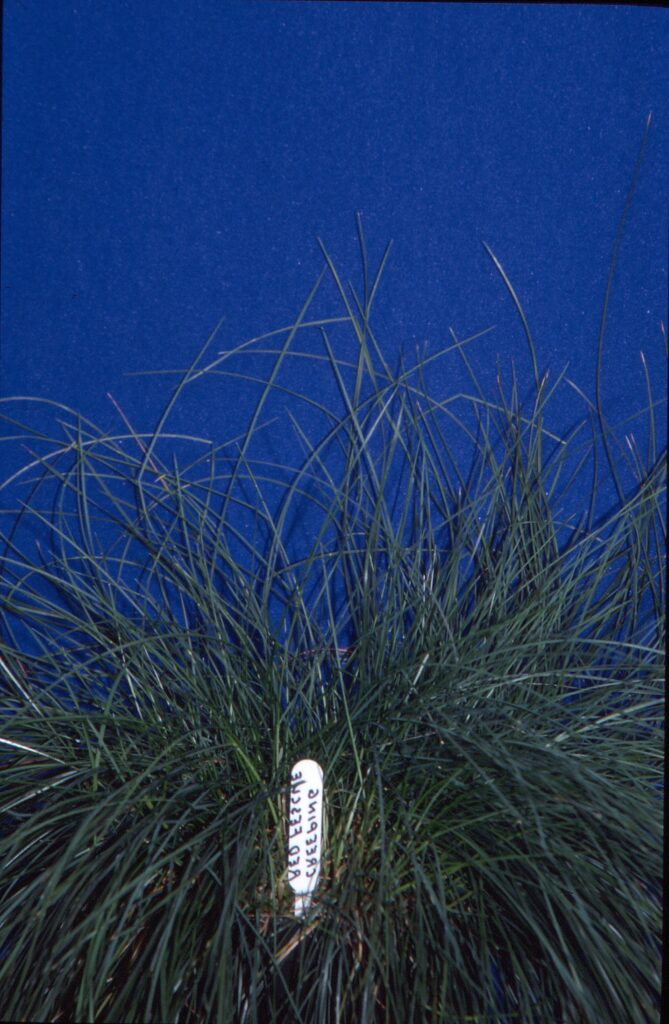
Creeping red fescue is a long-lived, hardy, creeping rooted, cool season perennial grass, important for its use in stabilizing soil, as stockpiled forage, as blending for the turf industry, and as a seed crop the cool, moist regions. Creeping red fescue root systems are fibrous with short rhizomes. Roots form a thick sod that is resilient to traffic, but they are less dense than smooth bromegrass or Kentucky bluegrass. 

Stems are up to 90 cm (35 in) tall and are often reclining at the base. Creeping red fescue mostly produces basal leaves. Leaves are 5 to 15 cm (2 to 6 in) long. Seed heads are up to 15 cm (6 in) and branch mostly upright. Spikelets are up to 15 mm long and 4-8 are flowered, producing purple-tinged flowers.

Stems are up to 90 cm (35 in) tall and are often reclining at the base. Creeping red fescue mostly produces basal leaves. Leaves are 5 to 15 cm (2 to 6 in) long. Seed heads are up to 15 cm (6 in) and branch mostly upright. Spikelets are up to 15 mm long and 4-8 are flowered, producing purple-tinged flowers. The upper surface is deeply ridged, and the undersurface is shiny. The collar is narrow and continuous. There are no auricles. The ligule is a very short membrane. The stems are nearly round. Its most distinguishing features are dark-green, very slender and bristle-like leaves; old, dead basal leaf sheaths are reddish brown (hence the common name).


Type

Tame grass.


Origin

Native to Europe and North America. Varieties developed in Canada.


Longevity

At least 20 years.

Use

Pasture, stockpiled, reclamation.


Optimal Time of Use

Spring, summer, fall, winter. Creeping red fescue can be continually or rotationally grazed. It remains palatable and nutritious year-round. Snow cover may restrict stockpiled grazing in some areas as it is low growing Leave at least 5 cm (2 in) for regrowth to occur. 


Recovery After Use

Requires a minimum 30-45 days of recovery after use. This time is highly variable depending on the moisture conditions. Recovery is usually good as growing points are often below grazing level, especially if not continuously grazed. Forage trials indicate that rest after a mid-July grazing on creeping red fescue should allow for adequate growth for stockpiled use. Manage creeping red fescue with adequate rest to decrease Kentucky bluegrass invasions.

Palatability/Nutritional Value

Creeping red fescue is palatable and holds its quality year round. It has average total digestible nutrients of 61% and 12% crude protein in the vegetative state. Creeping red fescue is not only palatable in the fall but also over winter, into the spring. When stockpiled, this species has adequate nutrition for a dry pregnant cow.

Annual Precipitation min/max (mm)

700mm / 1775mm. Does poorly under low precipitation but is noted to survive under lower minimum precipitation (400mm).


Drought Tolerance

Fair to moderate drought tolerance.


Flooding Tolerance

Withstands 2 to 5 weeks of spring flooding or waterlogged soils.


Winter Hardiness

Excellent hardiness.

Soil Texture Preference

Creeping red fescue can be grown on a wide range of soils as long as moisture is available. It is most suited to sandy, loamy, and clay soils in the Black and Gray soil zones.

Creeping red fescue can be grown on a wide range of soils as long as moisture is available. It is most suited to sandy, loamy, and clay soils.


Erosion Control

High erosion control. A good species for controlling erosion and often used for revegetation of waterways and canals since it forms a thick, soil-binding sod, but does not impede water movement.


Salinity Tolerance

Moderate tolerance.


Acidity Tolerance

High tolerance.


Alkalinity Tolerance

Moderate tolerance.

Seeds per kg

826,000 seeds/kg (375,000 seeds/lb)


Suggested Mixtures

Complements timothy, smooth bromegrass, alsike clover, alfalfa and cicer milkvetch.

Complements timothy, smooth bromegrass, alsike clover, alfalfa and cicer milkvetch, alsike clover, and alfalfa. 


Ease of Establishment

Seedlings are vigorous, and creeping red fescue is relatively easy to establish.


Competitiveness

Creeping red fescue is competitive in moist areas. Low invasiveness. As it is shade tolerant, it can remain productive with taller forage species.


Management Considerations

Use appropriate stocking rates and allow rest following grazing. Kentucky bluegrass can invade and overtake creeping red fescue stands if management is not considered. Creeping red fescue may increase in abundance if seeded with other less competitive species in a pasture mix.

British Columbia Rangeland Seeding Manual, Saskatchewan Dryland Forage Species Adaptation Tool, USDA Plants Database, Manitoba Forage Adaptation Tables, Alberta Forage Manual

Creeping red fescue is adapted to the Sub-Boreal Spruce zone and wetter areas of the Sub-Boreal Pine-Spruce, Interior Douglas-fir and the Interior Cedar-Hemlock zones.

Creeping red fescue is adapted to wetter areas of the Interior Douglas-fir zone and the Interior Cedar-Hemlock zone.

Creeping Foxtail

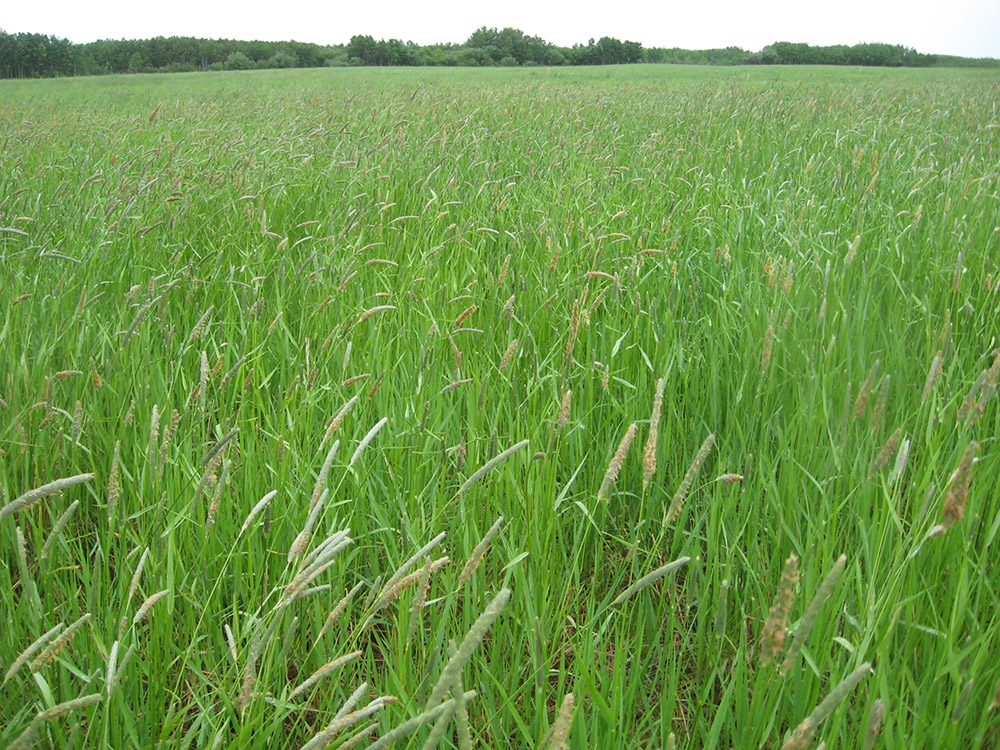
General Description

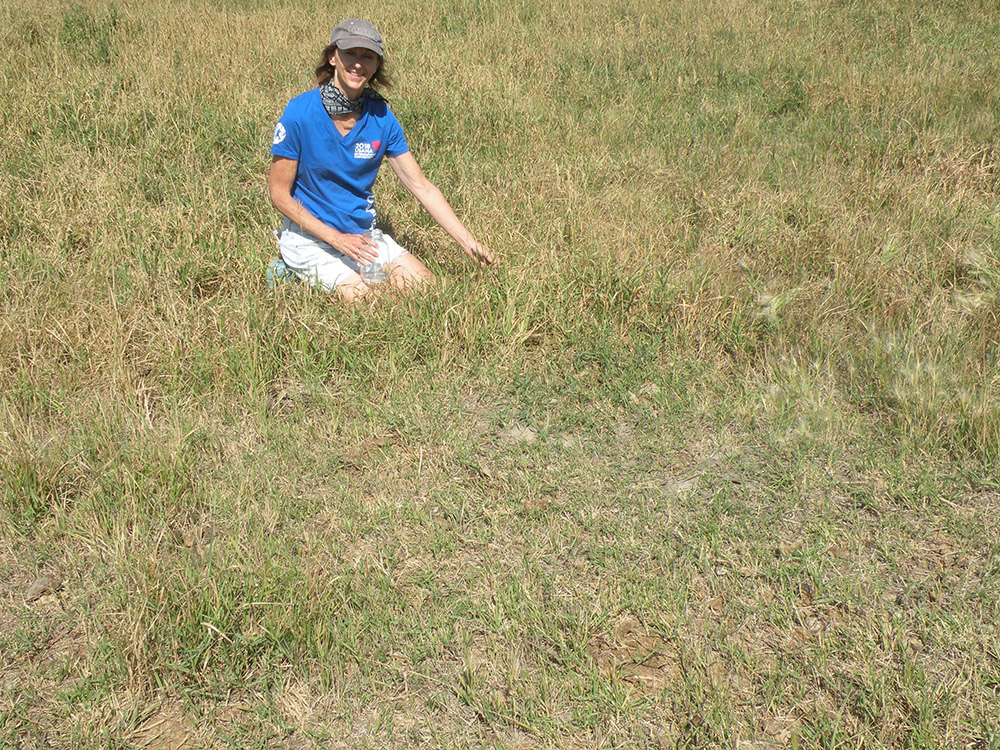
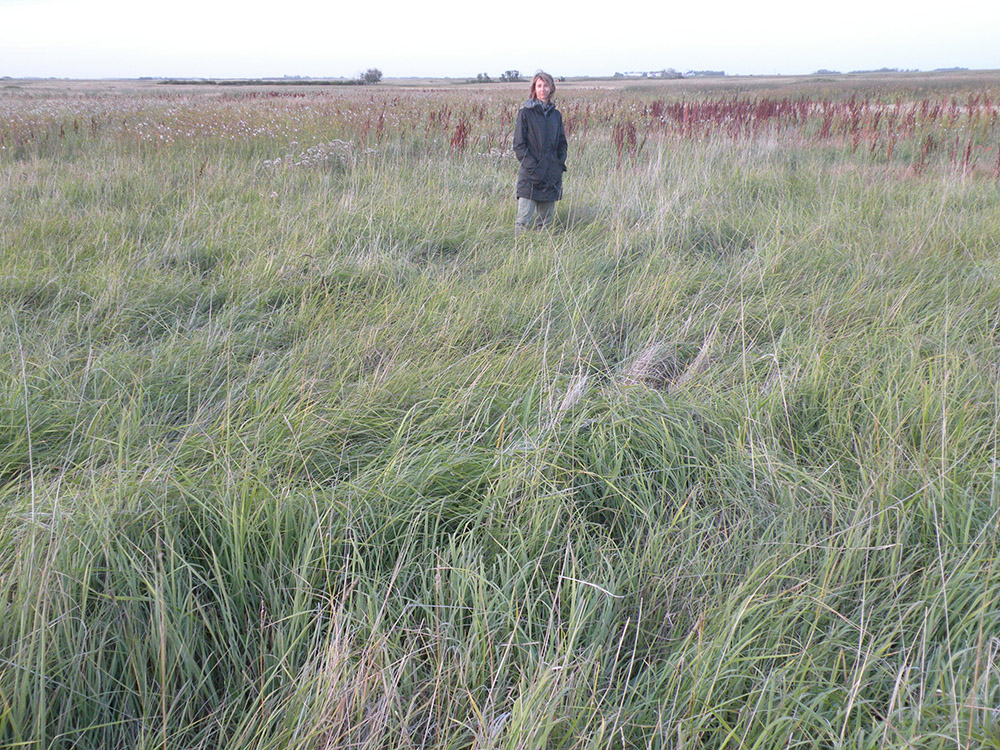
Creeping foxtail is a long-lived, early maturing, rhizomatous grass. It is highly adapted to moist riparian areas, but can become invasive due to its longevity, prolific seed production, ease of seed spread (wind/water) and creeping ability.

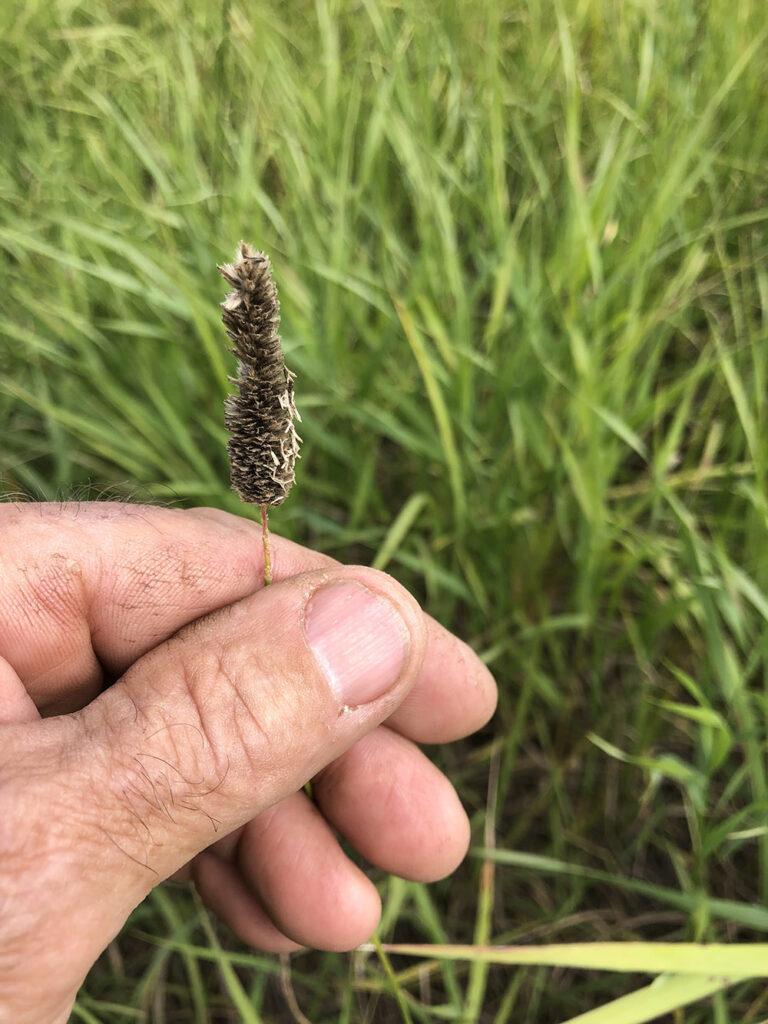
Creeping foxtail stems can grow to 1 m tall (3.3 ft), with leaves up stems. Leaves are smooth on top and rough beneath. They are generally 6-12 mm wide. The creeping rhizomes are very extensive and can form a thick sod quickly. As a sod thickens, generally less seed heads are produced. Creeping foxtail heads are a similar shape to timothy. The seeds are black and hairy when mature, and can be transported to a new location by wind or water.  
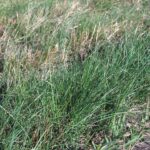
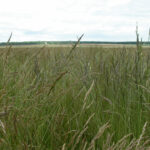
Meadow foxtail is a similar species, but does not have creeping roots and seeds are generally light grey in colour. The two species can cross.


Type

Tame grass.


Origin

Eastern Europe, Eurasia.


Longevity

At least 20 years.

Use

Hay, pasture.


Optimal Time of Use

Spring, summer. Creeping foxtail can be continually or rotationally grazed but responds best to rotational grazing. Intense, small paddock grazing may be needed to force grazing. Creeping foxtail begins growth very early in the season. Hay creeping foxtail early, before flowering for the best yield and quality. Over maturity decreasing palatability is a big limitation of creeping foxtail. 


Recovery After Use

Requires a minimum 45-60 days of recovery after use. Creeping foxtail regrows quickly after use when moisture is available. May be grazed after haying.

Palatability/Nutritional Value

Creeping foxtail has an average total digestible nutrient (TDN) level of 65% and crude protein level of 14-15% in the vegetative state. Creeping foxtail is most palatable for grazing or haying prior to heading. Livestock avoid grazing maturing plants.

Annual Precipitation min/max (mm)

460 mm / 1780mm


Drought Tolerance

Poor tolerance. Requires moist soils.


Flooding Tolerance

Withstands 2-5 weeks of spring flooding. Can withstand wet or waterlogged soils year round.


Winter Hardiness

Good hardiness.

Soil Texture Preference

Creeping foxtail is adapted to loamy to clay soils that remain moist or wet throughout the growing season. It is also found on peat and muskeg soils.


Erosion Control

High erosion control ability. Creeping foxtail is effective for erosion control in high moisture areas such as streams and canals due to spreading rhizomes. It can invade waterways.


Salinity Tolerance

Moderate tolerance. Creeping foxtail has the ability to displace foxtail barley growing in wet saline areas.


Acidity Tolerance

Moderate tolerance. Creeping foxtail tolerates soil pH to 5.5.


Alkalinity Tolerance

Moderate tolerance.

Seeds per kg

1,733,000 seeds/kg (786,000 seeds/lb)


Suggested Mixtures

Creeping foxtail matures early on moist sites, thus limiting mixture possibilities. It is often seeded as a monoculture. Alsike clover may prove successful in a mix. Legumes, generally, may add quality to the stand.


Ease of Establishment

Creeping foxtail seeds are small, fluffy, and tolerant of flooding. Purchasing coated seed makes seed metering and distribution more consistent. Creeping foxtail not only has poorer seedling vigor which can make it difficult to seed in a wetter area, but seedlings need enough time between seeding and fall to become well rooted and winter hardy.


Competitiveness

Creeping foxtail is very competitive once established due to strong rhizomes. Creeping foxtail may displace native wetland vegetation including reed canary grass.


Management Considerations

Creeping foxtail seed will move along riparian areas and waterways, spreading it downstream. Management in wet areas can be difficult due to waterlogged or moist soils. Harvesting when soils are saturated may result in soil compaction. Grazing or haying creeping foxtail at the right growth stage is important due to its poor palatability after heading. It should be noted that while the USDA Plants Database praises creeping foxtail for palatability season long, within western Canada, palatability has proven to be limited unless stands are kept vegetative.

Saskatchewan Dryland Forage Species Adaptation Tool, USDA Plants Database, Manitoba Forage Adaptation and Comparison Guide, Alberta Forage Manual

Creeping foxtail is adapted only to moist or subirrigated areas in the Sub-Boreal Spruce, Sub-Boreal Pine-Spruce, Interior Douglas-fir and Interior Cedar-Hemlock zones.

Creeping foxtail is adapted only to moist or subirrigated areas in the Interior Douglas-fir and Interior Cedar-Hemlock zones.